The Festival of Britain officially opened on 3 May 1951, with King George VI declaring it 'a symbol of Britain's abiding courage and vitality.' The ceremony at St Paul's Cathedral was followed by a royal broadcast and the unveiling of a tablet at the Royal Festival Hall.
A Symbol of National Resilience
Speaking from a dais outside St Paul's, the King acknowledged the hardships of the post-war era, noting that 'peace has not endured' and that much wealth had been 'dissipated by fire and slaughter.' However, he urged the nation not to succumb to despondency, instead looking back with pride and forward with resolution. The festival, he said, embodied Britain's enduring spirit.
Trumpeters of the Household Cavalry sounded a fanfare as the King declared the festival open. Despite some delays, the event was finally underway.

Royal Festival Hall: A Night of Grace
That evening, the Royal Festival Hall was dedicated by the Archbishop of Canterbury in the presence of the royal family. The interior was praised for its grace and dignity, though the exterior drew mixed reviews. An invited audience in evening dress filled the foyers and staircases, with many women opting for quieter gowns in keeping with the religious nature of the ceremony.
Public Opening Amid Rain
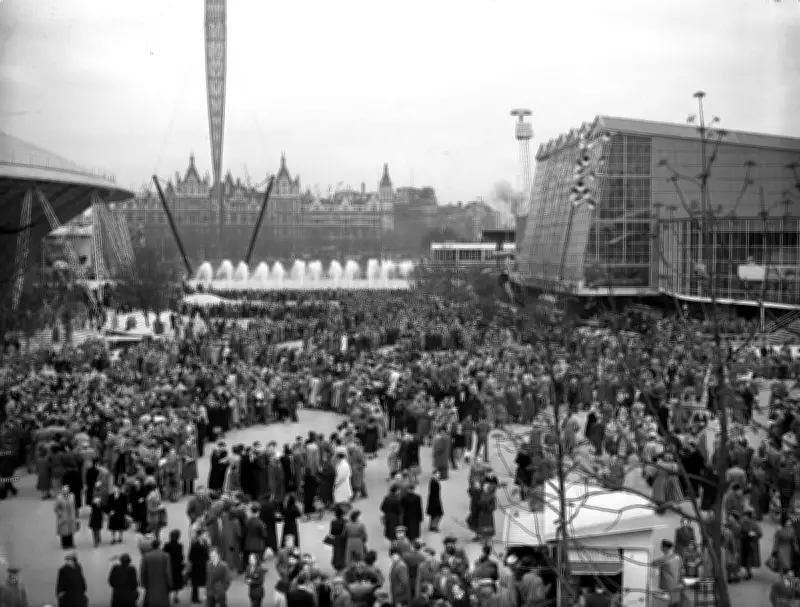
The South Bank Exhibition opened to the public on 4 May, but heavy rain dampened attendance. Only 20,000 people had entered by 8 p.m., far fewer than expected. Umbrellas dotted the outdoor cafes, and waiters scrambled to drain water from tables. Despite the weather, those who came explored the pavilions, which showcased futuristic designs and British innovation.
Enchanting Evening Scenes
By night, the South Bank transformed into a magical spectacle. Multi-coloured fountains played, and illuminated yachts glided across a luminous blue lake. Restaurants were full, offering a mix of traditional English fare and, for the adventurous, continental dishes. The cafeteria, described as the most beautiful ever seen in Britain, served familiar staples like battered plaice and marrowfat peas, grounding visitors in British culinary tradition.
Musical and Architectural Highlights
The BBC Symphony Orchestra, under Sir Malcolm Sargent, performed Beethoven symphonies at the Royal Festival Hall. While the orchestra was not at its peak, Sargent was praised for his direction. Acoustic issues were noted in the front stalls, but the hall was generally well-received.
Architecturally, the Dome of Discovery by Ralph Tubbs stood out, though its interior was cluttered with exhibits. The Skylon, a futuristic tower, was deemed 'pointlessly pointed.' The Regatta Restaurant and Press Room were commended for their thoughtful design, while the '51 Bar and Thameside Restaurant were considered perfunctory. The best group of buildings, according to critic Robert Lutyens, were those dedicated to the countryside, praised for their homogeneity and ease of access.
The festival, despite its architectural and organizational challenges, was celebrated as a testament to British creativity and resilience. It offered a glimpse of a brighter future, even as the nation grappled with post-war austerity.