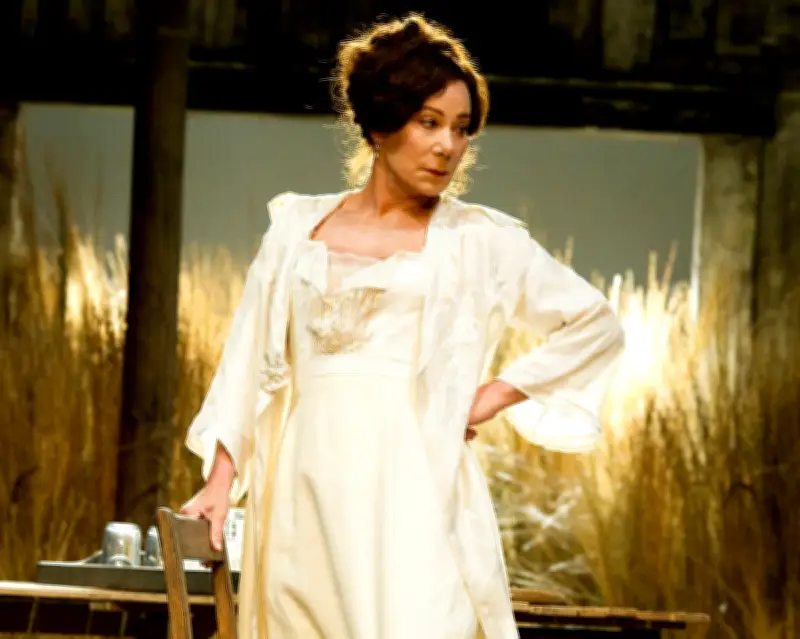
Michael Billington, who has seen Chekhov's The Cherry Orchard 20 times, argues that British productions excel at capturing the play's unique blend of comedy and tragedy. As new productions starring Helen Hunt and Kenneth Branagh in Stratford and Kristin Scott Thomas in London approach, Billington reflects on the play's inherent contradictions.
Chekhov vs. Stanislavski: Comedy or Tragedy?
Chekhov himself insisted his play was 'not a drama but a comedy, in places almost a farce.' Stanislavski, who directed the 1904 Moscow premiere, disagreed, calling it a 'tragedy.' Billington dismisses the cliché that British productions sentimentalise the play, stating, 'We generally do The Cherry Orchard very well because its blend of styles and moods is something baked into our own dramatic heritage.'
Notable British Productions
Billington recalls his first viewing in 1961, directed by Michel Saint-Denis for the RSC, featuring John Gielgud's comic Gaev and Dorothy Tutin's poignant Varya. He praises Michael Blakemore's National Theatre version for treating the orchard's destruction as 'an inevitable historical process,' while Mike Alfreds' 1985 production captured 'emotional contradictions' with Ian McKellen's Lopakhin gloating then comforting Sheila Hancock's Ranyevskaya.

Shakespearean Influence
'Steeped in Shakespeare, British actors are particularly good at pinning down the sudden shifts of mood that are pervasive in Chekhov,' Billington writes. He cites Penelope Wilton's 1995 Ranyevskaya, who giggled about eating crocodiles in Paris then extended a hand for a kiss like a grand duchess, and Zoë Wanamaker's 2011 performance, where she insulted Trofimov then embraced him.
Peter Stein's Haunting Production
Billington singles out Peter Stein's 1989 Berlin Schaubühne production, which pushed each category—tragedy, comedy, pastoral, farce—to extremes. The farce included Gogolian absurdity, and the pastoral was epitomised by a stunning cherry blossom reveal. However, he notes Stein had resources unavailable to British directors.
Upcoming Revivals
Despite resource disparities, Billington asserts a 'temperamental and stylistic affinity' with Chekhov. The upcoming productions—at the Swan Theatre, Stratford-upon-Avon (10 July–29 August) and the Harold Pinter Theatre, London (3 October–9 January)—promise to continue this tradition. 'You could say that the time is ripe for more Cherry Orchards,' he concludes.