This Christmas, you can bring a dash of discovery to the dining table without needing a laboratory. Experts from across the UK have shared their favourite simple experiments that reveal the science behind our festive traditions, from the flavour of sweets to the mechanics of a turkey's wing.
The Sweet Truth About Flavour
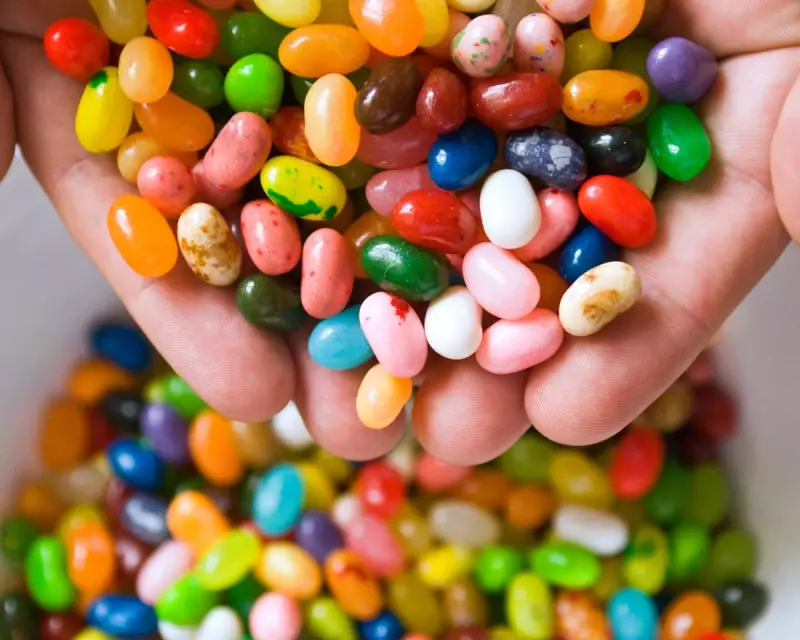
Professor Matthew Cobb, a zoologist at the University of Manchester, proposes a simple test that uncovers a fundamental truth about how we perceive taste. The experiment involves selecting a jellybean or similar sweet, closing your eyes, pinching your nose, and then placing it in your mouth to chew.
"You will probably just say 'sweet' and maybe have a vague idea of something else," Cobb explains. The revelation comes after about five seconds. "Take your fingers off your nose and you should get a sudden rush of sensation that enables you to correctly identify the flavour."

He notes this demonstrates that flavour is largely composed of smell, not just taste. When we chew, volatile aromas travel to the olfactory neurons via the back of the mouth. This combination creates what we perceive as flavour, a fact many discovered during Covid-19 when losing their sense of smell made food taste bland.
Why We Laugh at Terrible Cracker Jokes
With Christmas crackers providing a stream of questionable humour, Professor Sophie Scott, a cognitive neuroscientist at University College London, suggests a social experiment. First, read the jokes silently to yourself. Then, read them aloud to a room full of people.
Observe the reactions—whether people laugh, groan, or remain silent. Scott highlights a key insight: we are 30 times more likely to laugh when with others than alone. Laughter is primarily a social behaviour, not just a response to humour.
"What this means for cracker jokes is that a joke read by someone alone is much less likely to make them laugh than the same joke read – or heard – in company," she says. The strength of social bonds amplifies laughter, meaning you'll likely laugh more with close friends and family.
Dissecting the Festive Bird: A Lesson in Biomechanics
Your Christmas turkey or chicken offers a perfect opportunity for a hands-on anatomy lesson. Professor Steve Brusatte, a palaeontologist at the University of Edinburgh, recommends examining the carcass after the meal.
After a recent Thanksgiving dinner, he showed his family how the bones in the shoulder fit together to allow the wing to move. He pointed out the wishbone, which acts like a spring storing energy during flight. "This gives a better understanding of biomechanics and flight motions than I've ever seen in any textbook," Brusatte remarked.
Professor Sue Black, a forensic anthropologist at the University of Oxford, suggests taking it further. Boil the leftover carcass to clean the bones, providing a three-dimensional jigsaw puzzle to reconstruct and understand the anatomy of motion.
The Icy Magic of Instant Ice Cream
Unlock the chemistry behind why salt melts ice with a delicious experiment from Professor Andrea Sella, an inorganic chemist at UCL. Create a simple custard mix from milk, egg yolks, and sugar.
Crush some ice and mix it generously with salt in a zippable plastic bag. Place your sealed custard mix in a second bag inside the first. Mash them together. The temperature will plunge to -10°C or lower, turning your custard into ice cream in seconds.
Sella explains the science: the dissolved salt stops water molecules from refreezing onto the ice. The ice continues to melt, stealing heat from the custard in a process he calls "practical magic."
Finding Pi with Pine Needles
For a mathematical twist, Professor Kit Yates, a mathematical biologist at the University of Bath, proposes "Buffon's Pine Needles." Gather pine needles of roughly the same length (L). Scatter them randomly over paper with parallel lines spaced wider than the needles.
Count the total needles (T) and how many cross a line (C). You can then approximate the mathematical constant Pi using the formula: Pi ≈ (2 x L x T) / (C x W), where W is the distance between the lines.

"It demonstrates how Pi seems to crop up in really unusual places," says Yates. "It feels almost like magic, but it's just probability in action on your living room floor."
These activities prove that curiosity and festive cheer can go hand in hand, offering moments of shared discovery and wonder amidst the holiday celebrations.