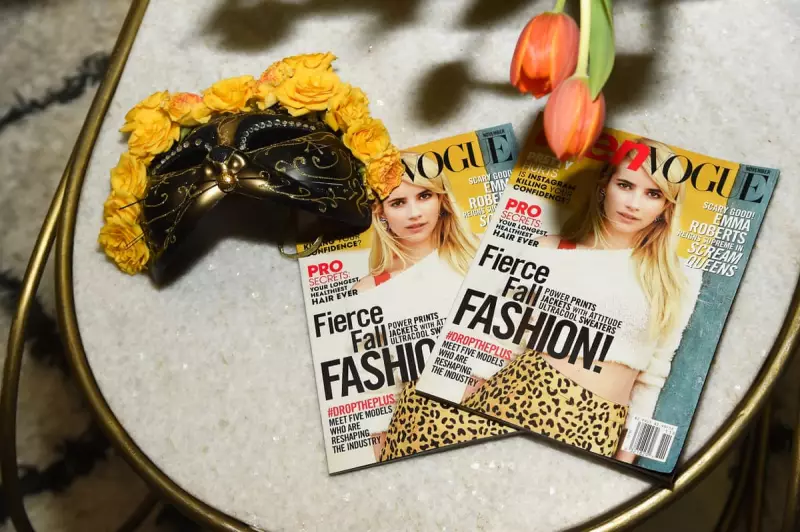
The progressive voice that once defined a generation of politically engaged young people has been silenced. Teen Vogue, the youth-focused publication that transformed from a fashion magazine into a powerhouse of political commentary during Donald Trump's first presidency, has been effectively dismantled by its parent company Condé Nast.
From Fashion to Political Firebrand
The magazine's radical transformation began in late 2016, just weeks after Trump's first election victory, when it published "Donald Trump Is Gaslighting America" - an article that garnered 1.3 million hits and became its most-read story of the year. Under editor-in-chief Elaine Welteroth, the publication that once focused on Disney stars and prom fever suddenly became required reading for politically aware youth.
Welteroth revealed to NPR that following the article's publication, Teen Vogue sold more copies in one month than it had during the entire previous year. This demonstrated the enormous appetite among young readers for content that addressed the political dimensions shaping their lives.
The Unraveling Under Trump 2.0
Earlier this month, Condé Nast announced it would fold Teen Vogue into its flagship Vogue publication, promising to "provide a more unified reader experience." Despite assurances about maintaining its "unique editorial identity," the changes tell a different story.
The company laid off six unionised Teen Vogue employees, including the politics editor, with most being "BIPOC women or trans" according to the Condé Nast union. When staff questioned human resources about these decisions, the company fired four employees, prompting New York attorney general Letitia James to threaten legal action with her statement: "Condé Nast, I'll see you in court."
Broader Crisis in Feminist Media
Teen Vogue's demise reflects a wider collapse across progressive and feminist media outlets. Many blogs that once populated the feminist media landscape - including Jezebel, Feministing, the Hairpin and the Toast - have either shut down or are struggling to survive.
Youth-oriented digital media companies like Vice and Vox have shed jobs at alarming rates, while traditional women's magazines are reducing their print issues or moving entirely online. Between 2008 and 2024, 74% of newsroom jobs vanished, creating an industry-wide crisis.
Christina Bellantoni, director of Annenberg's Media Center at University of Southern California, explained the climate: "We've got three more years of this administration making clear its priorities do not lay with having newsrooms that are reflective of the diverse world we cover."
Political Pressure and Advertising Fears
Former employees suggest that political considerations played a significant role in Teen Vogue's dismantling. Alma Avalle, a Bon Appetit journalist fired after confronting Condé leadership, reported hearing that "an executive said something to the effect of: 'The company is trying to avoid the attention of the Trump administration, and trying to avoid the attention and the scrutiny of the right.'"
Allegra Kirkland, Teen Vogue's former politics director, wrote that ahead of Trump's second inauguration, she was told that Anna Wintour - Condé's global chief content officer - didn't want to hear the word "politics" during the magazine's annual strategy meeting.
Amy Odell, an independent journalist covering fashion media, noted: "These glossy magazines are generally wary of political coverage, because they say advertisers don't want to sponsor it. With women's publications, it's like: 'Just do lip liner tutorials and we'll sell those to beauty advertisers.'"
The Rise of Conservative Alternatives
As feminist and progressive outlets decline, a conservative "womanosphere" has flourished. Podcasts like Culture Apothecary, hosted by MAGA influencer Alex Clark, and magazines like Evie - which positions itself as a "conservative Cosmo" - have gained traction.
These publications often blend style and wellness content with anti-feminist rhetoric and support for traditional gender roles. One recent Evie email blast advised women that "an empowered woman who is overflowing with joy about her career, and knows that it won't ever be as important as being a wife and mother, does not need to turn a date into a staff meeting."
Shara Crookston, an associate professor of women's and gender studies at University of Toledo who has studied Teen Vogue, sees this as "a backlash to feminist progress" that could limit media options for young women exploring different life paths.
The Impact on Young Readers
The consequences extend beyond media industry trends to affect young people directly. Teen Vogue's core audience now faces restricted access to information about gender-affirming care, abortion rights and other issues targeted by right-wing policies.
Paxton Smith, a 20-year-old Texan, recalled how a Cosmopolitan story about body hair choices sparked her political awakening. "No one had ever framed a woman's body - especially in a sexual way - as being whatever floated their boat," she said. Years later, Smith went viral for a speech about abortion rights at her high school graduation.
Lex McMenamin, a laid-off Teen Vogue staffer, remains hopeful despite the challenges: "Feminist media is not dead. Young people are so smart. I lack the nihilism that people have about young people and learning and self-development. Our readers will always exist."
Condé Nast maintains that the decision was purely business-oriented, with a spokesperson stating: "Teen Vogue has faced ongoing challenges around scale and audience reach for some time. This was a business decision, not a political one."