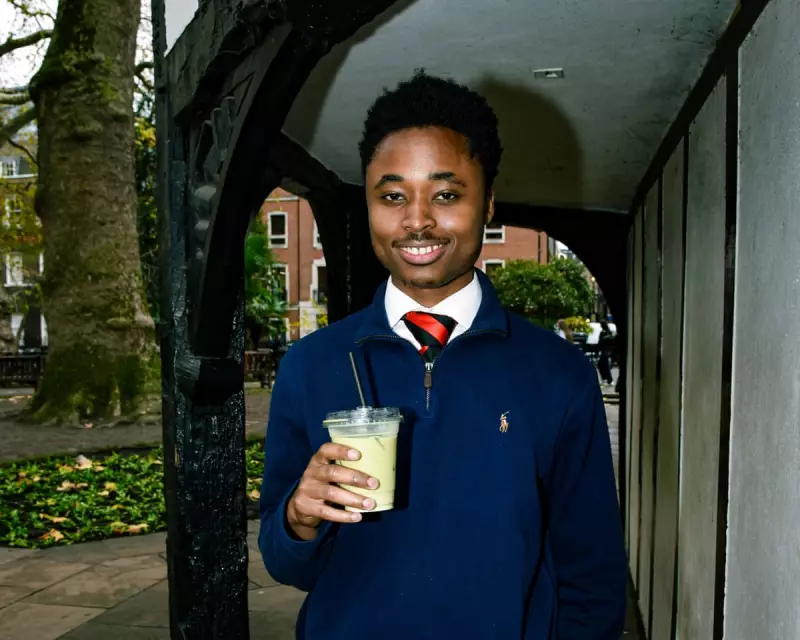
A quiet revolution in menswear is unfolding, not on the catwalks of Milan, but on the streets of Soho and the feeds of TikTok. It centres on a once-unremarkable garment: the quarter-zip jumper. What began as a tongue-in-cheek online post has blossomed into a global movement, complete with real-world meetups where young men gather, clad in their knitwear, sipping iced matcha.
From TikTok to Soho: The Birth of a Movement
The trend's origins are distinctly digital. It started when computer science graduate Jason Gyamfi declared himself the "founder of the quarter-zip movement" in a TikTok video with friend Richard Minor. In the clip, viewed over 30 million times, Gyamfi stated: "We don't do Nike Tech. We don't do coffee. It's straight quarter-zips and matchas around here."
This digital seed sprouted into physical gatherings worldwide, from Houston to Rotterdam. London's inaugural "quarter-zip meetup" was recently held in Soho, organised by sibling rappers OKay the Duo. Around twenty young men, aged between 13 and 21, convened, their choice of attire speaking volumes.
A Sartorial Shift with Deeper Meaning
This is far more than a fleeting fashion fad. The trend represents a conscious sartorial swap with profound social subtext. Participants are actively trading the ubiquitous Nike Tech fleece—a snug tracksuit often linked to urban, working-class style—for the quarter-zip, a garment historically associated with white, middle-class professionalism, even epitomised by figures like Rishi Sunak.
For attendees like Seph and David, the distinction is clear. "These fleeces are associated with gangs and essentially black people, if I'm being honest," Seph admitted. David sees quarter-zips and matcha as symbols that "represent maturity." Sixteen-year-old Ola Adams, a former daily Tech fleece wearer, noted the change in perception: "It's a lot easier to communicate with people when they don't stereotype you based on what you're wearing."
According to Professor Andrew Groves, director of the Westminster Menswear Archive, the quarter-zip's rise aligns with a broader casualisation of office wear. The pullover has "become the default business-casual layer because it reads smart without being formal." Commercial data supports the surge; John Lewis reports searches for men's quarter-zips are up a staggering 425% this year.
Aspiration, Irony, and the Limits of 'Respectability'
The trend merges several contemporary currents. For some teenage boys, it intersects with the "performative male" phenomenon, where adopting interests like matcha or literature becomes a curated signal to attract progressive women. It presents an aspirational masculinity blending softness with corporate power—an appealing image amid heteropessimism and graduate unemployment.
For content creator Andrew Amoako, whose Making It Out series satirises corporate culture, the trend is about social mobility. "When you stop wearing Tech fleeces and you start wearing quarter-zips, it means you've probably got a better job," he observes, though he cautions against stigmatising tracksuits.
However, experts warn of the pitfalls in such respectability politics. Liza Betts, a researcher at the University of the Arts London, argues that "value and legitimisation have been attached (or not) to the bodies themselves before the language of dress is invoked." Professor Groves concurs, noting the quarter-zip's meaning is fluid: "The same garment can read as professional, ironic, aspirational or threatening, depending on the wearer and the setting."
Ultimately, while the quarter-zip and matcha trend is often playful, it highlights enduring stereotypes attached to clothing. The movement suggests a desire for a wardrobe that opens doors, but also prompts a crucial question: should the change really need to come from the clothes, or from the perceptions of those who see them?