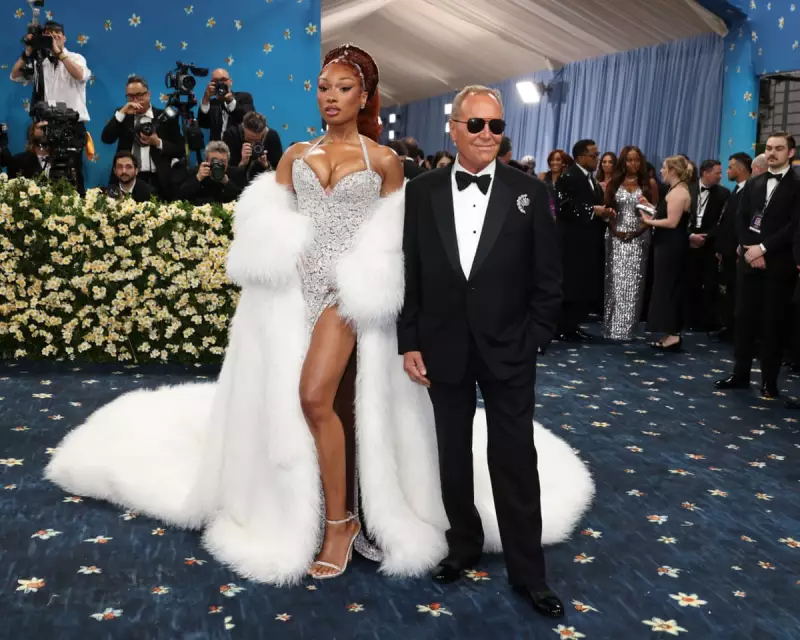
In the wake of Versace's $1.4 billion sale to Prada, the spotlight has intensified on Michael Kors, the American fashion label that now forms the cornerstone of its parent company, Capri Holdings. Accounting for roughly 70% of Capri's sales, the 44-year-old brand is being primed for global dominance, even as its founder voices concern over an industry increasingly obsessed with 'entertainment and spectacle'.
The 'Dirty Words' of Wearable Fashion
Speaking to the Guardian ahead of the launch of his new Regent Street flagship in London, designer Michael Kors offered a candid critique of contemporary fashion attitudes. He expressed frustration that 'wearable' and 'commercial' have become 'dirty words' within the industry, signalling a disconnect from the practical needs of customers. For Kors, whose empire spans clothing, accessories, watches, and fragrance, the goal remains selling a glamorous yet accessible lifestyle, embodied by clients from Michelle Obama to Megan Thee Stallion.
While his social media showcases a world of A-list parties and Greek island sailing, the brand's economic engine is its more accessible MICHAEL Michael Kors line. The ubiquitous MK logo, seen on high streets across the UK and beyond, offers a designer proposition often for under £300, a strategy that has made it a top seller for retailers like John Lewis.
Inclusive Casting in an Era of 'Size Zero'
Kors's commitment to inclusivity forms a core part of his brand's identity, particularly as the industry witnesses a worrying return to extreme thinness on catwalks. Following the September shows, many observers pointed to the normalising effect of weight-loss drugs and a resurgence of 'size zero' models. In stark contrast, Michael Kors continues to cast models across a range of sizes, ages, and races.
'Unfortunately, I think fashion people can be overly trendy,' Kors remarked. 'We all have families. We all know different people of different ages and different sizes. Don’t you want them all to be invited to the party? That’s to me how it should be.' This philosophy extends to his design process, which he views as problem-solving for diverse body types.
Building a Global Behemoth in the Mid-Tier Market
With luxury prices having soared by 25% since 2019, Capri Holdings sees a significant opportunity in the substantial mid-tier market. The group's strategy is to position Michael Kors as the destination for aspirational customers who have been priced out of the upper echelons of luxury. Bags like the Quinn tote (around £230) and the Hamilton style (£275), carried by Taylor Swift, are central to this appeal.
This focus comes after challenges for Capri, including a failed $8.5bn merger with Tapestry and pricing missteps at Michael Kors linked to US trade tariffs. The brand's future growth is now pegged to its accessibility and inclusive image. At 66, Kors remains energised and curious, citing visits to Philadelphia malls to meet customers as essential. 'You have got to stay curious,' he insists. 'It’s important I know what type of thing my customers want.'
As one of the last heritage American designers still at the helm of his namesake brand, alongside Ralph Lauren and Tommy Hilfiger, Kors isn't dwelling on succession. His immediate focus is on the tangible: creating 'things that delight but still function' for a world moving away from the 'wear-once' mentality, and ensuring everyone feels invited to the party.