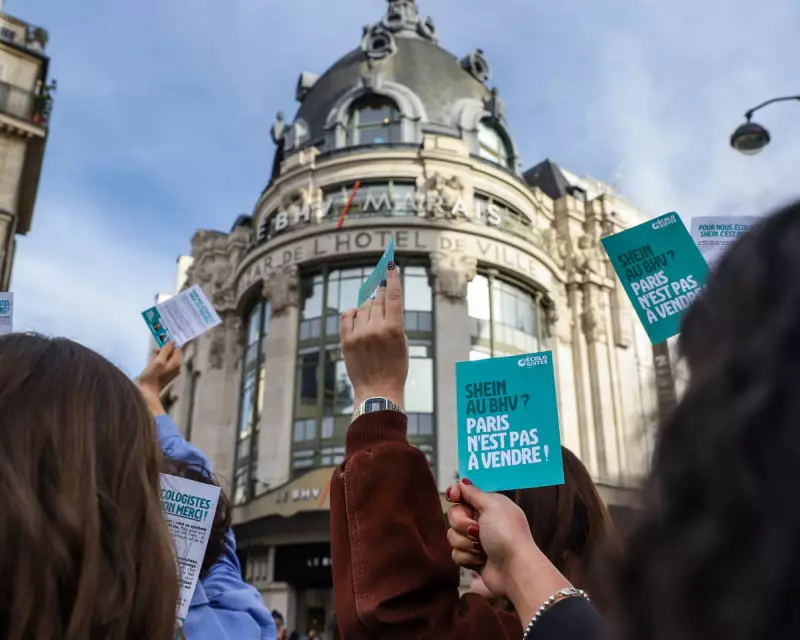
Paris, the historic capital of fashion and luxury, finds itself embroiled in an unprecedented battle against ultra-fast fashion giant Shein. The opening of Shein's first permanent French retail space at the iconic BHV Marais department store on 5th November 2025 has sparked widespread protests and government action.
The Paris Protest That Shook Fashion
On the morning of Wednesday, 5th November 2025, police forcibly removed anti-Shein protesters from the historic BHV Marais department store, located directly opposite Paris's city hall. The demonstration marked the opening of Shein's first permanent bricks-and-mortar retail space in France, situated on the sixth floor of the prestigious shopping destination.
The Singapore-based company, originally launched as SheInside in 2011 in Nanjing, China, has become the controversial face of ultra-fast fashion. Shein's business model involves selling clothing and various other products at an astonishing scale and remarkably low prices. The company's current "new in" page alone features more than 1,300 items, ranging from gold shirts to plus-size swimwear under its "Slaysola" sub-brand.
Government Crackdown and Consumer Backlash
The French government has been pursuing Shein through multiple channels for years. In 2023, following pressure from two French MPs, the French branch of the Organisation for Economic Co-operation and Development (OECD) launched an investigation into Shein's practices. The 2025 findings concluded that Shein failed to uphold OECD standards in human rights, labour law, and environmental protection, though the company disputed these claims.
More recently, France's legislative efforts have targeted fast fashion specifically. In 2024, the lower house of parliament approved a bill penalising fast fashion companies for environmental damage. By June 2025, the Senate passed a modified version that singled out Shein and similar companies as particularly egregious offenders. Over the past three months, France has fined Shein nearly €200 million for consumer protection violations and misleading discount practices.
The most significant government action came on the same day as the store opening, when Prime Minister Sébastien Lecornu moved to block Shein's e-commerce operations entirely. This followed the discovery of both "childlike" sex dolls and weapons available on Shein's website. The government immediately suspended all Shein deliveries and flagged more than 200,000 packages for customs investigation.
Cultural Conflict and Worker Resistance
The opposition to Shein extends beyond government chambers to the streets of Paris and the French workforce. BHV Marais staff, supported by major French trade unions, have staged numerous strikes and demonstrations in recent weeks. Several independent retailers have withdrawn their products from the department store in protest, while more than 100,000 French citizens have signed an online petition opposing Shein's presence in their city.
This resistance represents a cultural clash between Shein's disposable fashion model and traditional French values of artistry, durability, and sustainability. Despite the protests, the commercial reality remains clear: Shein has become the fifth-largest clothing retailer by volume in France, celebrated by many as an accessible source of trendy fashion.
The opening day scene perfectly captured this divide. While protesters carried signs reading "SHAME ON SHEIN," hundreds of Parisians waited patiently in line to enter the new store. They emerged carrying bulging shopping bags filled with polyester sweaters, shimmering tops, and plastic winter coats, likely feeling they had secured bargain purchases.
The True Cost of Cheap Fashion
Behind Shein's remarkably low prices lie significant hidden costs. Environmental damage from textile production represents just one concern. Garment workers in factories supplying Shein worldwide reportedly receive minimal wages while working in challenging conditions. Independent designers also suffer, with their creations frequently copied by the fast fashion giant.
Perhaps most concerning are the social and cultural costs – the normalisation of clothing as disposable items with little value, and the expectation that garments should be temporary rather than lasting possessions.
France's multi-pronged approach to regulating Shein, combined with strong worker and consumer opposition, provides a powerful model for combating ultra-fast fashion. By making Shein purchases more difficult through corporate regulation and social pressure, the movement aims to limit the company's market power and influence.
Ultimately, defeating fast fashion requires a fundamental shift in our relationship with clothing. This involves learning to appreciate and maintain existing garments, committing to secondhand purchases, and supporting better working conditions for garment workers worldwide. France's growing resistance to Shein demonstrates that collective action can challenge even the most dominant fast fashion corporations, offering hope for a more sustainable and ethical fashion future.