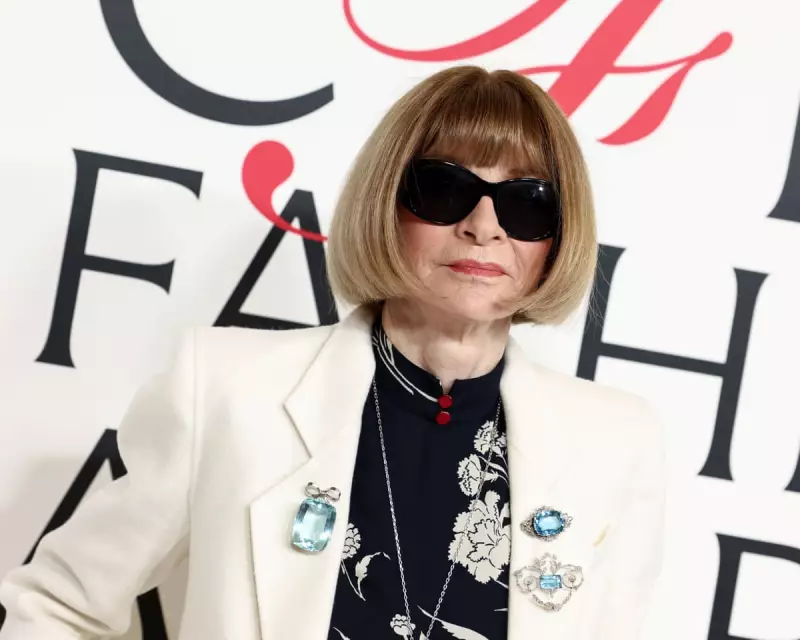
The December 2025 issue of American Vogue marks the end of an era, serving as the final cover overseen by Anna Wintour in her 37-year tenure as Editor-in-Chief. This milestone concludes a period during which she presided over more than 400 distinctive covers, each one a calculated statement in the world of high fashion.
The Final Statement: Chalamet and Controversy
Wintour's swan song features actor Timothée Chalamet, photographed by the renowned Annie Leibovitz. The image, which has sparked considerable online debate, depicts Chalamet in a Celine white polo neck and cream coat, standing on a fictional planet against a NASA-provided nebula. The cover has been met with a mixed reception, with some social media comments labelling it 'horrifying' and AI-like.
Jeremy Leslie, founder of magazine store magCulture, described the cover as 'weird,' suggesting it forces a second look. However, the imagery is deeply referential. The shoot pays homage to Antoine de Saint-Exupéry's The Little Prince, casting Chalamet as the princely figure on a moon-like sphere. Another part of the Leibovitz-led shoot features the actor in front of City, a land artwork by Michael Heizer in the Nevada desert, cementing the cover's position within Wintour's legacy of artistically ambitious productions.
A Legacy of Talking Points
Getting people talking has been a consistent thread throughout Wintour's reign. Her very first US Vogue cover in 1988 was itself radical, pairing high-fashion Christian Lacroix with accessible Guess jeans—a high-low mix that was controversial for its time.
Over the following decades, she released covers that came to define their cultural moments. These included a post-scandal Madonna in 1989, the era of the supermodels in 1992, a teenage Britney Spears in 2001, Michelle Obama in 2009, Kanye West and Kim Kardashian in 2014, and Beyoncé in a flower crown in 2018.
Yet, not all covers were universally praised. A 2008 cover featuring LeBron James and Gisele Bündchen was criticised for evoking racist tropes. A 2010 feature on Asma al-Assad, wife of the Syrian dictator, was widely seen as a misjudgment. The Beyoncé cover, while celebrated, was also historic for being the first in Vogue's history shot by a Black photographer, Tyler Mitchell. More recently, the cover featuring Lauren Sánchez Bezos was viewed by some as a tone-deaf celebration of extreme wealth.
Amy Odell, author of Anna: The Biography, notes that while Wintour generally 'played it very safe,' she strategically 'poked the bear' to keep the public and the industry on their toes.
The Future of Vogue Covers
With Wintour transitioning to her new roles as Vogue’s global editorial director and Condé Nast’s chief content officer, the responsibility for covers now falls to Chloe Malle, the head of editorial content. There is no longer an official Editor-in-chief position.
Leslie believes the Chalamet cover is a 'huge statement,' a challenging act to follow. Odell suggests Malle will face the complex task of defining modern aspiration and wealth for Vogue's audience, moving beyond the 'nepo babies' and oligarchic figures that sometimes draw public criticism today.
The new era may also signal a shift away from the bold, Wintour-style talking point covers. Leslie observes that Condé Nast now prefers 'worker bees' to the star editors of old, which could result in a more conservative approach.
Wintour's focus is now expected to shift towards Vogue World, the branded fashion event series that began in 2022. The next event, Vogue World: Milan, is scheduled for September 2026 and will focus on Italian craftsmanship.