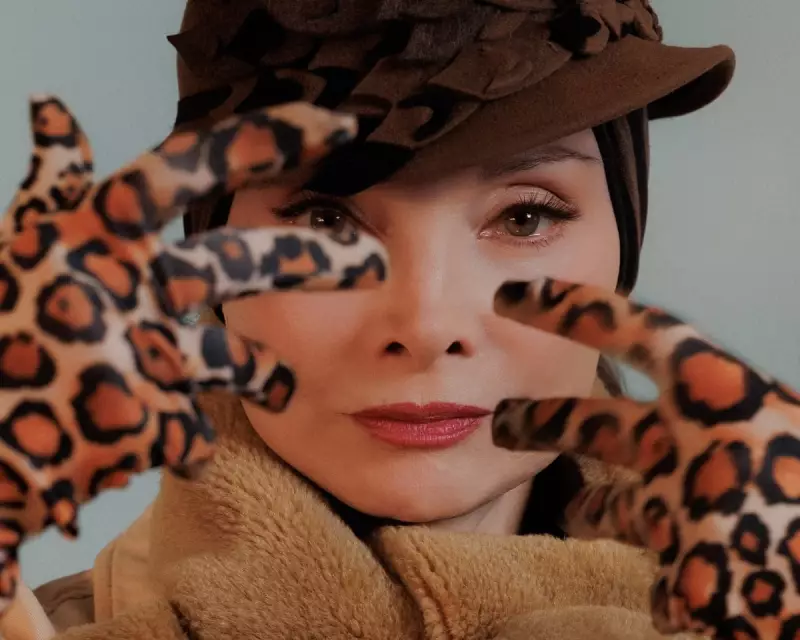
If you think of Toni Basil only as the cheerleader from the 1980s hit 'Mickey', you are missing the monumental story of one of Hollywood's most influential behind-the-scenes forces. At 82 years old, Basil's career is a living map of popular culture over the last six decades, connecting icons from Elvis Presley and Frank Sinatra to David Bowie and Margot Robbie.
The Early Years: Showbiz Blood and Go-Go Roots
Toni Basil was born into entertainment. With a father who was an orchestra leader in Las Vegas and a family of vaudeville performers on her mother's side, she was destined for the stage. From 1947, she spent her childhood weekends watching legends like Josephine Baker and Nat King Cole perform at the Sahara hotel. This unique upbringing gave her an insider's view of show business that would prove invaluable.
By her teens, she was a trained dancer immersed in the burgeoning youth scene, mastering dances like the pony and the mashed potato in go-go clubs. This authentic connection to what was 'cool' made her a sought-after choreographer while still in her early twenties. It led to her first major film credit: not just appearing, but teaching dance steps to Elvis Presley for his 1964 movie 'Viva Las Vegas'.

Counterculture and Creating a Dance Legacy
As the 1960s counterculture took hold, Basil moved seamlessly into its epicentre. She appeared in seminal films like 'Easy Rider' with Peter Fonda and Dennis Hopper, and 'Five Easy Pieces' with Jack Nicholson. She was also the star of artist Bruce Conner's film 'Breakaway', a track that later became a northern soul classic.
However, her most enduring contribution to dance culture came in the 1970s. Seeking to update her style, she sought out the hottest street dancers in Los Angeles. This led her to Don "Campbellock" Campbell and the birth of the locking dance style. Basil formed the pioneering street dance troupe The Lockers, blending Campbell's inventive moves with her own vaudevillian flair for performance.
"We changed the face of dance," she states. "We showed audiences that street dance was an art form." The group performed everywhere from 'Soul Train' to concerts with Frank Sinatra, laying the groundwork for future hip-hop and street dance styles.
Choreographing Icons and a Smash Hit
Basil's reputation brought her to the attention of David Bowie, who summoned her to London in 1973 to choreograph his ambitious 'Diamond Dogs' tour. She recalls his incredible work ethic and unique presence: "I always thought he should have been James Bond."
This pattern continued with other legends. She helped Tina Turner craft her elegant solo performance style in the late 1970s and worked with her for decades. She directed iconic music videos for Talking Heads, creating David Byrne's jerky, trance-like dance for 'Once in a Lifetime'.
Then came 'Mickey'. In 1979, she signed with a British label and recorded 'Word of Mouth'. A reworking of a song by the band Racey became her signature hit. Its success was ignited not in the US, but in the UK, after BBC producers saw her self-made video promos. "It took Britain, land of Boy George and the Beatles, to go, 'Look at this,'" she notes. The song topped charts globally, making Basil a pop star at 38.
A Lasting Influence and Life in Motion
Basil never stopped working. Her choreography credits span from 'American Graffiti' and Bette Midler's stage shows to 'Legally Blonde' and, most recently, Quentin Tarantino's 'Once Upon a Time in Hollywood', where she taught Margot Robbie and Leonardo DiCaprio 1960s dances. Tarantino dubbed her "the goddess of go-go."
Today, she lives in Los Angeles, teaching, judging international dance competitions, and maintaining her legendary status. 'Mickey' continues to resonate, sampled and referenced by artists from Run-DMC and Gwen Stefani to Taylor Swift and K-pop group BLACKPINK.
For Basil, the secret to a vibrant life at 82 is simple and has always been her guiding principle: "Dance is my drug of choice. You get high from it, and it gives you community." Her story is not of a one-hit wonder, but of a consummate artist who continuously evolved, shaped trends, and connected the dots between generations of cultural icons.