The Royal Ballet has launched a captivating new triple bill titled Perspectives at the Royal Opera House, featuring a world premiere from acclaimed choreographer Cathy Marston alongside works by American masters Justin Peck and George Balanchine.
Marston's Emotional Journey: Against The Tide
When Cathy Marston received the commission to create a new one-act work for The Royal Ballet, she initially planned to craft something abstract. However, the powerful music of Benjamin Britten's Violin Concerto compelled her towards a more narrative approach.
Against The Tide draws inspiration from the concerto's turbulent creation period between 1938 and 1939, set against the backdrop of impending world war. The piece reflects Britten's personal struggles as a pacifist moving to America with his partner Peter Pears while grieving his mother's death.

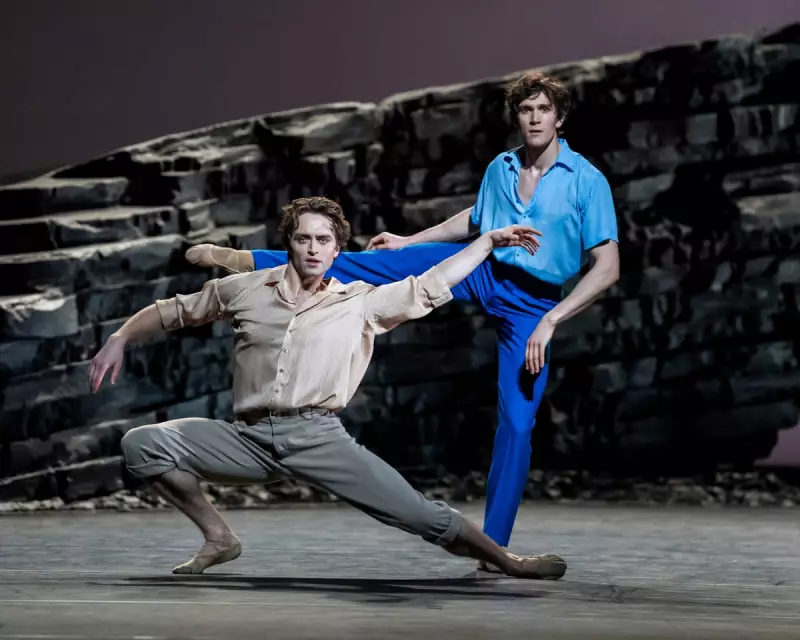
William Bracewell delivers a remarkable performance as the unnamed protagonist, his dancing instinctive and emotionally charged. His physicality beautifully conveys internal conflict through twisting movements and dramatic unravelling. Matthew Ball appears as a seductive figure in satin, while military-inspired characters represent duty and conformity.
The partnership between Bracewell and Ball proves endlessly inventive, their bodies following complex trajectories that lead to unexpected moments of connection and tender intimacy. Melissa Hamilton appears as the spiritual representation of Bracewell's mother, adding another layer of emotional depth.
American Masters: Pure Dance Excellence
The programme's second piece showcases Justin Peck's Everywhere We Go, marking the first time The Royal Ballet has performed work by this pre-eminent 21st century American choreographer. The company embraces Peck's distinctive style with energy and precision.
Set to a vibrant score by Sufjan Stevens, the dancers display preppy, perky athleticism as they navigate intricate patterns at remarkable speed. Peck's choreography frequently places movement on the "and" count, creating a sense of eager anticipation.
Standout moments include breathtaking ensemble sections where dancers leap en masse with arms sweeping skyward before collapsing to earth in what resembles a collective sigh of joy. Marianela Nuñez brings her characteristic magnanimity to a slower section, while Daichi Ikarashi dazzles with infectious delight through rapid sequences.
Balanchine's Enduring Beauty: Serenade
The programme concludes with George Balanchine's iconic Serenade from 1935, featuring one of ballet's most arresting openings. The curtain rises on Tchaikovsky's charged chords to reveal a stage filled with women in long tulle skirts, their hands raised toward the heavens.
Beginning like a ballet class, the piece evolves into both academic exercise and poetic escape. Leticia Dias captures the perfect balance of diaphanous grace and vivacious energy that defines Balanchine's famous "ballet is woman" philosophy.
While contemporary audiences might reconsider some aspects of Balanchine's representation of women, particularly in scenes where three sylphs release their hair to surround lone male dancer Ryoichi Hirano, the work's enduring beauty remains undeniable.
The Royal Ballet's Perspectives programme continues at the Royal Opera House until 2 December, offering audiences a rich exploration of narrative depth, pure dance joy, and timeless classical beauty.