A new documentary series is peeling back the curtain on the dramatic evolution of Irish dancing, revealing a world where towering wigs and spray tans have become as integral to the performance as the lightning-fast footwork itself.
The Riverdance Revolution
Battle of the Irish Dancers, a three-part docuseries on Sky, follows several young competitors as they prepare for the prestigious World Irish Dancing Championships. The series frequently contrasts the contemporary scene with the era before 1994, the year Michael Flatley's Riverdance exploded onto the global stage.
Veteran dance impresario Carole Scanlon nostalgically reflects on a time when Irish dancing was "completely different," showing photos of adolescents in community centres. The documentary supports this with grainy footage of dancers in capes and waistcoats performing to cassette tapes, judged by panels in formal attire.

The impact of Riverdance, however, is undeniable. Tutor and former Riverdancer Kelly Hendry states it "blew everything into a whole different ballgame," crediting Flatley's revolutionary performance with shattering a century of tradition.
The Reign of the Wigs
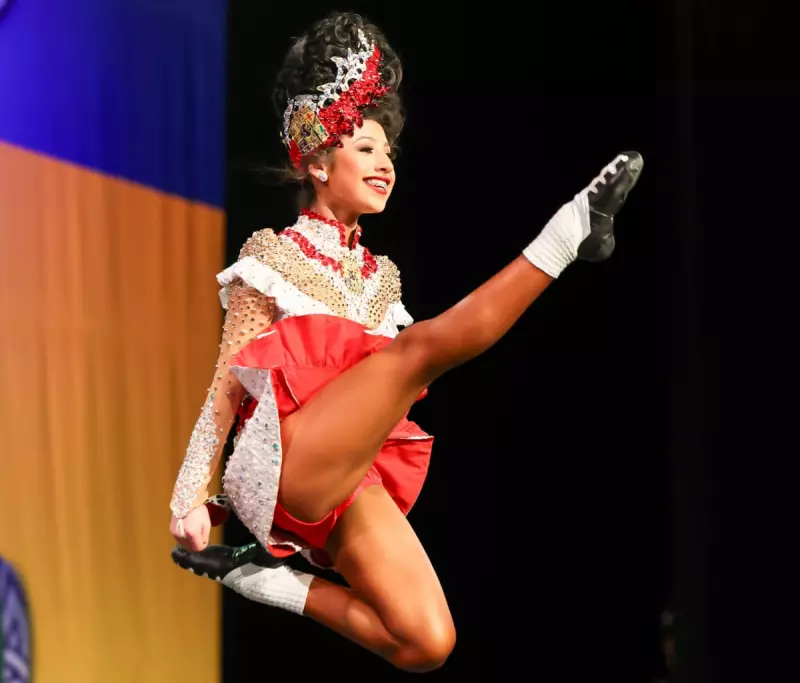
One of the most visible modern transformations is the elaborate hairpieces. "It's the wigs," says Kelly Hendry. "They've taken over." Gone are the simple home perms of the past. In their place are vertiginous towers of synthetic curls, heavily adorned with sparkly accessories and diamante details.
These wigs are presented as a practical solution for dancers like 14-year-old best friends Maria and Saoirse. The immobile structures allow them to whirl, kick, and clomp without their own hair coming loose and sabotaging their complex hornpipes. The series shows the spray-tanned proteges appearing entirely oblivious to the elaborate constructions perched on their heads.
This new aesthetic creates a curious paradox: today's Irish dancers, with their sequins and fixed grins, often look more reminiscent of the 1980s than the dancers who actually performed in that decade.
A Curious Omission and the Dancing Itself
Despite Riverdance's profound influence, Michael Flatley himself is notably absent from the docuseries. Beyond a few vintage clips from Lord of the Dance, the man considered the patron saint of modern Irish dancing receives scarcely a mention. The series also forgoes a deeper exploration of the dance form's history or its current global statistics.
Instead, it focuses on the journeys of its subjects. We see the impressive footwork of Maria and Saoirse, which has earned Newcastle's Kelly Hendry School of Irish Dancing a shelf of trophies. In Birmingham, 17-year-old Lauren enjoys a rare moment of approval from her stern coach, Carole. In Dublin, we meet 26-year-old Owen, a multi-award-winner preparing for his third and final world championship.
The documentary, while pleasant, has been criticised for showing only fleeting glimpses of the full dance routines, often employing unnecessary speed-ups, slow-motion, or cuts to coaches tutting over tea. This is described as "frustrating" given the sheer magnificence of the dancing on display.
The footwork itself is portrayed as a form of "lower-body hysteria" – majestic, preposterous, and utterly gasp-inducing. It is, as Maria poetically muses while applying her makeup, an feeling that is truly "undescribable."