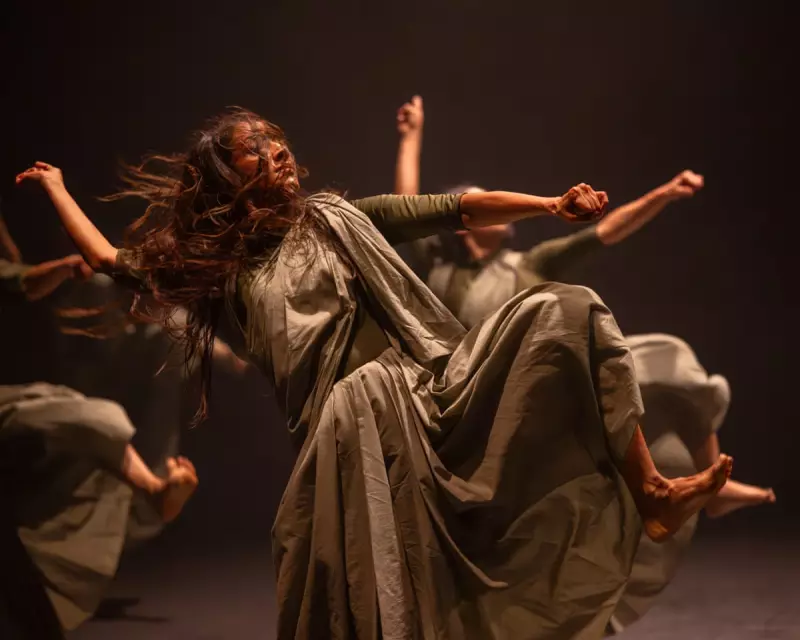
The dance world is preparing to say farewell to one of its most visionary talents as Akram Khan Company presents its final touring production, Thikra: Night of Remembering. This milestone marks the end of an era for the British dance scene, prompting those who have worked most closely with Khan to reflect on his extraordinary creative process and lasting impact.
The Musical Collaborator: Nitin Sawhney
Composer Nitin Sawhney first encountered Khan when the dancer was just 16 years old at London's Bhavan Centre. "He moved like lightning," Sawhney recalls. "His speed was incredible but his precision as well was really inspiring to watch." Their professional relationship began in the late 1990s with the project Fix and continued through multiple landmark productions including Kaash (2002), Zero Degrees (2005) and Vertical Road (2010).
Sawhney shares a particularly memorable story from their collaboration on Vertical Road. "I'd just had pneumonia and the only time he was available to meet in my studio was 1am," he explains. "We were sitting there pissed off about everything and grunting at each other." Khan demanded constant banging for the first five to ten minutes of the score, which initially horrified the composer. Yet through their creative dialogue, they transformed this challenging concept into what Sawhney describes as "the most exciting thing I had done for a long time."

The Literary Partner: Hanif Kureishi
Author Hanif Kureishi worked with Khan on A God of Small Tales (2003) and Ma (2004), noting how the choreographer's intelligence transformed seemingly unpromising material into moving art. Their collaboration involved working with women in their seventies, with Kureishi recording their life stories while Khan created movement around their narratives.
"Akram's not like other directors," Kureishi observes. "I've worked with a lot of different directors over the years, and some are very strict, they want to be worshipped and make people feel intimidated. Akram's not like that." He describes Khan as "very relaxed, he doesn't frighten people but he's totally in command." Kureishi ultimately concludes that "the thing about Akram is that he's a genius," though he wryly notes this means "he doesn't really listen to other people very much."
The Olympic Moment: Danny Boyle
Film director Danny Boyle, who oversaw the London 2012 Olympic Games opening ceremony where Khan performed, compares him to Brian Eno: "very wise, and very quiet and modest, and yet they're incredibly certain of what they want to do and where they want to go." Boyle had been introduced to Khan's work through Desh and was "astonished that he'd caught what I thought was impossible to capture."
For the Olympics, Khan was given the single-word brief "mortality" and created what Boyle describes as "that absolutely beautiful piece." The director recalls being particularly moved watching Khan's performance on the night itself, noting "it was extraordinary to witness."
Artistic Insights from Other Collaborators
Sculptor Antony Gormley, who created human-sized sculptures for Zero Degrees in 2005, remembers Khan's dedication to his craft. "Akram would come to our development days having spent two hours or more doing intense, rhythmic kathak footwork on the lino kitchen floor at his mother's house," Gormley reveals. He particularly cherishes the memory of travelling to Brussels with "a lifelike rubber copy of Akram" that had to be placed in the luggage rack, causing suspicion among fellow passengers.
Composer Jocelyn Pook, who worked on Desh (2011), Itmoi (2013), Dust (2014) and Jungle Book Reimagined (2022), highlights Khan's collaborative spirit. The creative team for Desh travelled to Bangladesh together, where Pook made field recordings that became central to the production. "It's a very rewarding way of working: you've got that freedom and there's an implicit trust," she notes, adding that "Akram's very open, positive, very considerate. And playful as well."

Ballerina Alina Cojocaru, who danced the title role in Khan's reboot of Giselle for English National Ballet in 2016, appreciated his unique approach to collaboration. "Sometimes you have a choreographer who might come in and say: 'I want this and this and this', and then you just try to give what they want," she explains. "But when it's an open dialogue, I could go into myself and find answers that were true to myself." She describes working with Khan as "a full-immersion experience emotionally and physically."
As Thikra: Night of Remembering and Chotto Desh continue their European tour, these reflections from Khan's closest collaborators paint a portrait of an artist who has consistently pushed boundaries while maintaining deep connections to his kathak roots. Their stories reveal a creator who combines profound conceptual thinking with practical innovation, leaving an indelible mark on British contemporary dance that will resonate long after his final tour concludes.