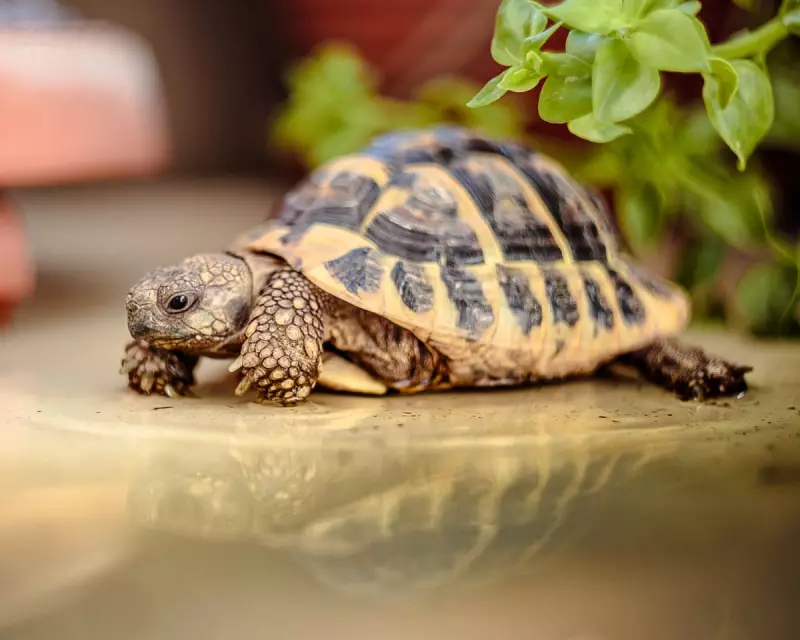
In the quiet aftermath of the festive season, many parents face the familiar ache of an empty nest as their children return to their independent lives. For one Guardian columnist, this annual readjustment has been softened by an unlikely companion: a baby tortoise who represents the ultimate stay-at-home child.
The Longing for Constant Companionship
Emma Beddington openly admits to feeling "unmoored" each time her sons depart after Christmas holidays. The transition back to solitary routines, unanswered WhatsApp messages, and weather-checking to imagine their days leaves her with thwarted caretaking impulses. "I'm anxious and unsettled," she confesses, "forever offering unwanted care parcels and unsolicited advice."
This maternal yearning coincides with emerging cultural discussions about the "stay-at-home hub-son" phenomenon. First identified after 28-year-old Brendan Liaw described himself as a professional stay-at-home son on the US quiz show Jeopardy!, this trend has sparked both think pieces and eye-rolling in communities where intergenerational living has long been commonplace.
Demographic Realities Behind the Trend
The concept isn't merely anecdotal. Official statistics reveal significant demographic shifts: according to ONS data released in July 2024, 34% of men aged 20-34 now live with their parents, compared to just 22.1% of women in the same age bracket. Publications like The Washington Post have profiled young men embracing this lifestyle, including Abdullah Abbasi who creates tongue-in-cheek stay-at-home-sons merchandise and Luke Parkhurst who proudly declares his SAHS status.
Yet for Beddington, whose sons "would rather gnaw off their own arms than stay at home," this independence represents parenting success while leaving an emotional void. "It doesn't feel like it sometimes," she admits of this supposed achievement.
An Unexpected Solution in a Shell
Enter the surprise family member: a baby spur-thighed tortoise born unexpectedly in 2024. This tiny creature, grown from "50 pence piece at hatching" to "the size of a generous National Trust scone," presented both a challenge and salvation during the winter months.
The tortoise's first hibernation proved emotionally taxing for its human caretaker. "If you think watching your kids go out into the world is agonising," Beddington writes, "try putting one in a straw-filled plastic box in the fridge for six weeks and wondering if they'll survive."
The Hibernation Heartache
The pre-hibernation period required keeping the tortoise awake in cold conditions without food—a process Beddington found "harrowing" as she anthropomorphised the creature's apparent "wounded, hungry, incomprehension." Even the actual hibernation felt "unnatural, cruel even" compared to leaving human children at university with basic supplies.
Regular checks provided reassurance that "our precious was still alive over the festive season," but the unboxing process brought new anxieties. The tortoise showed only "lukewarm" interest in waking life despite warm baths, grated cuttlefish supplements, and banana offerings.
Finding Meaning in Unlikely Motherhood
Beddington recognises the symbolic resonance of her tortoise's reluctance to emerge: "Who among us wouldn't prefer to burrow back into darkness for a few months and shut out the January 2026 world?" Yet this very resistance provides unexpected comfort.
"Keeping a grumpy scone alive despite its best efforts is the perfect distraction from my empty-again nest," she observes. The tortoise represents more than just a pet; it embodies the ultimate maternal fantasy: "a child who can never, ever, leave me."
In this unusual interspecies relationship, Beddington finds both a practical outlet for her caretaking impulses and a poignant metaphor for contemporary parenting dilemmas. The stay-at-home tortoise becomes both literal companion and symbolic answer to the complex emotions surrounding children's independence in modern family life.