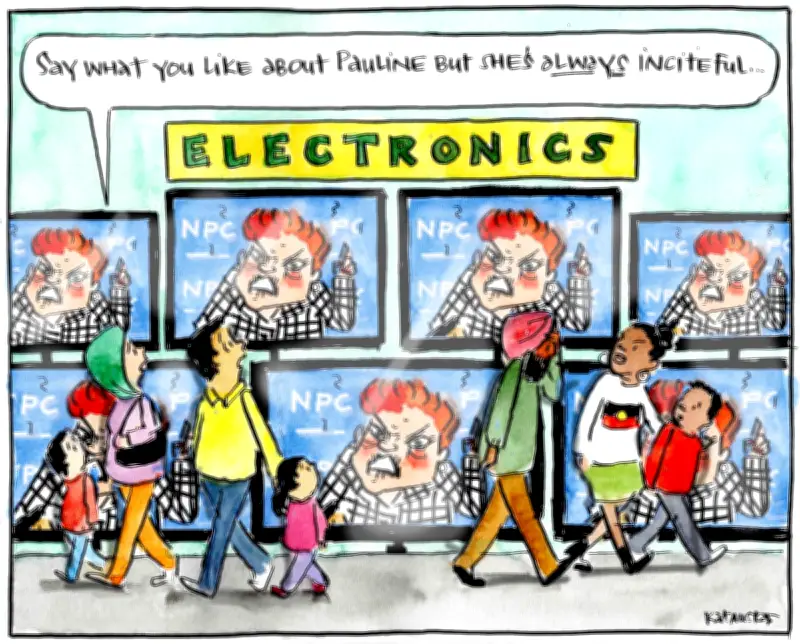
In a recent address at the National Press Club, Pauline Hanson launched a vehement critique of multicultural Australia, arguing that the nation's diversity policies have led to social division and a loss of national identity. However, her remarks have been met with fierce opposition from political leaders, community groups, and the public, who have defended multiculturalism as a cornerstone of Australian society.
Hanson's Controversial Stance
Hanson, known for her populist and often divisive rhetoric, claimed that multiculturalism has failed and called for a return to assimilationist policies. She cited concerns over immigration, integration, and what she described as the erosion of Australian values. Her speech was part of a broader campaign to revive her political fortunes ahead of upcoming elections.
Backlash and Rebuttal
The response was swift and widespread. Prime Minister Anthony Albanese reaffirmed the government's commitment to multiculturalism, stating that diversity strengthens the nation. Opposition leader Peter Dutton also distanced himself from Hanson's views, emphasizing the importance of unity. Community leaders and academics pointed to the economic and social benefits of multiculturalism, including increased innovation and cultural richness.
- Social media erupted with condemnation, trending hashtags like #StandForDiversity and #AustraliaIsMulticultural.
- Several prominent Australians, including former politicians and celebrities, publicly rebuked Hanson's statements.
- Multicultural festivals and events were organized in response, celebrating the nation's diversity.
Historical Context
This is not the first time Hanson has stirred controversy over multiculturalism. In the late 1990s, her One Nation party gained traction with similar anti-immigration and anti-multiculturalism platforms. However, the current backlash suggests a significant shift in public sentiment, with many Australians now viewing diversity as integral to their national identity.
Expert Opinions
Sociologist Dr. Maria Chen noted, “Hanson’s views are increasingly out of step with mainstream Australia. The data shows that multiculturalism has been a net positive for the country, economically and socially.” Political analyst John Smith added, “This could be a turning point, where divisive rhetoric is no longer tolerated in public discourse.”
Conclusion
While Hanson's speech aimed to reignite debate on multiculturalism, it has instead galvanized support for diversity. The overwhelming negative response indicates that Australia's commitment to multiculturalism remains strong, and that Hanson's brand of politics may be losing its appeal.