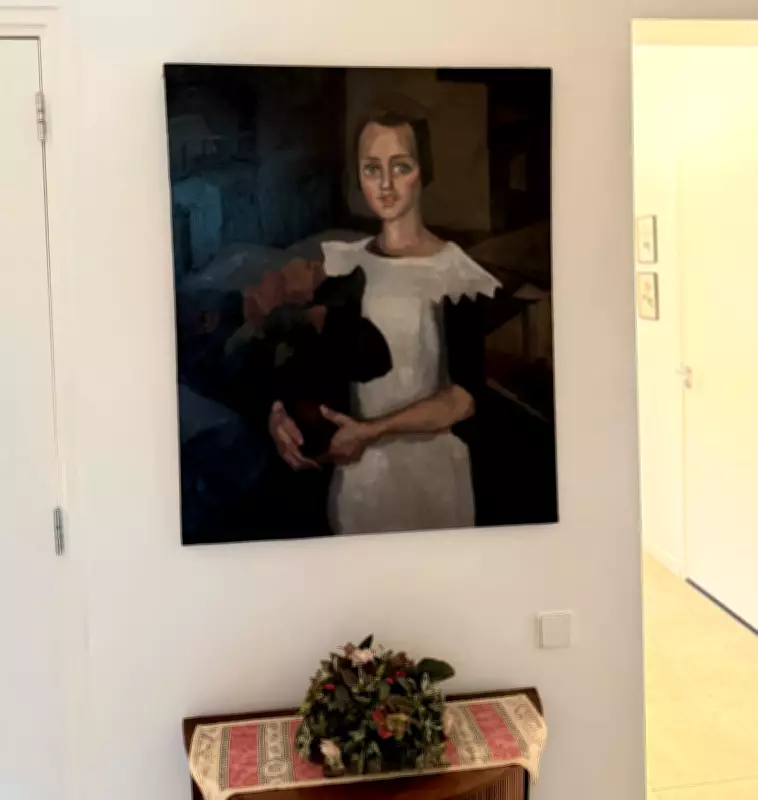
A painting looted by the Nazis from the renowned Goudstikker collection has been discovered in the home of a descendant of a notorious Dutch SS collaborator, reigniting debates about restitution and the Netherlands' wartime past.
Discovery of the Painting
The artwork, Portrait of a Young Girl by Dutch artist Toon Kelder, was found hanging in the hallway of a relative's home near Utrecht. The current owner, who inherited the painting, was unaware of its provenance until contacted by art detective Arthur Brand. Brand, known for recovering stolen art, was approached by a man who had recently learned of his family's collaborationist history and the painting's origins.
Family's Wartime Past
The man discovered he was descended from Hendrik Seyffardt, a Dutch general who led a volunteer Waffen-SS unit and was one of the Netherlands' most senior Nazi collaborators. Expressing deep shame and fury over the years of silence, the family handed over the painting to Brand after the story broke in Dutch media.
Growing Openness in the Netherlands
The incident reflects a broader shift in the Netherlands toward confronting its history of Nazi occupation, during which three-quarters of the Jewish population were murdered and thousands collaborated. Since 2020, a policy of "humanity and goodwill" has guided restitution requests from national collections, and auction houses increasingly refuse to sell disputed art.
Voices from the Jewish Community
Emile Schrijver, director of the Jewish Cultural Quarter in Amsterdam, emphasized that looted objects hold deep emotional value, regardless of monetary worth. "A descendant who gets a silver spoon used in Friday night soup might value it more than a painting they dislike," he said. "It's part of the same system: the eradication of a culture."
Legal and Moral Shifts
Gert-Jan van den Bergh, a legal expert in art restitution, noted that younger generations increasingly view these cases as ethical questions tied to memory and identity, rather than mere property disputes. Writer Yael van der Woude, whose novel The Safekeep explores complicity and memory, echoed this sentiment, asking how societies choose to remember or forget.
The Silence of the Past
Experts attribute the slow pace of restitution to het zwijgen ("the silence") that surrounded wartime collaboration. Anne Marthe van der Bles of the ARQ National Psychotrauma Centre explained that children of collaborators grew up knowing not to mention the war, as it would upset their parents. This loaded silence has kept stolen property hidden for decades.
Younger Dutch people, however, appear more determined to right historical wrongs. Schrijver urged action before fading family memories and fragmented archives cause thousands of stolen pieces to be lost forever. "We have to do justice to those seeking looted objects," he said. "It's almost never the monetary value. It's the connection."