Are middle-aged women really invisible? Guardian columnist Emma Beddington sees them everywhere, from Gillian Anderson at the Baftas to Rose Byrne and Melinda Gates. In a recent piece, she challenges the persistent trope that women over 50 fade from public view, citing a mix of personal experience and cultural commentary.
The invisibility debate reignited
The conversation was sparked by cultural commentator Mireille Silcoff, who at 53 wrote in the New York Times that she is not vanishing. 'I am not vanishing,' Silcoff stated. 'I even feel, quite regularly, that I am in some kind of prime.' Beddington reflects on her own week: a night out with a friend where staff were attentive, and a gym incident where a man throwing sandbags nearly hit her because he didn't see her. The evidence, she says, is mixed.
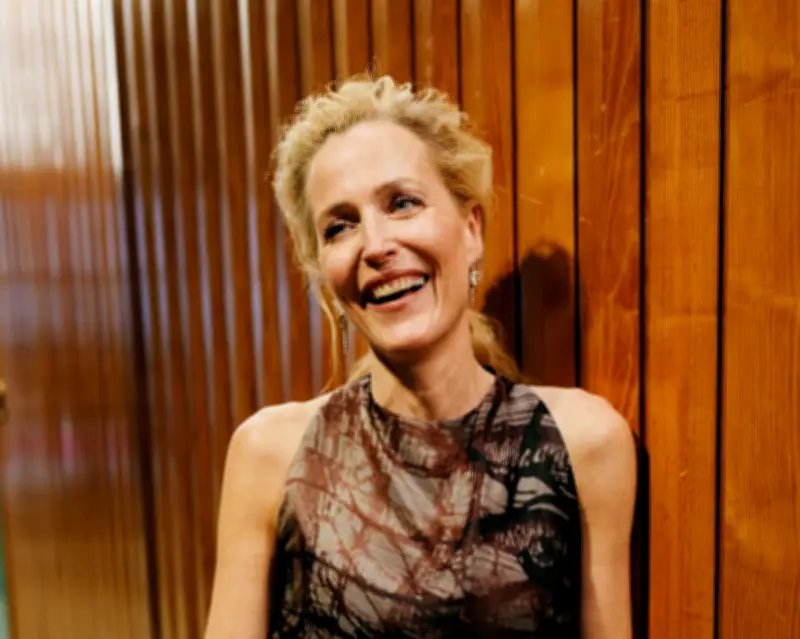
The trope of the invisible middle-aged woman is perennial, Beddington notes, referencing Jane Austen's Anne Elliot in Persuasion, whose 'bloom' vanished at 27. But recent reinforcements include Rachel Weisz (56) in Vladimir, an exchange between Rose Byrne (46) and Carla Gallo (51) on Platonic ('We're invisible. We're middle-aged women'), and a L'Oréal campaign claiming 70% of women believe they become invisible as they age. The campaign features Gillian Anderson (57), who says: 'Women over 50 are disappearing. You're noticed, you're needed, you're whistled at, you're even hit on, and then: poof! A few years later, you don't exist.'
Prominent midlife women push back
Anderson's response is defiant: she has 'never felt better' and tells the ageist, sexist patriarchy to 'fuck off.' Beddington observes that such fightback is required because 'it's everywhere in our society.' Yet she questions whether invisibility is truly universal. 'Anderson is everywhere, glowing with health and purpose,' Beddington writes, 'affirming women's weird and wonderful sexuality, while Byrne co-founded a five-woman production company dedicated to promoting female storytelling.' Powerful women in their prime are prominent in public life, some visibly talking about invisibility.
Beddington's friend agreed: midlife women 'have the money and the power and all look like they're 30 now.' When Beddington protested she looks like 'Ramses II,' the friend replied, 'All the rich ones.' Wealth, Beddington concedes, is part of the story. Visibility is easier with cultural and financial capital. But prominent midlifers offer hope of 'visibility trickle-down' where it's most needed, such as fighting sexism and ageism in the workplace. Actors are calling it out: according to research by Age Without Limits, more talking animals and men named Chris starred in the UK's biggest films in the past three years than women over 60.
Health and business drivers
Health is another area where wealthy, powerful women are galvanised into action. A recent New Yorker feature highlighted a 'concierge' gynaecologist serving women who are not used to being ignored. Systematic under-researching and underfunding of women's health issues, many emerging in midlife, has prompted Melinda Gates to pour $215 million into menopause research, and a Silicon Valley one-percenter to fund an ovarian cancer study.
Beddington also notes a realisation that courting middle-aged women makes good business sense. 'We're relatively solvent consumers, an under-exploited market,' she writes. She suspects some companies use invisibility as 'rage bait' to drive engagement or sell anti-ageing products. L'Oréal's slogan 'You're worth it' plays into this, even if the patriarchy disagrees.
Ultimately, Beddington embraces a different kind of invisibility: moving through the world unneeded, unnoticed, and unmolested. 'I would dearly love it if no one ever saw me try to eat sushi on a moving train again,' she quips. 'I find that kind of invisibility aspirational.'