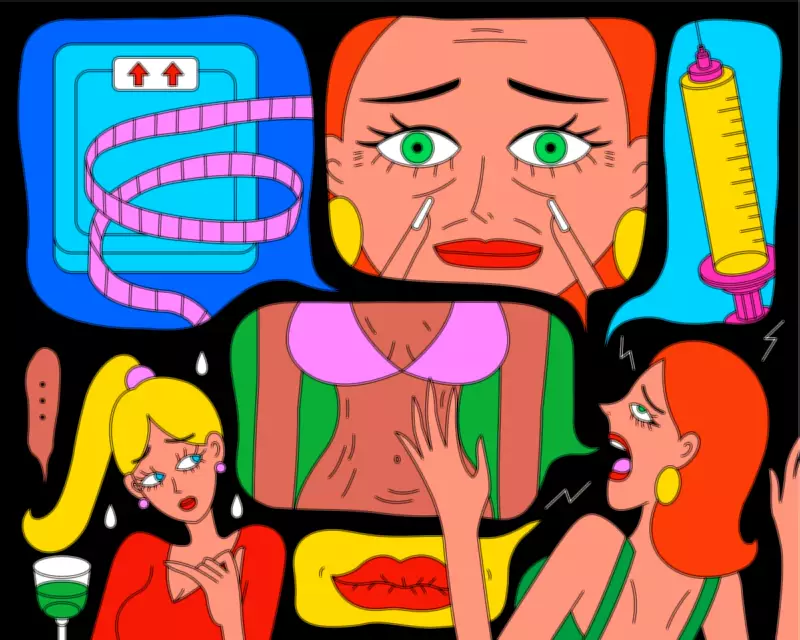
How do I respond to my friends when they criticize their own weight and looks? These negative comments about bodies and faces permeate society and could lead to some tough talks with friends.
Understanding the Dilemma
One friend frequently complains about her weight. It would feel preachy to tell her that she is supporting the beauty industrial complex and reinforcing a status quo that keeps women fixated on their physical appearance. But saying, “You’re beautiful!” feels shallow. Another friend told me she needs to get more Botox soon because she hates the lines in her forehead. I told her honestly that I don’t see any lines, but she dismissed me, saying it was the wrong lighting and I was being too generous.
Navigating the Conversation
The only thing contemporary beauty culture hates more than an ugly woman is a judgy woman, particularly if she has an opinion about other women’s beauty behaviors. Any criticism of cosmetics must conclude with the disclaimer: “No judgment, though!” I personally think we would all benefit from harsher judgment of the oppressive standards sustaining the $427 billion diet industry and $700 billion beauty industry, but I also think you are right. When a friend tells you she is worried about her weight, “you’re an agent of the patriarchy” is not a helpful response.
Avoiding Shallow Compliments
“You’re beautiful!” is not great either, as it reinforces the idea that individual beauty is the solution to the insecurity that beauty culture breeds in us all. It implies that your looks determine your worth, but you look good, so it is not your problem! Instead, listen without judgment and without overcompensating with compliments, as beauty reporter Zeynab Mohamed advises.
Making Conversations More Frequent
Exchanges like these are signs to strike up more beauty-related discourse. The key is to make conversations more frequent so they do not feel like an attack. Be more intentional about having general conversations around the beauty industry, the pressure we internalize, and the standards we work so hard to meet and maintain. Invite a friend over to watch The Substance or American Psycho and break down the beauty themes over a bottle of wine. Drop a critical book or podcast episode in the group chat, such as Unshrinking by Kate Manne, or share a Tressie McMillan Cottom video about the “everyday eugenics” of GLP-1s to your Instagram story and see who responds.
Connecting and Commiserating
Another option is to connect and commiserate. Beauty journalist Val Monroe says she does not try to dissuade friends from their perspective because she will never be more persuasive than the critical voice that lives in their head. Instead, she tells them how she responds to her own occasional dissatisfaction with her appearance, which for the most part involves turning outward. Share your own experiences with dissatisfaction, such as fixating on crow’s feet during a Zoom call and meditating afterward. It can be simple and relatable.
Adopting a ‘Hate the Game, Not the Player’ Mentality
Virginia Sole-Smith, writer of the body liberation newsletter Burnt Toast, recommends responses like: “Wouldn’t it be cool if we did not have to devote so much time and money to all of this?” It is also fine to not engage. If the friend talks about these things in ways that you find triggering, it is valid to say: “Sorry, I love you but I am just not the friend for Botox talk.” Set that boundary.
Moving Toward Political Discussion
If your discussion partner seems open to debate, try to move the conversation toward the politics behind it. Moshtari Hilal, author of Ugliness, suggests asking: “Why does it matter so much to you? Would you love or respect me less if my appearance changed? Do you deserve to be treated better for having youthful skin or a symmetrical face?” These questions can lead to deeper discussions about the roots of beauty standards in white supremacy, colonialism, capitalism, and sexism.
Breaking the Pattern of ‘Appearance Talk’
Breaking the pattern of appearance talk could benefit all involved. Negative commentary about bodies and faces permeates society, from a mother calling herself “bad” for ordering dessert to the self-critique-as-social-bonding scene in Mean Girls. Research shows that participating in or simply listening to appearance talk can increase body dissatisfaction and anxiety, leading to harmful diet and beauty behaviors. These ideas are contagious, but shifting negativity away from individual bodies and toward systems and structures can also be contagious. Second-wave feminists called this “consciousness-raising.” Discussing ageism inherent in anti-aging with friends may not change the world, but it can help externalize the shame of beauty culture, challenge false beliefs, and alleviate appearance anxiety.
Some friends might not be into analyzing Ozempic via text. Maybe your Botox-loving BFF wants a compliment on her freshly frozen forehead and nothing more. It is up to you how to handle that. Hilal finds it tough to be around people who fixate on wrinkles or body shape. If your fear of “ugliness” does not lead to care or compassion, but to reproducing those standards as its salesman, it may be necessary to take a step back from the relationship.
No judgment here.