Gaza's Ramadan: A Sanctuary of Soul in a Landscape of Ruin
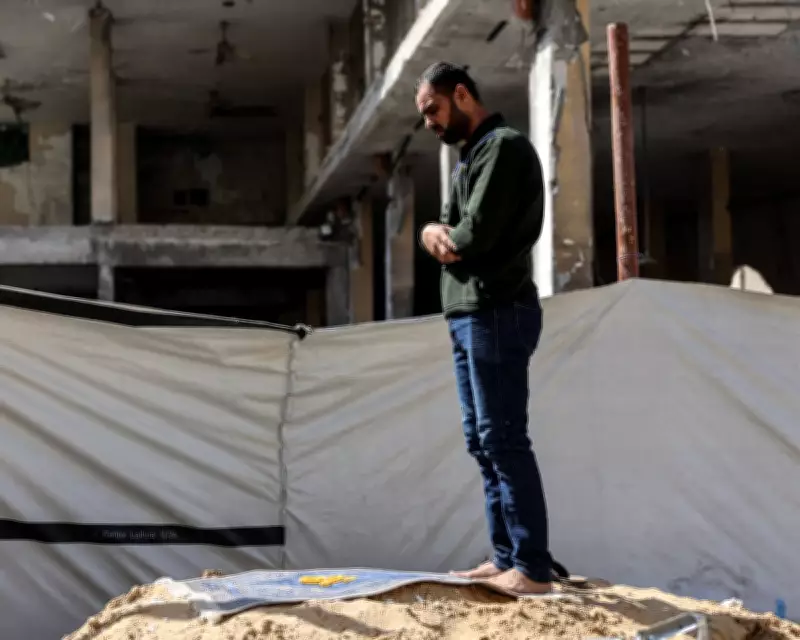
In Gaza City, a man prays on a mound of sand outside the Alkanz mosque, his silhouette captured on February 20, 2026, a poignant image of faith amidst devastation. This Ramadan, for Muslims across Gaza, the sacred month arrives not as a golden-lit celebration but as a fragile pause in an ongoing nightmare. Displaced from her home in Gaza City to a rented room in Al-Zawayda, Majdoleen Abu Assi searches for a peace that feels ghostly, her world defined by the heavy silence of a so-called ceasefire.
The Weight of Silence and the Hum of Surveillance
This year, Ramadan was welcomed not with traditional lanterns adorning balconies but with the roar of bulldozers clearing rubble and the constant buzz of zanana, Israeli surveillance drones, overhead. Even during prayer, that metallic humming drowns out the adhan, the call to prayer, a stark reminder that calm rests at the mercy of sudden strikes. The vibrant life of places like Al-Zawiya market, with its aromatic spices, and the al-Omari mosque, where collective prayers once felt unbreakable, now exists only in memory.
Ramadan once meant true warmth for Abu Assi, experienced in her family home in Gaza's Rimal neighborhood, where tables brought everyone together with laughter and peace. Breaking fast with family, friends, or neighbors taught that hearts had room for all. Today, rituals have become mountains to climb in cramped rooms, with ears tilted skyward, listening for missile whistles that might signal the end of truce.
Soaring Costs and the Struggle for Sustenance
Displacement has exacerbated practical hardships. The cost of food and drink for Ramadan has skyrocketed from about 1,000 shekels to easily 3,500 shekels, yet even that fails to meet basic needs fully. Walking home before sunset through rubble and sand that sting the eyes, Abu Assi navigates winding paths between collapsed buildings and deep craters, her thoughts simple: what can be prepared for iftar, the fast-breaking meal, from so little?
Ramadan evenings once meant anticipation, choosing where to break fast in spaces filled with light and laughter. Now, they involve calculating portions of lentils and counting cupboard contents, trying to create something that still feels like home. This shift underscores how the ordinary has become extraordinary, with every meal a testament to resilience.
Defiant Hope and Sacred Solidarity
Amid grief and exhaustion, a defiant and beautiful hope emerges. In Al-Zawayda, neighbors share small portions of lentils or dates with a dignity that rises above hunger. This solidarity is sacred resistance, a declaration that even if homes are destroyed, the human spirit remains unbroken. Lighting a single candle becomes not just a gesture against darkness but a victory over despair itself.
For children, Ramadan is particularly hard. They have learned the language of war, distinguishing between shells and explosions before knowing Ramadan songs. When they ask if bombing will return tomorrow, they are questioning their future—a question no one can answer. Yet, seeing them hang torn decorations on tent sides reveals something essential: in Gaza, hope is not a feeling but a deliberate decision.
Quiet Is Not Peace: The Right to the Ordinary
It is crucial to understand that quiet here is not peace. Real peace means the right to the ordinary: walking to a market that hasn't been turned to rubble, praying in an undefiled mosque, returning to a neighborhood that hasn't been flattened, and sleeping without fearing silence as a prelude to nightmare. This Ramadan in Gaza carries a different spirit, one where the adhan brings a flicker of tranquility not because the world is just, but because people remain, weaving hope from threads of ruin.
Fasting, praying, and enduring are not habits but acts of reclaiming souls from wreckage. As Abu Assi reflects, this is a time to pray for mercy, share what little there is, and light that single candle for hope, embodying a resilience that transcends hunger and fear.