Crafters Channel Political Fury Through Creative Protest Movements
In an unprecedented wave of creative resistance, hobbyists and artisans across the United States are transforming traditional crafts into powerful political statements against Immigration and Customs Enforcement (ICE) actions. What began as a small stitch-along in a Minnesota yarn shop has exploded into a nationwide movement, with makers using knitting, nail art, quilting, and even doll photography to express their opposition to immigration enforcement policies.
From Yarn Shop to National Movement
Gilah Mashaal, owner of Needle & Skein in the Minneapolis suburbs, initially maintained a "no politics" rule in her store for nine years. However, the prolonged presence of federal immigration paramilitaries in the Twin Cities prompted a dramatic shift. Together with employee Paul, she transformed a weekly knit-along into a "protest stitch-along," consciously moving beyond the pink "pussy hats" of 2016 to create something more specifically targeted.
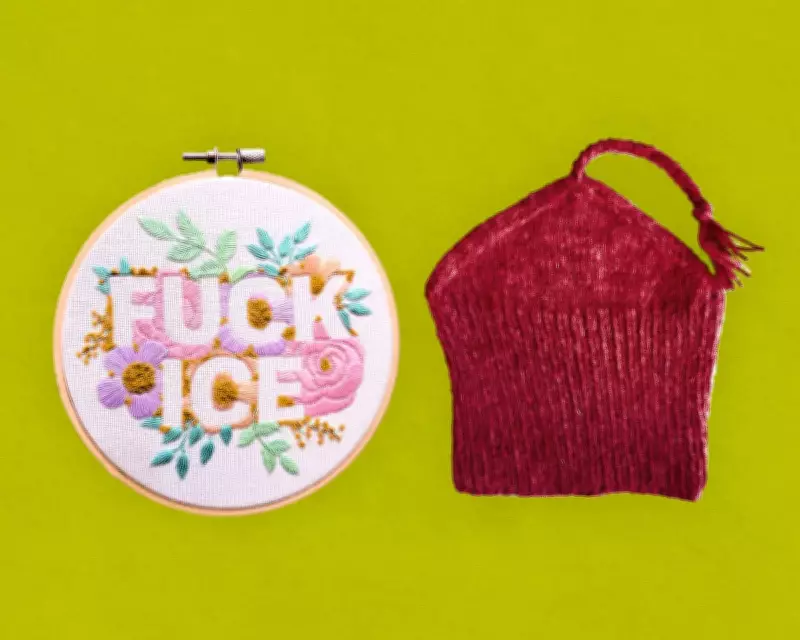
Their research led to the "Melt the ICE hat" – a red knit cap inspired by Norwegian resistance symbols from the Second World War. For Mashaal, a Jewish small business owner, the historical parallel resonated deeply. "I said: 'Well gee whiz, that's extremely fitting for this moment,'" she recalled, recognising the powerful symbolism of adopting resistance imagery from another era of oppression.
Financial Impact and Viral Spread
The movement has achieved remarkable financial success alongside its cultural impact. The knitting pattern, priced at $5 with proceeds directed to immigrant aid, has sold nearly 70,000 copies in under two weeks, generating over $250,000. Funds are being distributed to multiple organisations, including the St Louis Park Emergency Program, which assists those affected by ICE raids with rent and bill payments.
What began with an expected group of ten participants quickly swelled to over a hundred local crafters, then spread virally across social media platforms dedicated to fiber arts. Local yarn shops nationwide now host their own knit-alongs and offer specials on red yarn, while the pattern has been adapted for crochet and various yarn weights, becoming ubiquitous in knitting communities online.
Beyond Knitting: Multi-Platform Creative Resistance
The anti-ICE sentiment has permeated diverse creative communities far beyond traditional crafts. On nail art forums, intricate designs spell out explicit messages against ICE using specially created polishes like "Melt ICE" from indie brand Pahlish. One Florida-based fintech worker, who requested anonymity, explained her shift from subtle political expression: "I've done more subtle political messages in the past, but it just feels like we're past the point of subtle."
Even unexpected online spaces have joined the movement. American doll collectors' forums feature photographs of dolls holding protest signs, while explicit content platforms have seen anti-ICE captions trending. The viral photograph of a woman confronting a far-right influencer in Minneapolis has inspired nail artists to recreate the "resistance pink" colour and imagery.
Historical Context of Craft Resistance
This contemporary movement connects to a rich historical tradition of craft-based political resistance. From the tricoteuses knitting during French Revolution executions to Gandhi's homespun movement against British rule, fiber arts have long served as tools of defiance. In America, quilting preserved Black history and culture through generations of oppression, while Michelle Obama's portrait subtly honoured this tradition.
Modern crafters frequently describe "rage knitting" or "rage quilting" as therapeutic processes that channel anger and helplessness into creative action. Additional patterns have emerged to honour specific victims of immigration enforcement, including a blue bunny-eared hat inspired by a detained five-year-old asylum seeker and tributes to Portland's inflatable frog protesters.
Emotional Crafting as Political Statement
Many creators report that their anti-ICE work represents a departure from their usual aesthetic, driven by raw emotion rather than artistic convention. Fiber artist Sarah Gonsalves typically creates colourful, cheeky embroidery kits, but her recent piece featuring the final exchange between Renee Good and her killer uses stark black lettering on white canvas with red splatters. "I made it out of sadness and anger," she explained, noting how viewers reported being moved to tears.
Similarly, quilter Melissa Laranjeira from Virginia created a haunting piece with the message "WE KNOW WHAT WE SAW," responding to what she perceives as gaslighting about ICE violence. "Seeing blatant acts of violence and then being told they were something else entirely feels like an attempt to gaslight the American people," she stated, describing her quilt as "a statement about refusing to unsee what happened in plain sight."
Norwegian Resistance Parallels
The choice of red knit caps carries particularly potent historical symbolism, according to Mats Tangestuen, director of Norway's Resistance Museum. During Nazi occupation, Norwegians wore similar red hats (topplue or nisselue) as acts of defiance despite bans imposed in February 1942. "Such acts of resistance sent a signal to other Norwegians who might have been considering switching sides," Tangestuen explained, noting the significance for Minnesota's large Norwegian-descendant population.
Remarkably, these humble knitted items occupy central positions in Norway's resistance museum alongside weapons and communication equipment, chosen by actual resistance members as representing "the most important aspects of the Norwegian resistance." This historical validation underscores the power of seemingly simple craft objects as tools of political statement and community solidarity.
As the movement continues to grow, it demonstrates how traditional hobbies can transform into powerful platforms for political expression, fundraising, and community organising in response to contemporary immigration enforcement challenges.