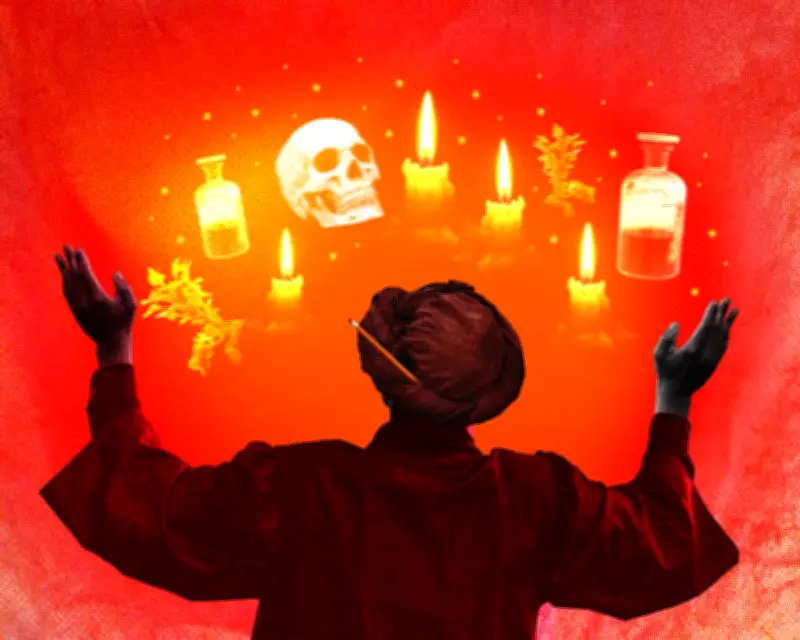
A rare open conversation reveals the enduring nature of the often maligned Caribbean obeah tradition. This practice, which merges pre-Abrahamic African religion, Christianity, and indigenous Caribbean features, has been stigmatized in the region.
The Origins and Nature of Obeah
Babus, Fakis, Sangomas – these are a few of the names of spiritual or mystical healers and practitioners found across the African continent. A version of the tradition they follow, obeah, made its way to the Caribbean among enslaved populations from West Africa. Today, obeah endures despite colonialism and the widespread adoption of Christianity.
Obeah is a syncretic practice that merges pre-Abrahamic African religion, Christianity, and indigenous Caribbean features. It is part medical and natural, utilizing materials from animal and plant life to heal, and part supernatural, using spells to ward off evil and summon good fortune. To West Africans, obeah broadly falls in the “juju” tradition of folk magic. For Haitians, it is similar to vodou; for African Americans, hoodoo. The common belief is that forces in the spiritual world can influence the material one through physical objects such as amulets, charms, and talismans, or ritualistic concoctions to heal or curse.
Obeah in Popular Culture
One such mixture is featured in the new Jamaican suspense thriller, Stew Peas. The film features the Jamaican obeah belief that a woman can “bind” a man by serving him a traditional kidney bean and meat stew, secretly mixed with her menstrual blood. The film poses a rare opportunity to have a conversation about obeah, which is taboo in many parts of the Caribbean. Practices that fall under the umbrella are illegal in Jamaica, Antigua and Barbuda, and a number of other nations, and in some communities, you will be hushed for even mentioning the word.
Living in Fear of Evil Spells
Obeah looms large in the Caribbean cultural imagination. Natricia Duncan, from Saint Vincent and the Grenadines, says that she was keenly aware of obeah and related spiritual beliefs and traditions growing up. During electricity outages in her community, candles came out and “jumbie” stories were told, ones “based on a belief in spirits, in a world we can’t see, in supernatural abilities.” Natricia describes frequent interventions from elders, who gave advice to children to make sure that someone did not “do them” – that is, cast an evil spell on them. They believed that spells could be cast through the use of personal physical objects, sometimes as simple as a borrowed pencil. “As a child, you really believe these things.”
But in Natricia’s experience, obeah is also closely connected with herbalism. The belief is that “there is power in nature, in the soil, in animals.” She recalls how a desperate mother she knew was advised by an “obeah man” – the term for a practitioner – to burn all her son’s clothes and make a medicine from the ashes to treat his severe epilepsy. “There were also practices of using water boiled with lizards to heal asthma,” she says. Most of this was harmless, but she also recalled negative experiences, where some were poisoned or broke out into rashes due to obeah potions.
Colonial Connections
While speaking with Natricia, the similarities between her childhood experiences and those in Africa are striking. The same deference to traditional healers during periods of illness, the same fear of being hexed by haters, and the same belief in the supernatural that could be leveraged for effect in the material world. The only difference is that, in the Caribbean, there is more tension between these practices and Christianity than in Sudan with Islam. In her experience as a Christian, Natricia says obeah “represents evil.”
That stigma can be traced back to enslavement and colonization. During enslavement, many of these practices represented hope, togetherness, a sense of identity, and a connection to the homeland from which they were stolen. But they were opaque to Christian colonizers in the Caribbean, who began to group these diverse practices under the umbrella of “obeah” and demonize them. From the 18th century onwards, anti-obeah legislation began to pass. Jamaica made the practice illegal in 1760 after a large uprising known as Tacky’s Rebellion, in which obeah men administered oaths to rebels and conducted rituals thought to grant protection from colonizers’ weapons. Other British colonies followed in criminalizing obeah. Natricia explains: “Anything that resulted in people gathering or having ideas about empowerment would have been considered a threat, and forbidden.”
Why Has Obeah Endured?
Obeah is not an ancient tradition entirely distinct from modern organized religion. Obeah touches on themes present in monotheistic religions. Natricia points out that Christianity often endorses a similar notion of good and evil spirits, or a fallen angel in the devil, hellbent on leading humans astray. The difference is that, in the forms of Christianity she has experienced, “God is all-powerful – as long as you are under his protection, you are safe.”
Monotheistic religions may lack, and therefore create a yearning for, that connection to the physical world, where religion is not only a matter of faith or prayer but a form of tactile interaction with material items and nature. Perhaps, says Natricia. But the use of these objects is not only psychological. Some of the healing properties of plants and herbs used by spiritual healers for centuries are now being confirmed by modern science. Papaya, for example, has well-evidenced wound healing properties, and tamarind is useful for reducing inflammation and aiding digestion.
Obeah’s endurance in the Caribbean may also be connected to developing medical systems, limited access to care, and a lack of awareness of mental health. Natricia says that growing up, she was aware of unwell children who were treated as cursed or possessed by evil spirits, prompting their “desperate” parents to seek out alternative medicine. But again, she cautions, the same notions persisted for a long time in Christianity, where mental illness was treated as possession by a demon that needed to be exorcised.
Still Complex, Still Surviving
The conversation reveals how common these experiences of traditional practices are, despite massive geographical distance and cultural variation. Obeah, and its origins and derivatives, cannot be clearly traced or attributed to one specific historical phenomenon. The fact that these varied forms of spiritual practice still endure across the diaspora, despite decades and even centuries of counter-programming from colonization and conversion, is striking. Their survival demonstrates the enduring appeal of the spiritual realm. The possibility that life is not only about submission to a single omnipotent creator but a two-way exchange, in which people attempt to control their fates through summoning higher forces.
Once that notion is seeded, for better or for worse, it is hard to relinquish. It is complex, Natricia says. There is the “westernized part of your brain,” but alongside it always sits that “core belief … the nights listening to those stories.”