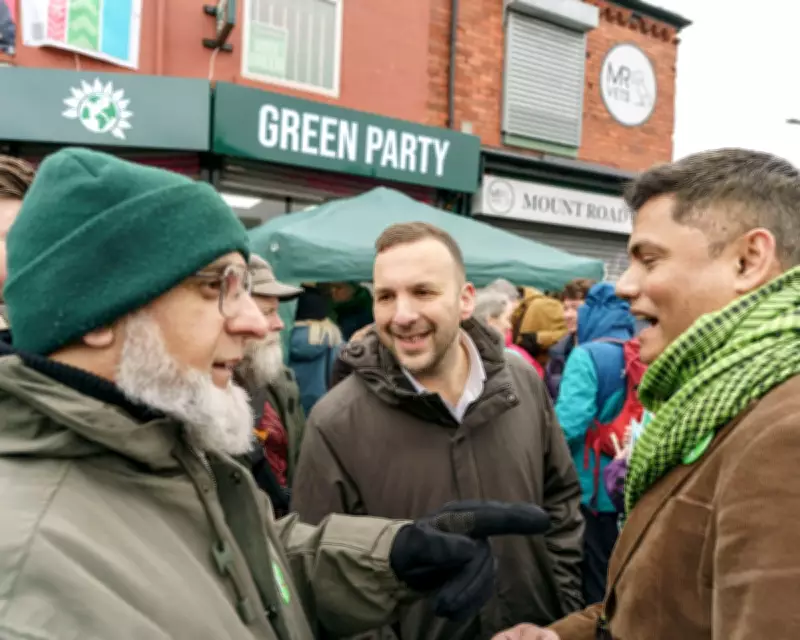
In the aftermath of the Gorton and Denton byelection, where the Green party's Hannah Spencer defeated Reform UK's Matthew Goodwin, accusations of 'family voting' emerged. Nigel Farage called the subsequent police investigation an 'establishment whitewash,' but Greater Manchester Police found no evidence of such fraud. The term 'family voting'—where family members collude in the voting booth—was quickly adopted by the political right, but it reflects a deeper narrative: that British Muslims cannot be trusted with democracy.
Taj Ali, a journalist and historian, has been speaking to Muslim voters across the country for a Guardian documentary. His conclusion: the rise of the Greens and independent candidates is not about Muslim sectarianism or clan politics, but about the disintegration of Labour's traditional base. Many Muslim voters, like others, feel taken for granted and are angry about local issues such as potholes, traffic, overcrowded housing, and the loss of community spaces.
The Reality of Biraderi Politics
Ali acknowledges that clan-based 'biraderi' politics has existed among some British Pakistani communities historically, but he argues it has nothing to do with current electoral shifts. In the 1970s, kinship networks helped migrants navigate a new country, but by the 1990s and 2000s, they sometimes led to nepotism in local candidate selection. However, today's voters are motivated by universal concerns: economic hardship, distrust of politicians, and a desire for change.
Labour's Declining Support Among Muslims
At the 2019 general election, 86% of British Muslims backed Labour. By 2024, that figure fell to 60%, according to a Survation poll. In the most deprived areas, Labour's vote share dropped by 6.8 percentage points, with independents winning in Dewsbury, Batley, Blackburn, and Birmingham Perry Barr. Instead of engaging with these voters, politicians and pundits have portrayed them as a monolithic bloc driven solely by foreign policy, ignoring their local concerns.
Local Issues Drive Voter Anger
In Birmingham, Ali found voters focused on parking, potholes, traffic, houses in multiple occupation, and litter. They blamed Labour, which has run Birmingham city council for 14 years. Young Muslims like 18-year-old independent candidate Mansuur Ahmed are mobilizing via TikTok, promising to prioritize local issues. Ahmed's campaign highlights the closure of 42 youth centres between 2010 and 2023.
The real story is that British Muslims are exercising their democratic rights, not threatening democracy. As Ali concludes, if politicians listen instead of speak about them, they might understand this shift.