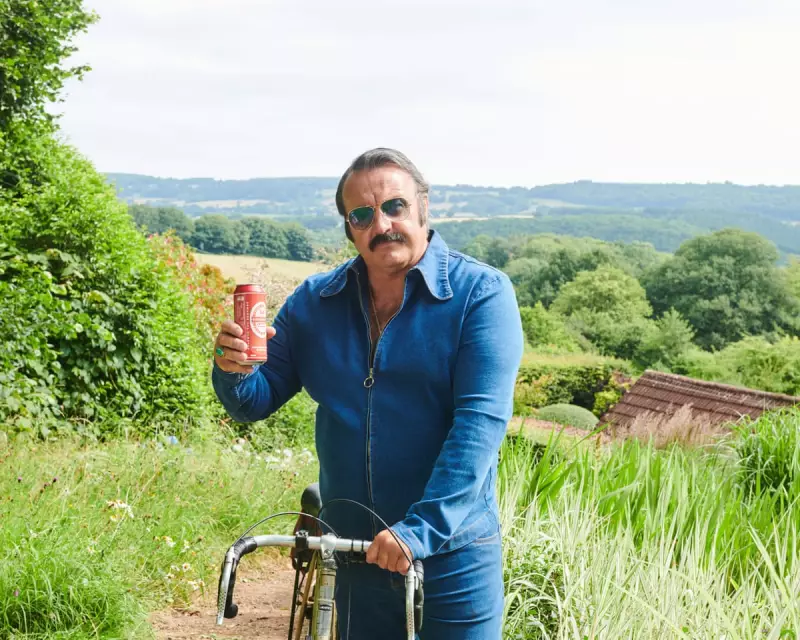
The landscape of television comedy has shifted dramatically in recent years. Political satire struggles to keep pace with reality, while broad pop culture parody feels increasingly difficult in a fragmented media world. Against this backdrop, the return of BBC Two's sitcom 'Mammoth' for a second series feels like a refreshingly bold statement. Starring Welsh comedian Mike Bubbins, the show delivers a potent and often subversive cocktail of nostalgia and social commentary.
A Man Out of Time: Tony Mammoth's Unchanged Worldview
The premise of Mammoth is gloriously simple. Tony Mammoth, played by the 53-year-old Bubbins, was a PE teacher frozen in an avalanche during a school skiing trip in 1979. Thawed out a quarter of a century later, he re-emerges into the 2020s with his body, wardrobe, and staunchly unreconstructed attitudes perfectly preserved. The comedy initially stems from laughing at this 'swaggering alpha' and his hopelessly outdated views.
However, the show's real genius lies in how it flips the script. Mammoth's horrified reactions to the quirks of modern Britain often carry an uncomfortable ring of truth. Whether it's bafflement at wellness trends or despair at health and safety culture, his perspective forces a laugh that is as much about recognition as it is about ridicule.

Series Two: Family, Grudges, and Alcohol-Free Beer
This new three-episode run continues Mammoth's journey. Having discovered that perpetually outraged local mother Mel (Sian Gibson) is his daughter and her son, the sweetly passive Theo (Joel Davison), is his grandson, Mammoth is navigating newfound family life. He remains a thorn in the side of fellow PE teacher Lucy and continues his friendship with old pal Roger, played by Joseph Marcell of The Fresh Prince of Bel-Air fame.
True to form, Mammoth dispenses terrible advice, such as suggesting dexedrine to his lifeguard grandson to stay awake. He also nurses a 50-year grudge against a man who once criticised his parking. The send-up of masculinity is at its most effective when focusing on his unshakeable confidence and breathtaking selfishness.
The show finds a new foil in Michael, played by Al Roberts, a younger man who fetishises the 1970s just as much as Mammoth. Their bonding over a shared love for the era, from Cinzano to Minder, is heartfelt, thanks to Bubbins's own genuine obsession (the Ford Capri he drives is his own). Yet some generational gulfs remain unbridgeable, highlighted by Mammoth's priceless reaction to Michael requesting an alcohol-free beer.
The Strengths and Limitations of Mammoth's World
The success of the series rests almost entirely on the broad shoulders of Mike Bubbins. His impeccable deadpan delivery and clear affinity for the character make Mammoth a compelling, if infuriating, centrepiece. The show is undeniably his brainchild, and his performance carries it.
This focus, however, means the supporting characters can sometimes pale in comparison. While Theo's low-energy demeanour is a deliberate contrast to his grandfather, Mel's constant state of shrill intensity can feel one-dimensional. Some inconsistencies in the cast's accents also occasionally break the spell of the show's Welsh setting.
By the conclusion of this second series, there is a sense that the central joke—a man from the 1970s judging the 2020s—might be starting to wear thin. The question of whether Mammoth will evolve into a more considerate, safety-conscious man lingers. But as the show itself seems to ask: would that even be entertaining?
Mammoth series two is available to stream on BBC iPlayer now. It remains a unique sitcom that provides a subversive thrill, allowing audiences to laugh both at and with a bygone era's idea of manhood, all while holding a mirror up to our own peculiar times.