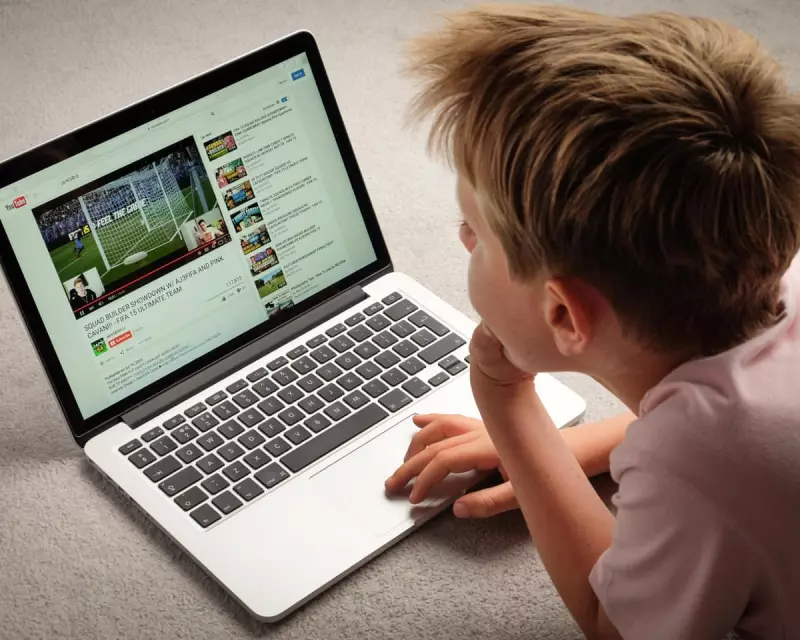
The UK's Children's Laureate has issued a stark warning to Members of Parliament, stating that much of the children's programming consumed on YouTube amounts to sedation rather than genuine entertainment.
A 'Frictionless' but Unnourishing Diet
Frank Cottrell-Boyce gave evidence to the culture, media and sport committee's inquiry, where he lamented the low quality of content that dominates young people's screens. He described platforms like YouTube as delivering 'frictionless' programming that bombards children with information but fails to provide the 'stimulation and nourishment' found in the quality children's television enjoyed by previous generations.
He specifically cited the channel CoCoMelon, which boasts 180 million subscribers on YouTube Kids, as an example of this phenomenon. Cottrell-Boyce contrasted this with the slower, more repetitive pacing of traditional children's TV, which he argued helps build familiarity and makes life navigable for young viewers.
The Broken System and its Consequences
Greg Childs OBE, a veteran BBC children's producer and director of the Children's Media Foundation, supported this view, stating the children's TV industry is 'broken'. He revealed a stark viewing statistic: 62% of viewing by under-16s is on YouTube, compared to just 22% on broadcast TV.
Childs argued that while YouTube has captured the attention of a nation, it has not replaced the previous curated system of content. He expressed deep concern for children's wellbeing, stating they are being damaged by algorithmic recommendation systems that lead them down 'rabbit holes of all sorts of content'.
The financial model was also laid bare. Childs stated that the 'creator economy' does not effectively exist for children's TV on YouTube due to its advertising rules, with creators of kids' content receiving 80-90% less in revenue than other creators. This is despite the Children's Media Foundation estimating that YouTube made £700m from children's advertising in a single year.
Calls for Action and Renewed Funding
Both experts called for significant intervention. Greg Childs urged for a form of regulation and a ratings system for YouTube, suggesting the government should compel the platform to act in the public interest if it refuses to do so voluntarily.
He proposed concrete solutions:
- Renewing the 'very successful' young audiences content fund, which was closed in 2022.
- Implementing a streamers' levy to help fund UK children's content.
- Using AI to rate content and allow parents to curate algorithms to prioritise public service content.
Childs emphasised that the spirit of any new approach should be collaborative, summarising it as: 'Come on, you great big beasts controlling us, come join us and make it better for kids.'
The session highlighted a critical juncture for children's media in the UK, with experts arguing that the current algorithmic model is failing a generation and that urgent action is needed to restore quality and creativity.