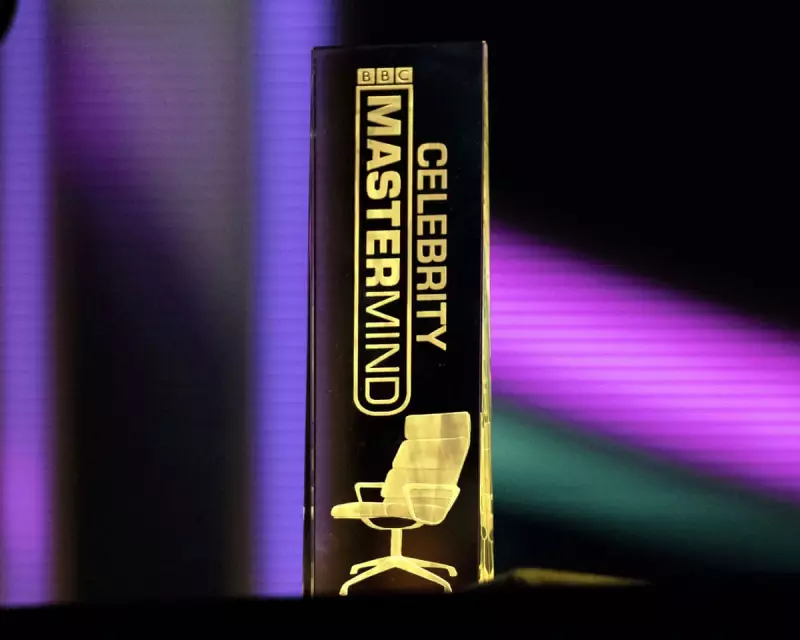
When former cricketer Monty Panesar claimed Germany played home football matches in Athens, or when Justice Secretary David Lammy identified Henry VIII's heir as Henry VII, they joined the unfortunate ranks of celebrities whose quiz show blunders have haunted them for years.
The Perils of Celebrity Quizzing
These embarrassing moments on programmes like Celebrity Mastermind don't just provide temporary amusement - they can cause lasting reputational damage. Panesar's 2018 Mastermind appearance resurfaced recently when Australian cricket captain Steve Smith used it to taunt him, while Lammy's 2009 wrong answers were recently referenced by political rival Robert Jenrick to question the justice secretary's intelligence.
The phenomenon extends beyond politics and sport. Actor Amanda Henderson's 2020 confusion between Greta Thunberg and 'Sharon' prompted such social media frenzy that the Swedish climate activist briefly changed her Twitter name to Sharon in response.
Why Do Celebrities Take the Risk?
Despite the obvious dangers, agents continue to put their clients forward for these intellectual gauntlets. Bronagh Monahan, cofounder of Mon Rae Management, explains the thinking: "These things are generally for charity so there's a nice halo effect for appearing. If you get something wrong, it shows you are fallible which makes you popular."
Not everyone buys this optimistic assessment. Guardian sketch writer John Crace, who still bears the scars of misspelling 'mozzarella' on Celebrity University Challenge, warns: "I still get humiliated on a regular basis by my family reminding me of Mozzarellagate."
Crace believes producers actively hope contestants will embarrass themselves. "Unless you are exceptionally clever you are likely to make a fool of yourself. The producers are hoping you make an arse of yourself as that makes the best TV."
Surviving the Quiz Show Experience
Not all quiz show appearances end in disaster. Maths teacher Bobby Seagull has built a media career on his successful performances on University Challenge, also winning celebrity versions of Mastermind and Pointless. He now coaches celebrity contestants on how to handle the pressure.
"My advice is always to relax and enjoy it," Seagull says. "If you treat it too seriously then you panic and get into that circle of doom we've seen so many times in celebrity quizzes." His preparation tips include listening to recordings of quizmasters and binge-watching other quiz shows.
Even Seagull isn't immune to mistakes, recalling how he once confused Barry Manilow with Rod Stewart. He emphasises that brain fog can affect anyone, regardless of intelligence: "You could be Stephen Fry and a brain fog can still obscure your ability to retrieve information under pressure."
The rise of social media has intensified the risks. Seagull warns celebrities to stay offline if they blunder, noting that online pile-ons have become so harsh that "the risk of social media blowback is getting to a point when it's becoming difficult for producers to recruit celebrities of note to these shows."
Yet talent agent Alex Segal of InterTalent maintains a more positive outlook: "People do these shows for visibility, they can win good money for charity and it's fun. It's not that deep." He cites client Omid Djalili's Mastermind appearance, where the comedian's creative wrong answers - including describing a horned rattlesnake's movement as 'writhing erotically' instead of 'sidewinder' - proved entertaining rather than damaging.
As celebrities continue to weigh the potential benefits against the risk of becoming the next viral quiz show failure, one thing remains clear: in the age of social media, a wrong answer on television can follow you forever.