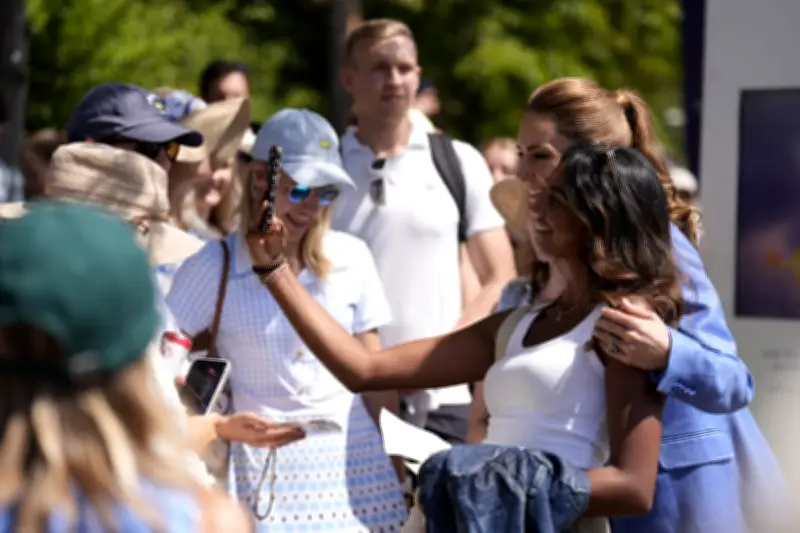
Social media has turned Wimbledon into a 'bucket list' event, with influencers and tourists flocking to the tournament for photos and experiences rather than tennis, sparking fears that aggressive marketing is diluting its sporting heritage.
Social Media Frenzy at Wimbledon
Photos of influencers in crisp white linen dresses posing in front of floral displays at Centre Court and videos promising hacks to beat the queues for tickets have made Wimbledon a hotspot on Instagram and TikTok. The social media frenzy has led to concerns that the championship is becoming more of a tourist attraction than a tennis tournament, overrun with individuals more interested in building their profiles than watching the matches.
Wimbledon's Strategy to Attract Younger Audiences
Wimbledon has deliberately courted influencers in recent years to shed its exclusive image and appeal to a younger generation. Usama Al-Qassab, Wimbledon's director of marketing, noted that the strategy is working, with visitors 'generally inching about a year younger year on year' over the past decade. The average age of those obtaining tickets through the ballot is now mid-40s, while queue attendees average about 35.
International Growth and Demand Surge
Wimbledon works with content creators before the tournament, but most invitations come from brands. This year, Wimbledon invited 12 people from Japan, Germany, and India to boost awareness in those countries. Al-Qassab reported a 'slight growth in international attendees', now reaching 20% of the total. Demand has surged, with the first week of 2025 attracting nearly 300,000 visitors, busier than the record-breaking 2025. The All England Club's planned expansion aims to meet this demand, as Al-Qassab stated, 'There is this appetite which we are struggling to [meet] without that opportunity.'
Phone Use and 'Bucket List' Appeal
Unlike heritage tournaments such as the Masters golf championship, which ban cameras and phones, Wimbledon allows phone use because it is considered a 'bucket list' event, according to Al-Qassab. This policy has encouraged social media sharing, further fueling the hype.
Tennis Boom and Social Media Influence
Wimbledon's growth mirrors a global tennis boom, with the number of players rising by nearly a quarter in the five years before 2024. Films like 'Challengers' starring Zendaya and the 'Tenniscore' fashion trend on TikTok and Instagram have boosted the sport's popularity. Leah Gillooly, a former Wimbledon umpire and sports marketing researcher at Manchester Metropolitan University, noted that the queue has become younger, more international, and busier, with people arriving earlier. She attributed this to social media, saying, 'People are talking about how this is an amazing experience almost like being at a festival.'
Tracking Queue Numbers as 'Badge of Honour'
Gillooly highlighted that social media accounts tracking queue card numbers have turned them into a 'badge of honour', heightening Wimbledon's desirability. Joanna Hughston, marketing lead at Goat Agency, explained that brands know 'a lot of eyes are on Wimbledon' and invite influencers to expand reach beyond traditional sponsorship. She said, 'For better and worse, in a way, [Wimbledon] has become more of a tourist attraction, driven by social media and celebrity, fashion, food and the culture that's happening around Wimbledon itself.'
Influencer Perspectives
Sebastian Melrose, a professional racing driver and influencer with 383,000 Instagram followers, was invited by Evian. Despite never watching live tennis before, he felt Wimbledon suited his profile as a 'high-end creator' working with 'high-end brands.' His 'quite aesthetic' post from the event reached 54,000 views, outperforming recent posts from Le Mans. Lauren Siegel, a researcher on social media and tourism, said Wimbledon exemplifies how 'people that may not have been interested in tennis or sports are now a lot more motivated to document that they were there and be part of that peer group or social status.'
Authenticity Concerns
Mark Borkowski, a sports PR, noted that Wimbledon 'has always been a social event,' evolving from corporate hospitality and celebrity spotting in the 1990s to social media and influencers. The impact is felt courtside, with former tennis doubles champion Mike Bryan observing, 'From the fans, everyone's taking shots, and are they really watching the match, or are they trying to make their channel look better?' His brother Bob Bryan added, 'The energy is a little different and people are more subdued because they're capturing the moment instead of being in the moment.'