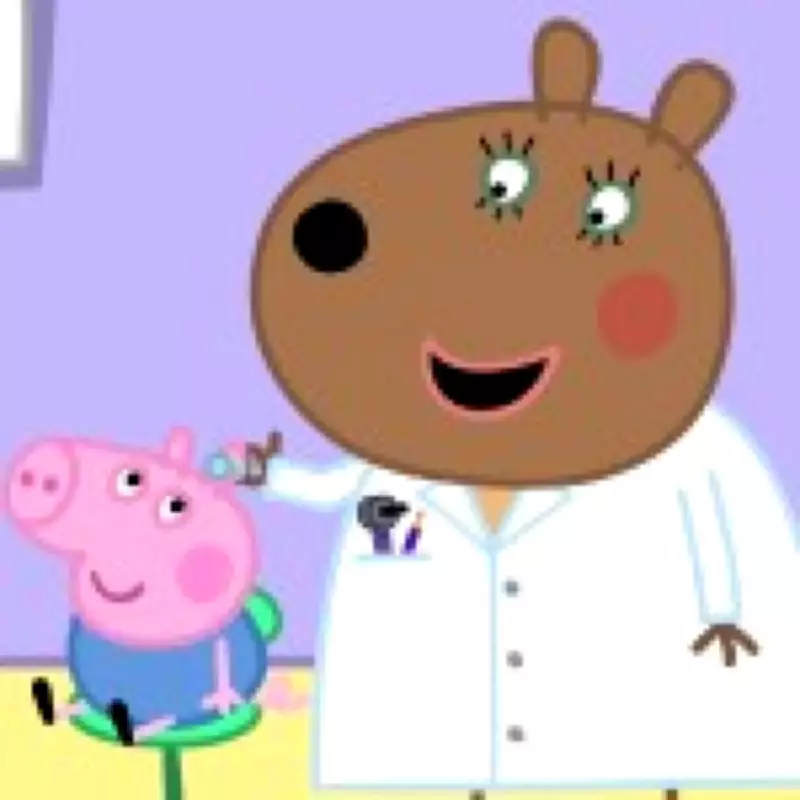
The beloved children's television programme Peppa Pig has introduced a groundbreaking new storyline focusing on hearing loss, which charity leaders believe will have a profound and lasting impact on young audiences. In a significant move for children's media representation, Peppa's younger brother, George, is revealed to be moderately deaf and receives a hearing aid in upcoming episodes.
Authentic Representation Developed with Experts
This important narrative development was created in close partnership with the National Deaf Children's Society (NDCS), ensuring an authentic reflection of deaf children's experiences. The new episodes, scheduled to air on Milkshake from March 9th, feature George navigating life with hearing loss while continuing to enjoy family activities and adventures.
George Crockford, Chief Executive of the NDCS, described the storyline as "heartwarming" and "groundbreaking" in its approach to deaf representation. "Deaf representation has come a long way, but I think there's been nothing in the children's space, so I really, really welcome this," he told Metro.
Creating Visibility and Normalising Deafness
Crockford emphasised the multiple ways this representation could influence young viewers. "I think there's a few ways it could have a profound impact, but the biggest one is for children to feel like they're seen," he explained. "It will also open up those conversations with other hearing children that seeing a deaf child is not something that's strange or unique."
The charity leader highlighted how the storyline demonstrates that George remains fully capable of participating in family fun while occasionally needing additional support and adjustments for full inclusion. "Having something that demystifies hearing loss... I think it is really groundbreaking to bring down barriers from such an early age," Crockford added.
Practical Impact on Deaf Children's Lives
With approximately 54,000 deaf children across the nation and limited media representation, this development holds particular significance. Crockford noted that most deaf children are the only deaf child in their school, making early representation crucial. "When they start school, having this sort of representation means that when they're meeting other children for the first time, they're not having to explain their hearing aid because they've seen one before," he said.
The emotional resonance of the storyline was personally meaningful to Crockford, who reflected on his own family experiences with hearing loss. "There's some really heartwarming parts of the story in terms of how they're trying to support him, and it really hit home for me with the emotional journey I've been through as a parent," he shared.
Research Supporting Positive Impact
New research from Hasbro, which owns the Peppa Pig franchise, reveals strong parental support for such representation. The study found that 98% of parents with hearing-impaired children believe deaf representation in children's television positively impacts their children.
Additionally, 53% of respondents said such representation helps children develop a stronger sense of self, while 47% indicated it normalises deafness and reduces feelings of isolation. These findings underscore the potential social and psychological benefits of inclusive media content.
Collaborative Production Process
The script development involved significant collaboration with deaf professionals, including Camilla Arnold, a deaf executive producer and script consultant known for her work on BBC's See Hear, Acorn TV's Chelsea Detectives, and Netflix's Bridgerton. This ensured authentic portrayal throughout the creative process.
Beyond the storyline itself, Hasbro has committed to supporting the NDCS through fundraising initiatives that provide expert guidance and insight during the production of George's character development. The partnership represents a comprehensive approach to improving deaf representation in children's media.
Memorable Storyline Moments
Viewers can anticipate touching moments throughout the new episodes, including George discovering new sounds and achieving the milestone of saying Peppa's name for the first time. These narrative elements aim to celebrate deaf children's experiences while educating broader audiences.
Crockford expressed hope that these episodes would become "a great resource that is accessible to children" while personally finding them emotionally resonant. The inclusion of Jodie Ounsley, known as Fury on BBC's Gladiators and the first deaf female rugby player to represent England, voicing an audiologist character adds further authenticity to the representation.
This pioneering approach to children's programming represents a significant step toward normalising disability and promoting inclusion from early childhood, potentially influencing how future generations perceive and interact with deaf individuals.