In the current geopolitical climate, NATO finds itself at a critical juncture, with its reputation potentially vulnerable amidst shifting global dynamics. For an alliance heavily reliant on American stability and support, the uncertainties introduced by figures like Donald Trump pose existential threats. Channel 4 attempts to bolster NATO's public image with its new two-part documentary, Frontline: Our Soldiers Facing Putin, but the result is a production that seems designed more to terrify and arouse than to inform.
A Premise Built on Fear and Speculation
The documentary's core premise hinges on a speculative future: after four years of conflict in Ukraine, what if Russia, emboldened by the outcome, decides to invade Estonia, a longstanding NATO member? This scenario would inevitably drag NATO into a direct war. The programme sets out to answer whether the alliance is prepared for such an eventuality, setting aside concerns about potential US political shifts to focus exclusively on behind-the-scenes access to NATO's recent military manoeuvres.
From Border Tensions to Trench Warfare
The opening scenes transport viewers to the Estonia-Russia border, described in heroically over-the-top narration as "the very edge of Europe." Here, a guard named Peter is shown "staring directly at the Russian threat," which, on this particular day, manifests as a Russian border patrolman pacing calmly on his side of the barbed wire. While the narration insists this is a stark reminder of "just how close danger lies," it feels more like a staged moment than a genuine frontline encounter.
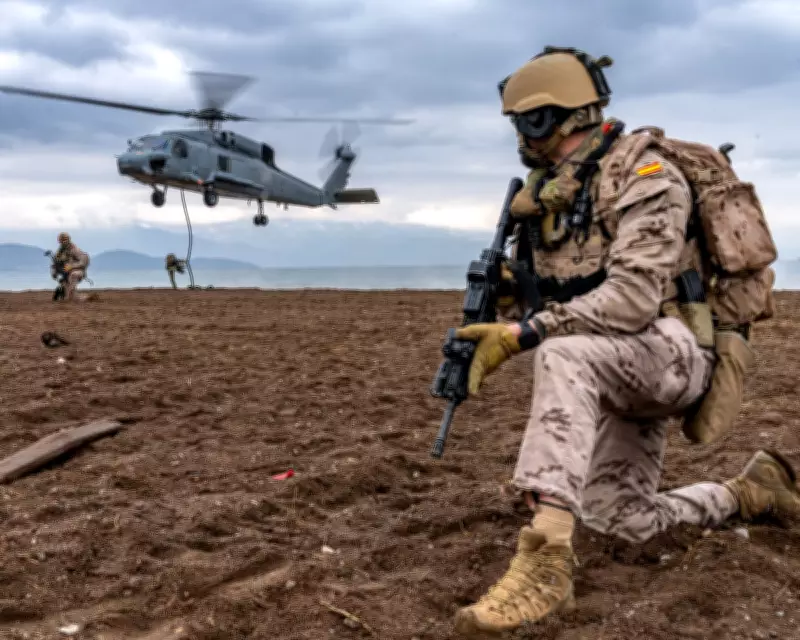
What follows is essentially an extended advertisement for NATO's hypothetical military prowess, likely to appeal only to those with a peculiar fetish for military jargon. Phrases like "Enhanced Forward-Presence Battle Groups" are thrown around with breathless enthusiasm, as the documentary delves into the activities of 1,300 British troops permanently stationed in Estonia. Viewers witness these soldiers practising trench warfare, with former NATO deputy supreme allied commander General Sir Richard Shirreff ominously describing it as "total war, a war of absolute utmost brutality." His tone suggests he might not be entirely displeased if such a conflict were to erupt in reality.
The Mundane Reality of Peacetime Logistics
Recognising that 1,300 troops alone could not withstand a full-scale Russian invasion, the documentary shifts focus to the logistics of reinforcement. It whisks viewers away to Joint Force Command Naples, a location presented with a mix of terror and arousal-inducing narration. Despite claims of high-level security and rare camera access, the interior reveals little more than a quiet office block, complete with a laminated "SENSITIVE AREA" sign. The so-called "highly secure command hub" turns out to be a meeting room with a large map, where plans for Exercise Steadfast Dart – NATO's largest operation of 2025 – are conceived.
Exercise Steadfast Dart serves as a dress rehearsal for moving troops to a new eastern front line. The documentary attempts to inject drama into peacetime logistics, following Sergeant Heath as he directs khaki trucks and Craftsman Peters as he inspects vehicles, all while a chef in Romania prepares meals for travelling soldiers. Despite efforts to frame these tasks as a race against time, the reality is terminally mundane, failing to generate any genuine suspense or insight.
Advocacy Masquerading as Documentary
As the programme draws to a close, it drops any pretence of objectivity, with both General Shirreff and the documentary itself openly advocating for an expansion of British military capabilities. However, viewers who do not already fervently support such sentiments are unlikely to have persevered through the preceding hour of dull exposition. The only real casualty here might be a Russian military analyst, tasked with studying this footage for useful intelligence, who is in for a rather tedious day at work.
In summary, Frontline: Our Soldiers Facing Putin is a missed opportunity. Instead of offering a nuanced analysis of NATO's readiness or the complexities of modern warfare, it delivers a terminally dull piece of propaganda, heavy on jargon but light on substance. It is currently available for viewing on Channel 4, but unless you have a specific interest in military terminology or enjoy watching paint dry, you might want to give this one a miss.