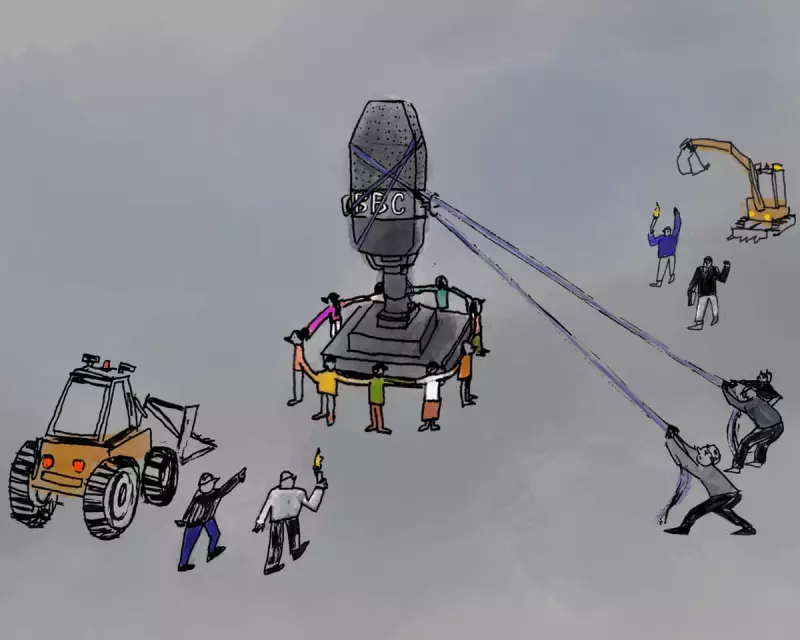
The British Broadcasting Corporation faces a crisis unlike any in its century-long history, according to a leading media expert. Pat Younge, chair of the British Broadcasting Challenge, warns that unprecedented threats from American political pressure and billionaire-controlled tech platforms endanger the BBC's future at a time when democracy faces an information crisis.
The Unprecedented Threat Landscape
The BBC confronts danger from multiple fronts simultaneously. While accustomed to pressure from political parties and newspaper publishers, the organisation now faces the unprecedented threat of a lawsuit from the US president. This comes as global democracy struggles against AI-generated deepfakes, hostile state propaganda, and social media algorithms that amplify division.
Younge highlights how six American billionaires control the major tech platforms through which most media content is distributed and consumed. These individuals pursue self-interested agendas, while a litigious president browbeats media organisations. The situation appears particularly dire in the United States, where public television and radio have lost virtually all funding under the Trump administration.
This dangerous convergence could easily spread to Britain, warns Younge, with few existing obstacles preventing a populist or authoritarian government from undermining the BBC. The corporation represents Britain's most effective defence against global media power concentrated in private hands.
Four Essential Reforms for Survival
The British Broadcasting Challenge proposes four crucial reforms to secure the BBC's future. First, the government must grant the BBC a permanent charter establishing it in perpetuity and enshrining its core principles of independence, public service and universality. A renewable agreement with the culture secretary would set service parameters every decade while maintaining these fundamental values.
Second, a new governance board should be created with members appointed by an independent body. This board would regulate editorial performance and set strategic direction, with members possessing genuine expertise and representing different UK regions. Crucially, this governance board would be separate from the management board chaired by the director general.
Universality and Funding: The Bedrock of Public Service
The third proposal demands recommitment to BBC universality. This means geographical universality, ensuring services remain free throughout the UK, and universality of content providing quality programmes that reflect all nations and regions. The BBC's unifying role becomes increasingly vital as premium content moves behind paywalls and media fragmentation worsens.
The corporation must continue offering popular programmes like The Traitors and Match of the Day alongside content the market doesn't deliver: programming for minority audiences, prime-time current affairs, creative risks promoting new talent, and coverage of women's and disabled sports.
Fourth, the BBC requires a proper funding settlement recognising the 30% cut imposed over the past 15 years. At just £3.35 weekly, the licence fee represents astonishing value, reaching 95% of British adults monthly while sustaining over 50,000 jobs in the creative economy.
The report calls for a more open and confident BBC, liberated from years of bullying, that genuinely listens to audiences. With the charter-renewal process beginning, the government has an opportunity to demonstrate courage and vision in protecting this priceless national asset. The question remains whether they will seize this crucial moment.