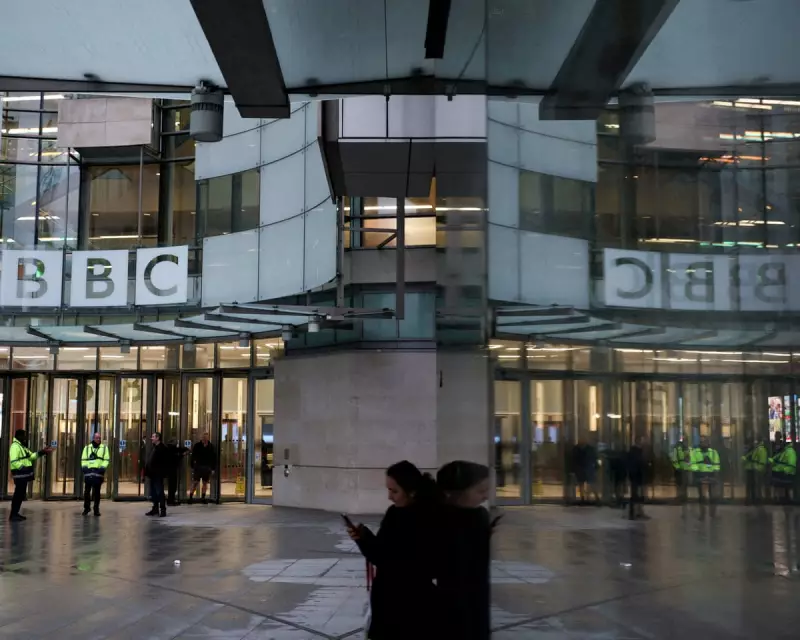
The British Broadcasting Corporation finds itself at a critical juncture this week, grappling with a high-profile international legal threat and fundamental questions about its financial future. The broadcaster is preparing to defend a monumental $10bn defamation lawsuit filed by former US President Donald Trump, while simultaneously facing a government-led review into how it will be funded from the 2030s onwards.
A Dual Crisis: Legal Onslaught and Financial Uncertainty
On Tuesday, the UK government initiated a public consultation on the future of the BBC's funding model. This review will explore alternatives to the traditional television licence fee, including the potential for a subscription service or the introduction of advertising. The move comes amid a sustained decline in the number of households holding a TV licence, casting long-term doubt over the corporation's primary revenue stream.
This existential financial debate was immediately overshadowed by the escalation of a separate, but equally severe, threat. Donald Trump followed through on his promise to sue the BBC, filing a $10bn lawsuit in a Florida court. The legal action centres on an edited clip of a Trump speech featured in a BBC Panorama documentary broadcast shortly before the 2024 US election.
The president alleges the corporation "intentionally, maliciously and deceptively" defamed him. In a statement to reporters, Trump declared, "I'm suing the BBC for putting words in my mouth." The BBC has vowed to defend the claim vigorously.
The Panorama Edit at the Heart of the $10bn Claim
The lawsuit focuses on an edit of President Trump's speech delivered on January 6, 2021, prior to the storming of the US Capitol. In the original address, Trump told supporters, "We're going to walk down to the Capitol, and we're going to cheer on our brave senators and congressmen and women." More than 50 minutes later, he stated, "And we fight. We fight like hell."
The Panorama programme spliced these two separate phrases together, presenting them as a continuous statement: "We're going to walk down to the Capitol … and I'll be there with you. And we fight. We fight like hell." The BBC has acknowledged this edit was an "error of judgment" that created a "mistaken impression" Trump had directly called for violence, and it has apologised to the president. However, it firmly rejects any legal basis for a defamation claim and has refused his demands for financial compensation.
The fallout from the controversy last November led to the resignation of both the BBC's director-general, Tim Davie, and its head of news, Deborah Turness.
Legal Hurdles and Global Implications
Legal experts highlight significant challenges for the former president's case. In the United States, public figures like Trump must prove "actual malice"—meaning the publisher knew the statement was false or acted with reckless disregard for the truth. They must also demonstrate tangible harm resulted from the publication.
Trump's legal team claims the BBC caused him "reputational and financial harm." However, the BBC's lawyers have previously argued that Trump was not harmed by the programme, noting he was re-elected president shortly after it aired. They also emphasised the documentary was not distributed on BBC channels in the US and was restricted to UK viewers on BBC iPlayer, though Trump's suit claims it was accessible via third-party services like BritBox or through VPNs.
Media lawyer Mark Stephens has questioned the premise of reputational harm, stating, "Trump's reputation has already been battered... proving that Panorama caused additional serious harm is a bit of a stretch."
This lawsuit marks a significant escalation in Trump's longstanding campaign against media organisations, representing his first known legal action against a foreign broadcaster. It follows substantial settlements he has reached with major US networks like ABC and CBS in recent months.
Stakes for the BBC and the Licence Fee Payer
The combination of a potentially ruinous legal battle and an uncertain funding model presents a perfect storm for the national broadcaster. Christopher Ruddy, CEO of the right-wing US network Newsmax, speculated on BBC Radio 4's Today programme that the case could cost the corporation between $50m and $100m in legal fees alone, even if it were to settle for a lower amount.
This prospect raises acute questions for UK licence fee payers, who ultimately fund the BBC's operations. There is little public appetite for their payments to be used to fund a multimillion-pound legal defence or settlement with a litigious foreign president.
A spokesperson for Prime Minister Keir Starmer stated that any legal action was a matter for the BBC itself, but reaffirmed the government's support for "a strong, independent BBC as a trusted, relied-upon national broadcaster, reporting without fear or favour." Nevertheless, the case adds a complex layer to the UK's diplomatic relationship with the Trump administration, known for its sensitivity to perceived slights.
As the BBC braces for a protracted legal fight in the US courts, it must also navigate a parallel debate at home about its very survival. The outcome of both will fundamentally shape the future of one of the world's most iconic public service broadcasters.