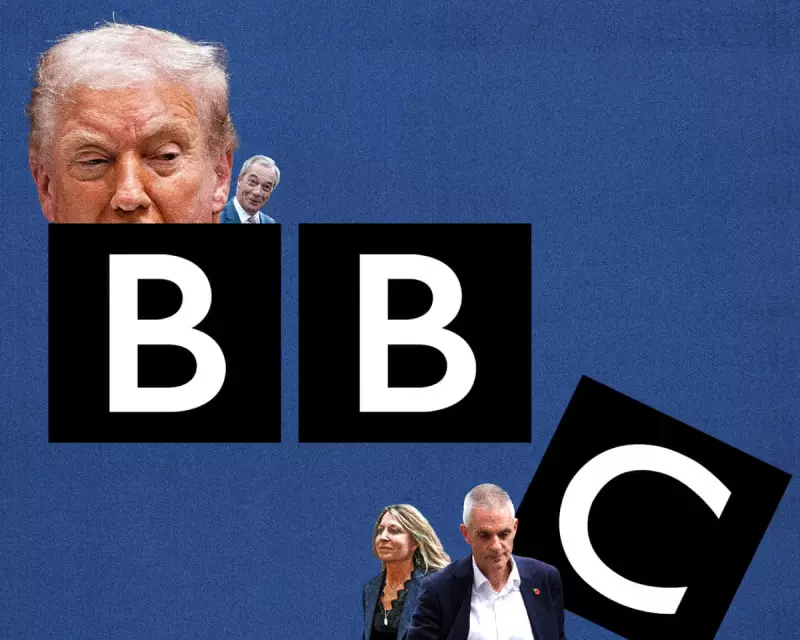
BBC Leadership Vacuum Creates Unprecedented Crisis
The BBC finds itself navigating treacherous waters as it searches for a new director general while facing coordinated political attacks from prominent figures including Donald Trump and Nigel Farage. This leadership crisis emerges at a time when the corporation's impartiality has been called into question following several high-profile errors.
Political Pressure Mounts on Britain's Most Trusted Broadcaster
The BBC remains the most trusted news organisation in the UK, reaching an impressive 74% of British adults weekly. This stands in stark contrast to the United States, where no single news organisation reaches more than 25% of the population in a week. The British news market enjoys significantly less polarization than most countries, with 70% of nations worldwide lacking a free press entirely.
Despite this position of trust, the corporation faces relentless criticism from political figures. Nigel Farage, who simultaneously presents a nightly current affairs show on GB News while positioning himself as a potential future prime minister, has been particularly vocal. His extensive commentary on BBC matters contrasts sharply with his minimal response to the Capitol riots, where he offered just nine words of condemnation.
Legal Threats and Leadership Challenges
The situation has escalated with former US President Donald Trump threatening to sue the BBC for $1 billion. This legal threat comes despite Trump's recent conviction on 34 counts of falsifying business records and a civil case loss where he was found to have sexually abused a woman and ordered to pay $83 million in damages.
The timing of these developments coincides with the BBC's search for new leadership, a position that has become increasingly unattractive to top candidates from the private sector. The role offers significantly lower compensation than comparable private sector positions while subjecting the holder to intense public scrutiny and political pressure.
Potential candidates from business backgrounds appear reluctant to step into what has been described as "the eye of the firestorm." Unlike tech executives like Mark Zuckerberg, who recently declared apologizing for errors was a "20-year mistake," the BBC director general must maintain public accountability while navigating complex political landscapes.
Searching for Solutions in Troubled Times
One potential solution being floated involves former director general Mark Thompson returning for a limited tenure. Thompson possesses unique qualifications, having led both the BBC and the New York Times, and currently serving at CNN. His experience with both British and American media landscapes, combined with his substantial earnings from previous roles, might make him willing to consider public service again.
This leadership crisis reflects a broader trend in public life where the best and brightest increasingly opt for quieter, better-compensated roles in the private sector. The constant attacks from bad-faith actors, combined with social media threats and intense scrutiny, make high-profile public service roles increasingly unappealing.
The BBC's predicament highlights a fundamental challenge facing British institutions: how to attract top talent to roles that offer less financial reward and more public criticism than ever before. As one of the last organisations where leaders still resign over mistakes, the BBC's struggle to find new leadership speaks volumes about the current state of public service in Britain.