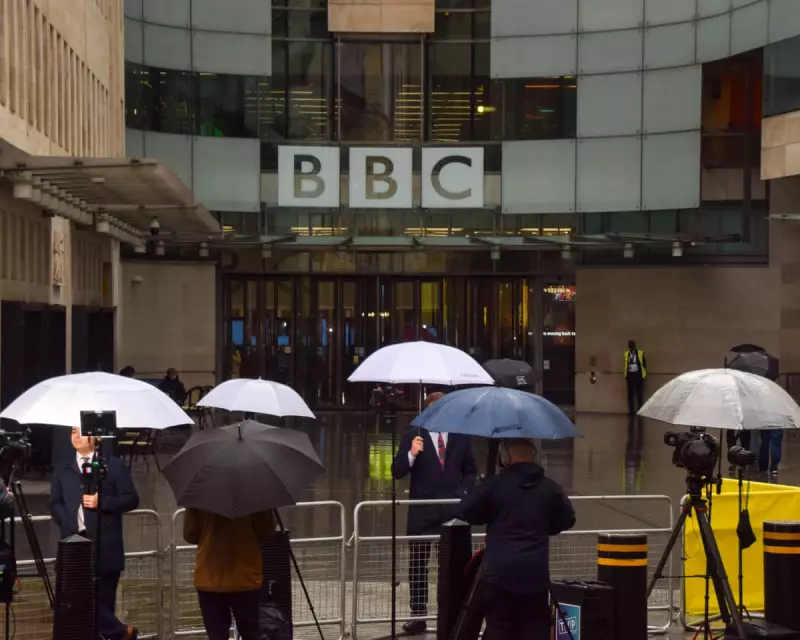
The BBC is facing one of its most significant crises in recent years following the resignation of its director general, Tim Davie. His departure comes after accusations of 'serious and systemic' bias in the corporation's coverage, sparking a wide-ranging debate about its future and fundamental integrity.
Management Crisis and Structural Flaws
According to Peter Grimsdale, a former BBC and Channel 4 executive, the broadcaster has a tendency to transform minor issues into major crises. He attributes this to a cumbersome, top-heavy management structure that creates inertia during critical moments.
Grimsdale contrasts this with his experience at Channel 4 in the 1990s, where a simpler organisational chart with clear lines of responsibility allowed crises to be resolved 'in the blink of an eye'. He advocates for a slimmer, flatter BBC structure that would not only function more efficiently but also save substantial licence fee money for improved content.
The Battle for Truth in a Post-Truth Era
Anthony Lawton from Leicestershire argues that while the BBC must pursue truth, claiming to have 'no agenda' is fundamentally flawed. He suggests that in today's attention-driven media landscape, impartiality cannot mean detachment.
The right approach, according to Lawton, is to pursue truth with a deliberate agenda of accuracy, fairness, proportion and service to the public good. This perspective becomes particularly relevant as the BBC faces external threats, most notably from former US President Donald Trump.
External Threats and Political Pressure
Donald Trump has threatened to sue the BBC for $1 billion, labelling the corporation '100% fake news' and its journalists 'corrupt'. This attack has drawn comparisons to the media landscape in the United States.
Larry Marchant from Virginia, US, warns that the UK appears to be following America's path, where reliable news sources were 'pulled down, abused, and finally sold off'. He expresses concern about who ultimately benefits from such media control wars.
Mike Harding, former presenter of the BBC Radio 2 folk show, adds that management often consisted of 'safe placemen and -women' without genuine affection for the institution. Combined with political pressure from figures like Boris Johnson and Nigel Farage, he fears the 'wreckers' might succeed without strong opposition from BBC supporters.
Defending the BBC's Fundamental Integrity
Despite the criticism, many readers passionately defend the BBC's core values. Isabella Stone from Sheffield notes that the sheer number of known liars seeking to destroy the BBC serves as the clearest indication of its fundamental truthfulness and integrity.
Alec Hamilton from Cheltenham suggests the BBC has strong grounds to countersue President Trump for defamation, given the significant reputational damage caused by his allegations.
Amid the turmoil, a potential silver lining emerges: all leading candidates to replace Tim Davie are women, potentially signalling a new direction for the broadcaster's leadership.