Art Exhibitions at Hayward Gallery: Between Meaning and Instagram Aesthetics
Two concurrent exhibitions at London's Hayward Gallery present contrasting approaches to contemporary art, with both shows raising questions about artistic depth versus social media appeal. Chinese artist Yin Xiuzhen's "Heart to Heart" and Japanese artist Chiharu Shiota's "Threads of Life" occupy the gallery spaces until May 3, offering visitors dramatically different experiences of installation art.
Yin Xiuzhen's Poignant Preservation of Memory
Yin Xiuzhen's exhibition emerges from her experience of 1990s Beijing, where rapid modernization threatened to erase the city's history and identity. Her early works demonstrate a deeply felt response to this transformation, with pieces that physically preserve fragments of the past against the relentless march of progress.
The artist's most moving works include a small wooden trunk built by her father, now filled with her old clothes encased in concrete. This piece powerfully represents the preservation of personal warmth within the cold brutality of composite materials that transformed her city. Nearby, traditional roof tiles scattered around an antique Chinese cupboard are covered in a thick layer of cement powder, visually representing how the past is constantly being buried to make way for the future.
One particularly striking installation features a minivan extended into a concertina shape through stitched-together recycled clothing. This work, like many in the exhibition, represents the artist's persistent attempt to maintain human connections to history despite unstoppable change.
From Profound to Superficial: The Evolution of Xiuzhen's Work
While Xiuzhen's early installations demonstrate genuine emotional depth, her more recent works appear to have lost their critical edge. The exhibition includes books encased in old fabric, city models constructed from discarded clothing packed into suitcases, and even a luggage carousel built into the gallery space.
The most dramatic piece is a jumbo jet suspended from the ceiling, entirely constructed from worn T-shirts. Despite the obvious commentary on global commerce and capitalist exploitation suggested by the materials, these works offer little substantive criticism or meaningful engagement with their themes. The centerpiece installation—a giant human heart made from recycled T-shirts intended as a space for "deep and meaningful conversations"—ironically requires visitors to supply their own significance, as the artist provides minimal guidance or substance.
Chiharu Shiota's Social Media Phenomenon
Upstairs, Chiharu Shiota's "Threads of Life" exhibition has become a social media sensation in recent years, and the Hayward Gallery clearly hopes her visually striking installations will attract visitors seeking Instagram-worthy content. The exhibition features three distinct rooms, each filled with elaborate webs of colored thread.
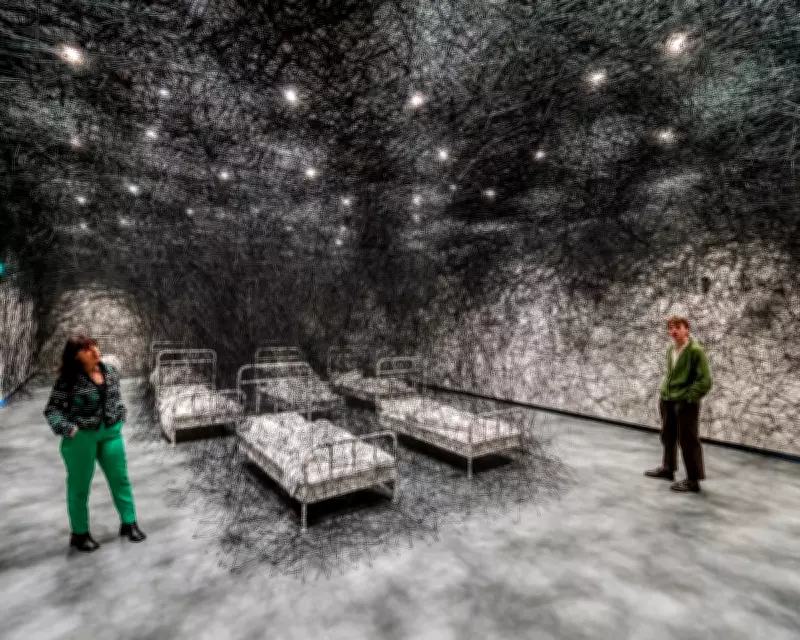
The first room presents a tangled nightmare of crimson lines dangling with keys, suggesting connections between people that remain difficult to unlock. The second space contains emotional letters of thanks stapled to red threads hanging from the ceiling, literally playing with the concept of "tugging on heart strings." The final room swaps red for black thread woven around beds, creating what resembles "the world's dirtiest, gothiest, spideriest hotel."
Superficial Depth in Contemporary Installation Art
Both exhibitions raise important questions about the current state of contemporary art and its relationship to social media culture. Shiota's work explicitly addresses themes of blood, death, life, and human connection, but does so with such obvious symbolism that it risks becoming meaningless. The installations are so "on the nose" in their messaging that they offer little room for nuanced interpretation or genuine emotional engagement.
This superficial approach to profound themes represents a growing trend in contemporary art institutions, which face increasing pressure to create visually spectacular installations that will photograph well on social media platforms. The dilemma is clear: galleries can either present intellectually challenging art that may not attract large audiences, or they can host visually appealing but conceptually shallow exhibitions designed for Instagram sharing.
Ultimately, these exhibitions seem primarily aimed at visitors who prioritize gallery selfies over meaningful encounters with art. While both shows will undoubtedly generate social media buzz, they leave serious art lovers questioning whether visual spectacle has replaced substantive content in contemporary curation.