Vatican Condemns Georgia Meloni Church Mural as Sacrilegious, Ignoring Political Concerns
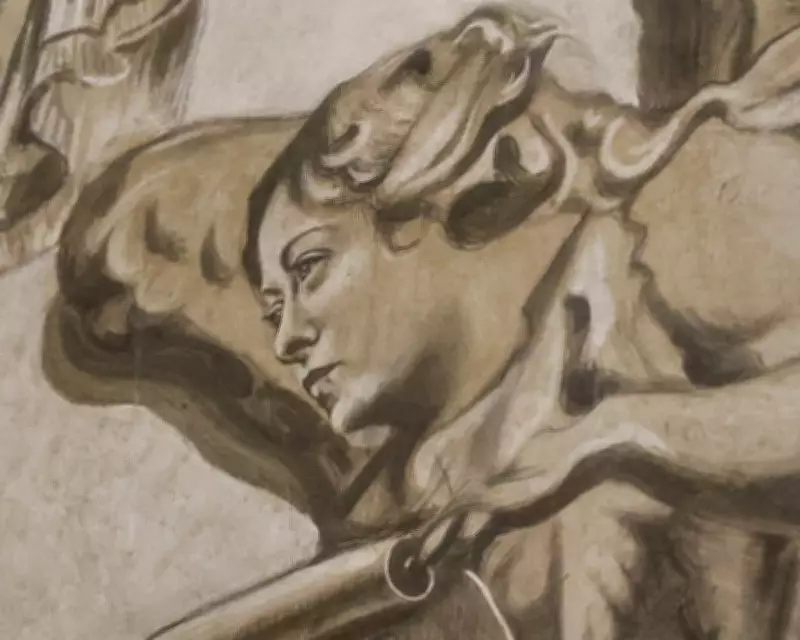
A controversial mural featuring the face of Italian Prime Minister Georgia Meloni on the exterior of a church in Rome has drawn sharp criticism from the Vatican, which has labelled the artwork as sacrilegious. However, many art critics and local commentators are arguing that the Vatican's focus on religious offence misses the more significant issue: the mural's potential to glorify a political figure in a sacred space, raising questions about the intersection of art, politics, and religion in modern Italy.
Details of the Mural and Initial Reactions
The mural, which appeared recently on a church in the historic centre of Rome, depicts Meloni in a stylised, almost iconic manner, reminiscent of traditional religious iconography. According to reports, the artwork was created by an anonymous street artist, and it has quickly become a focal point for public debate. The Vatican issued a statement expressing deep concern, stating that the use of a church building for such a depiction is disrespectful and undermines the sanctity of the site. Church officials have called for the mural's removal, citing it as an act of vandalism that blurs the lines between secular and sacred imagery.
Critics Highlight Political Implications Over Religious Offence
While the Vatican emphasises the sacrilegious nature of the mural, art historians and political analysts are pointing to a different set of concerns. They argue that the real offence lies not in the mere presence of a portrait on a church, but in the way it portrays Meloni. By adopting visual cues from religious art, such as halos or solemn expressions, the mural could be seen as elevating the Prime Minister to a near-divine status, which critics say is inappropriate and politically charged. This has sparked discussions about the role of public art in shaping political narratives and whether such depictions risk normalising authoritarian or populist imagery in cultural spaces.
Local residents in Rome have expressed mixed feelings, with some viewing the mural as a bold statement on contemporary politics, while others see it as an unwelcome intrusion into their religious community. The debate has also touched on broader themes of artistic freedom versus respect for religious institutions, with some suggesting that the Vatican's reaction may be overly focused on traditional values at the expense of engaging with the artwork's political message.
Broader Context and Future Implications
This incident is not isolated; it reflects ongoing tensions in Italy and beyond regarding the use of public spaces for political expression. In recent years, street art has increasingly been used to comment on social and political issues, sometimes leading to clashes with authorities. The Meloni mural case highlights how such artworks can become flashpoints for deeper societal debates, particularly in a country with a strong Catholic heritage like Italy. As calls for removal grow, there are questions about whether the mural will be preserved as a piece of political commentary or erased to appease religious sensitivities.
Ultimately, the controversy underscores the complex relationship between art and power in the 21st century. While the Vatican sees the mural as an affront to religious decorum, others view it as a provocative critique of Meloni's leadership and the cult of personality in politics. This divergence in perspectives suggests that the mural's impact extends far beyond its physical location, resonating with wider discussions about democracy, iconography, and cultural identity in Europe today.