A new exhibition at the Baltic Centre for Contemporary Art in Gateshead plunges visitors into an immersive, otherworldly realm. Saodat Ismailova: As We Fade marks the Uzbek artist and film-maker's first solo show in the United Kingdom, presenting a concise and brave curation of her film works that is simultaneously exhilarating, terrifying and unforgettable.
Stepping Into the Void
The experience begins the moment you enter the darkened space. The room is arranged around a central, padded black square, a direct reference to the concept of the void that has fascinated Ismailova throughout her two-decade career. This thematic core stems from her upbringing during the Soviet perestroika era of the late 1980s, a time of collapsing ideology that left a cultural vacuum. The daughter of a cinematographer, Ismailova felt this shift profoundly as public film screenings ceased.
Four distinct works are positioned around this void, creating a dialogue of crackling energy and elemental force. Recurring imagery of fire, ice, and cascading water fills the projections, while the soundscape makes you feel the desert wind and whipping sand. The collective atmosphere is one of breathtaking beauty, disorienting anxiety, and elemental ambience.

A Tapestry of Film and History
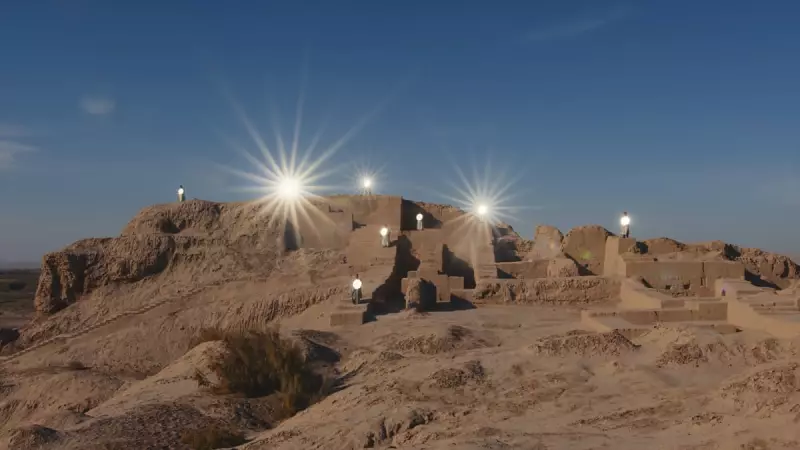
The mesmerising title piece, As We Fade, is projected through 24 suspended sheaths of silk, a number echoing the old cinematic standard of frames per second. The silk itself nods to Uzbekistan's historic position on the ancient Silk Road. The film shows rituals performed on the sacred Sulaiman Too mountain, with images fading in and out across the panels, prompting contemplation on both the seen and the unseen.
Another work, Melted Into the Sun, explores the story of an 8th-century prophet-like figure, Al-Muqanna. Faceless figures move through dusky topographies under magenta skies, visiting locations like the Amu Darya river and the city of Bukhara. Incorporating aspects of ASMR and video game aesthetics, the film poses universal questions about the arbitrary divisions of east and west.
Memory, Propaganda and the Female Realm
Perhaps the most visceral piece is Swan Lake, a rapturous ode to Central Asian cinema from 1988 to 2001. Ismailova creates a poetic and avant-garde collage from 28 films made in Kazakhstan, Uzbekistan, and Tajikistan. The film is a torrent of breathtaking and often violent imagery—a woman kissing a fish, a man licking glass, crackling footage of ballet dancers. It threads ideas of psychic space, power, and propaganda, inspired by the artist's memories of watching the Soviet hypnotist Kashpirovsky, who attempted mass hypnosis on state television in 1989.
The exhibition also highlights Ismailova's focus on distinct gendered realms in Central Asia. Zukhra, originally shown at the 2013 Venice Biennale, is a daringly simple single shot of a woman sleeping, then leaving her bed. It powerfully evokes the enormity of a woman's domestic inner world, a space of confinement but not diminishment.
You could lose yourself for hours in this richly layered, historically allusive dreamspace. Saodat Ismailova: As We Fade is less about clear political context and more about magic and feeling—a profound meditation on holding onto the past and learning to let go. The exhibition runs at the Baltic, Gateshead, until 7 June.