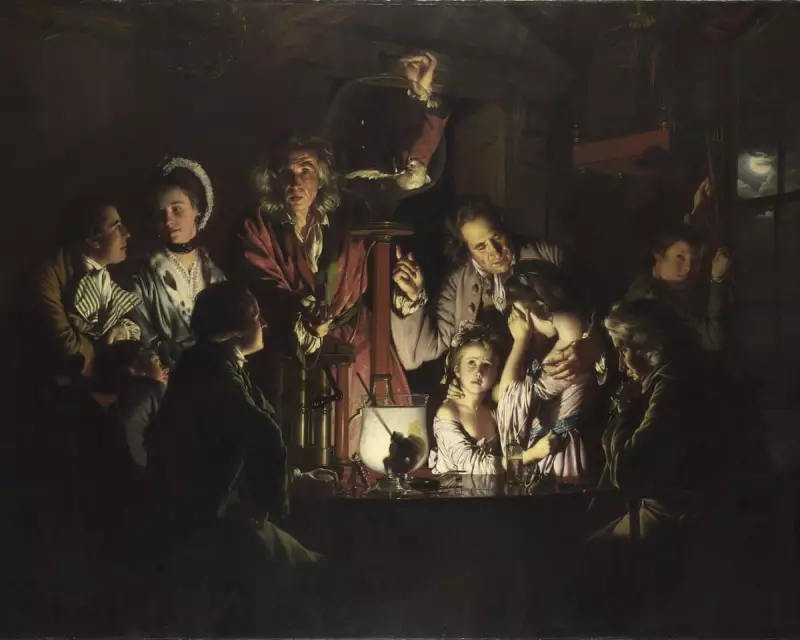
A fascinating revelation about one of Joseph Wright of Derby's most famous paintings has emerged, challenging long-held interpretations of the dramatic scene. An Experiment on a Bird in the Air Pump, created in 1768, might not depict the tragic death viewers have assumed for centuries.
The Radio 4 Revelation
According to a February episode of BBC Radio 4's Moving Pictures programme, the painting's narrative may be less grim than art critics have suggested. The programme revealed that air pumps resembling the one in Wright's painting, particularly those made by contemporary scientist Benjamin Martin, came with instructions for dramatic home experiments.
These experiments involved placing a live creature inside the pump, extracting the air to the point of suffocation, and then, at the critical moment, turning a stopcock to restore air and revive the animal. This theatrical demonstration allowed amateur scientists to amaze their friends and family by seemingly killing and then resurrecting a creature.
Reinterpreting the Family's Reaction
This historical context provides a compelling explanation for the varied reactions of the figures in Wright's composition. While the youngest family members appear distressed by the experiment, the adults seem remarkably calm. The Radio 4 programme suggested this discrepancy occurs because the older spectators already know the creature will be revived.
Harriet Monkhouse of Manchester highlighted this interpretation in her letter to the Guardian, responding to Jonathan Jones's review of the National Gallery exhibition. She noted that while the bird's fate appears concerning, the historical practice of revival experiments offers a different perspective on the scene.
Enduring Questions About Animal Welfare
Despite this more hopeful interpretation, questions remain about the ethics of such demonstrations. As Monkhouse pointed out, even if the bird was routinely revived, the experience couldn't have been pleasant for the creature. The painting continues to spark discussions about 18th century scientific practices and animal welfare, making it as relevant today as when Wright first exhibited it.
The work remains a centrepiece of the National Gallery's collection in London, where visitors can now view it with this new understanding of its likely narrative. The painting captures a pivotal moment in the Age of Enlightenment, blending scientific curiosity with dramatic tension and raising enduring questions about the relationship between humanity, science, and the natural world.