Claire Tabouret, the French artist selected to design six new stained-glass windows for Notre Dame Cathedral, has found herself at the centre of a heated cultural debate. Her modern artistic intervention into the historic landmark, which reopened in 2024 after the devastating 2019 fire, represents both a bold creative statement and a source of significant controversy.
A Transformative Commission
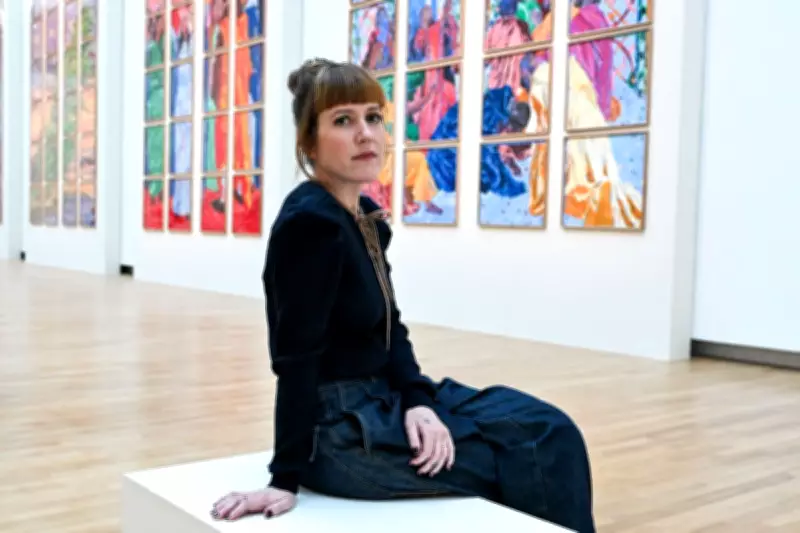
Tabouret was chosen from over 100 artists to create the windows, which will be installed later this year at an estimated cost of €4 million (£3.3 million). This commission has dramatically elevated her profile from having a select group of admirers, including French tycoon François Pinault, to becoming a nationally recognised figure. Her designs are currently on display at the Grand Palais in Paris before their installation.
Mixed Reactions to Modern Intervention
The project has received enthusiastic support from French President Emmanuel Macron and Paris's archbishop, fulfilling Macron's promise of a "contemporary gesture" in the cathedral's restoration. However, it has also provoked protests, petitions, and accusations of cultural and spiritual vandalism from traditionalists who oppose integrating modern art into the medieval landmark.
Tabouret remains philosophical about the criticism. "These are people who hate the project, no matter what," she observes. "They didn't even really look at the designs. They go on their computers to spread hate, but you can see from the messages they write that they don't really know what it's about." She notes that she's also receiving considerable positive feedback, which she finds encouraging.
Artistic Versatility on Display
Concurrently with the Notre Dame controversy, Tabouret's first major solo retrospective, Weaving Waters, Weaving Gestures, is showing at the Museum Voorlinden outside The Hague until 25 May. The exhibition showcases her remarkable versatility across multiple media, including paintings on canvas, faux fur, Plexiglas, bronze sculptures, ceramics, and works reproduced on tapestries and rugs.
The retrospective reveals why Tabouret captured the Notre Dame jury's attention. Visitors encounter striking self-portraits where she depicts herself as a vampire with a blood-stained mouth, a Joan of Arc figure in armour, and casually wearing a hoodie. "The human face is like the surface of water, always in motion, always elusive, never still," she reflects, suggesting these works hold a mirror to viewers as much as to herself.
Technical Innovation and Tradition
Notable works include a bronze sculpture of swimmers surrounded by paintings of children in bathing suits, and a series of Sèvres porcelain vases called The Mourners, each featuring the face of a weeping woman. The technique she developed for these vases – removing colour from painted porcelain while adding new paint – later informed her approach to creating the Notre Dame window designs on Plexiglas.
The Notre Dame Selection Process
Tabouret initially hesitated to apply for the Notre Dame commission, intrigued by what she saw as an uncharacteristically bold French approach to change. "It's not very French to change stuff," she notes, "so I thought that interesting as well as brave and fresh." She ultimately submitted her application just fifteen minutes before the deadline.
After reaching the shortlist of eight artists, she presented her designs to a jury with the specified theme of Pentecost – the biblical moment when the Holy Spirit descends upon the apostles. "We were supposed to make six sketches … I did sixty," she recalls. "I got obsessed. You couldn't pull me out of this. I was deep-diving into the Pentecost and my studio was just Pentecost everywhere!"
Balancing Tradition and Innovation
While not religiously observant herself, Tabouret approached the subject with respect and found herself captivated by the beauty and poetry of the Pentecost text. Her designs maintain traditional Pentecost symbols – fire, wind, a dove, and the breath of God – while presenting them through contemporary figurative painting. She depicts groups of people within vivid landscapes featuring turbulent seas and wind-lashed trees in vibrant blues, reds, greens, and purples.
"I think the jury wanted the images to be understood by everyone, which is absolutely how I paint," she explains. "I'm not trying to create any traps or mysteries."
Historical Context and Controversy
The existing seven-metre high monochrome windows that Tabouret's designs will replace are often mistakenly described as "original". In reality, they date from the cathedral's mid-19th century renovation. While experts consider their value more historical than aesthetic, their proposed replacement has faced opposition from a culture ministry committee, the influential Académie des Beaux-Arts, and heritage activists who have unsuccessfully appealed to courts and authorities to prevent their removal.
Manufacturing and Installation
The windows are being manufactured at the nearly 400-year-old Atelier Simon-Marq in Reims, a workshop with a distinguished history of collaborating with artists including Marc Chagall and Joan Miró. Each window comprises approximately fifty pieces of stained glass. Tabouret enjoyed "complete artistic freedom" from church authorities, with the only restriction being not to disturb the cathedral's inner "white light".
Her Grand Palais exhibition, D'un seul souffle (With One Breath), documents the design process, showing how she painted images in reverse on transparent Plexiglas using stencils and monotype printing techniques on thick paper.
Philosophical Perspective on Heritage
Tabouret offers a thoughtful perspective on balancing heritage with contemporary creativity. "When you live in a country with so much history, so much architecture and heritage you cannot just freeze time," she argues. "The question is, how do we create a harmonious dialogue between new layers in buildings like Notre Dame that are made of layers? If you stop those layers it makes no sense in my opinion."
Personal Background and Motivation
Now 44 and recently returned to France after living in the United States, Tabouret resides south of Paris with her American husband, furniture designer Nathan Thelen, their two young daughters, and various animals. Family legend holds that she decided to become a painter aged four after seeing Monet's Water Lilies in Paris with her music teacher parents.
"I remember the moment and I know the feeling, because I still get it when I see the Water Lilies or a painting I love; I feel an urgency to paint," she recalls. "I didn't know the artist or his paintings, I just knew I wanted to paint. My mum tells people I went to see the person sitting in the gallery and said: 'I need paint right now', it was that urgent."
Despite her current prominence, Tabouret maintains a practical artist's perspective. One exhibit features her paint-spattered workwear – trousers, boots, and a sweater. "I'd rather be wearing these than what I'm in now," she confesses, suggesting where her true priorities lie amidst the controversy surrounding her most high-profile commission to date.