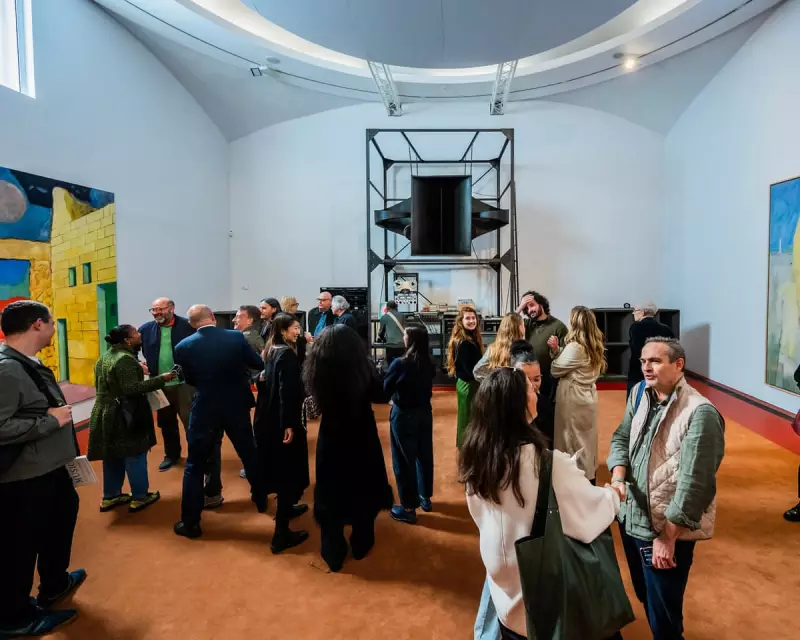
Visitors entering Peter Doig's House of Music exhibition at London's Serpentine Gallery encounter an unexpected sensory experience: not just paintings, but massive sound systems filling the space with music. The north gallery features a vintage Western Electric and Bell Labs system from 1920s cinemas, while Doig's personal Klangfilm Euronor speakers - previously owned by Kraftwerk's Florian Schneider - create an immersive audio environment.
The artist initially expressed nervousness about combining music with visual art, wondering whether visitors would question the need for audio accompaniment to paintings. Yet his exhibition represents a growing movement where galleries are transforming into sophisticated listening spaces.
Beyond the Gallery Walls
Doig's installation is far from an isolated case. Theaster Gates has hosted vinyl listening sessions during his White Cube exhibitions in New York, drawing from his extensive record collection. At Liverpool's Walker Gallery, Zinzi Minott's blood-filled speaker provided atmospheric sound for the groundbreaking Conversations show, while the V&A East recently hosted Sound Clash, a weekend dedicated to sound system activities.
This month, Autograph and House of Dread present Listening Room, a performance exploring how sound functions as presence, erasure and resistance within archives. Meanwhile, Doig has invited friends including poets Roger Robinson and Linton Kwesi Johnson to host their own sound service sessions during his exhibition.
Caribbean Roots, British Influence
The current trend draws directly from sound system culture that originated in 1950s Jamaica as an affordable, democratic way for communities to enjoy the latest music. The culture arrived in Britain with the Windrush generation, with Duke Vin establishing the first system in west London.
This introduction of heavy, rib-tickling bass fundamentally transformed UK music. Doig experienced this culture firsthand after moving to Trinidad, where even his daughter's school event featured speaker stacks comparable to those at Notting Hill Carnival.
Professor Julian Henriques of Goldsmiths, University of London, who has extensively studied sound system culture, sees Doig's work as pioneering new territory. He notes that traditionally male-dominated sound system culture is reaching new audiences through gallery spaces.
Fashion and Beyond
The influence extends beyond visual arts into fashion and retail. Valentino installed a high-end audio system in its New York flagship store, hosting ten-hour listening sessions. During Milan design week, Stone Island collaborated with Shivas Howard Brown's Friendly Pressure, while Doig arguably started the fashion trend with his 2020 Dior runway show featuring enormous speaker stacks overlooking models.
Culture critic Suze Webb attributes this trend to sound systems becoming status symbols and the increasing presence of Black and Caribbean creatives in design teams. The legacy of Virgil Abloh, who transitioned from DJ to designer, also looms large - his protégé Devon Turnbull created the OJAS Listening Room at 180 the Strand.
While some radical roots of sound system culture may have been diluted, Henriques views its mainstream popularity positively. He concludes that having sound systems as backdrops for fashion shows and gallery exhibitions represents meaningful cultural recognition rather than appropriation.