Sheida Soleimani's 'Forest of Stars' Exhibition: Art as Political Care
As the daughter of political refugees, Iranian American artist Sheida Soleimani transforms the act of caring for bodies—both human and animal—into a powerful political statement. Her latest exhibition, Forest of Stars, is set to captivate audiences at the Yancey Richardson Gallery from April 16 to May 22, 2026. This showcase delves into themes of identity, displacement, and resistance through a surreal lens, challenging traditional narratives in photography.
Roots in Refugee Experience
Soleimani's artistic journey is deeply intertwined with her family's history. Her mother, a former nurse in Iran, found solace in caring for injured animals after being forced to flee to the United States. "My mom would bring home animals hit by cars, and my father, a doctor, provided medical supplies for makeshift surgeries," Soleimani recalls. This upbringing immersed her in a culture of caretaking that now fuels her work, reframing it as a form of political activism against oppressive regimes.
Challenging Colonial Photography
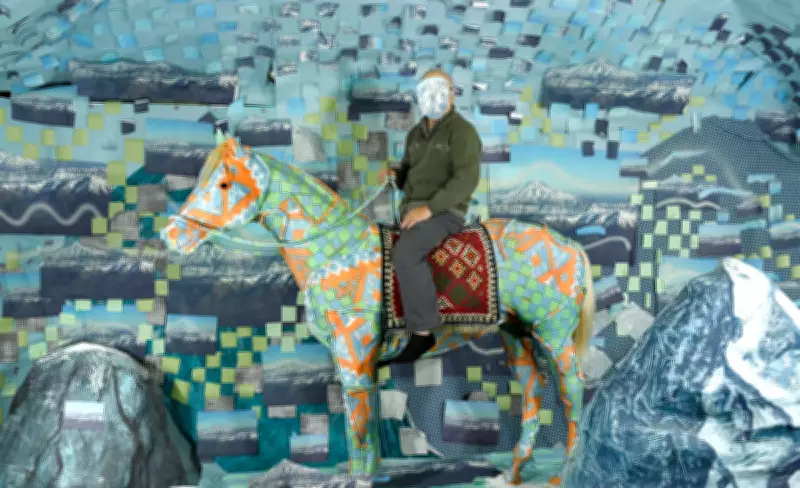
In her series Ghostwriter, Soleimani intentionally obscures faces to critique the colonial history of photography. "The history of photography is dominated by straight white men imposing their lens non-consensually," she explains. By avoiding traditional portraiture, she pushes back against stereotypes and phrenology, emphasizing the autonomy of her subjects, including animals, which she portrays without symbolic baggage. "I want creatures to represent just being animals," she asserts.
Symbolism and Storytelling
Soleimani employs a rich symbolic lexicon in her work, using props and imagery to build a language around events. For instance, she references the ancient game of Snakes and Ladders to mirror the precarious journey of refugees. "It's a game of luck and chance, similar to what refugees face in escaping their countries," she notes. Her father's life motto, drawn from a Persian poem—"We are the wave whose comfort is our demise"—underscores themes of constant movement and resistance against stagnation.
Political Urgency and Awareness
With ongoing conflicts in Iran, Soleimani's art gains heightened relevance. "We're at war with Iran right now, and many stories cannot leave the country due to internet shutdowns," she states. Her work aims to amplify these silenced voices, drawing attention to decades of suffering under a totalitarian regime. Through surreal celebrations of tenderness, she invites viewers to reconsider care as a radical act in the face of political turmoil.
This exhibition not only showcases Soleimani's technical prowess in photography but also her commitment to using art as a tool for social change, blending personal history with global political discourse.