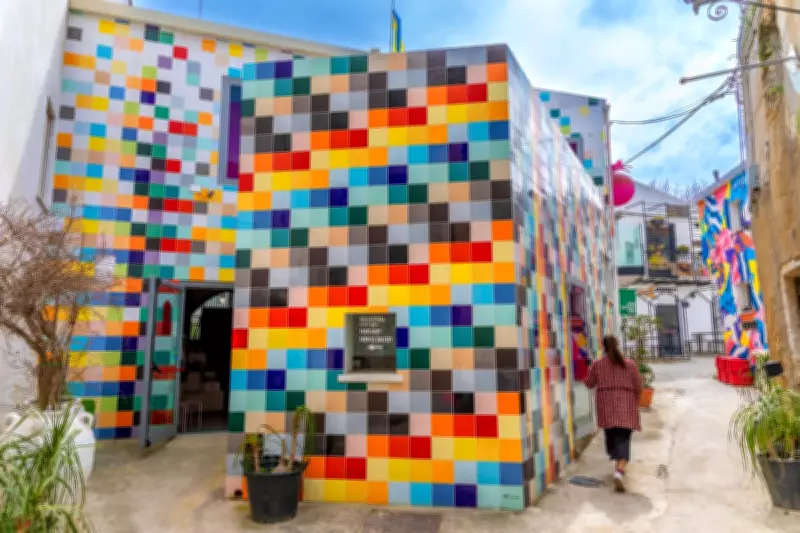
In the heart of western Sicily, a remarkable transformation is underway as abandoned spaces are being reborn through the power of art. From empty palazzos in Favara to earthquake-ravaged towns like Gibellina, creative initiatives are breathing new life into forgotten urban areas, establishing the region as an emerging arts hub.
Palermo's New Cultural Landmarks
Amid the bustling tourist crowds on Palermo's Via Maqueda, a significant revival is taking place at number 206. The Convento dei Crociferi, abandoned for three decades, has been transformed into the Museum of World Cities by Sicilian power couple Andrea Bartoli and Florinda Saievi. This new arts space, set to open soon, features a cloister with scalloped porticoes framing a lush courtyard filled with palms and banana trees.
Bartoli explains the philosophy behind their work: "Cities change because people make them change." This belief drives their organisation, Farm Cultural Park, which has rehabilitated four urban sites across western Sicily since 2010.
The Favara Miracle
The transformation began in Favara, a former sulphur mining town that suffered rapid depopulation after its mines closed post-World War II. Bartoli and Saievi turned a warren of crumbling palazzos into a vibrant casbah of art studios, exhibition spaces, and cafes. This intervention has revived the town, increasing tourist accommodation from just six hotel rooms to 600 beds.
Bartoli remains pragmatic about art's role: "What happened in Favara was a miracle. But you can't just put art in a place and hope it solves all the problems. Contemporary art can't change Sicily. It can't improve the healthcare system or education." However, he acknowledges art's power as a tool to attract visitors, generate employment, and potentially lure back residents.
Gibellina: Italy's First Capital of Contemporary Art
Further afield, Gibellina represents another success story in Sicily's cultural renaissance. Built from scratch after the 1968 earthquake destroyed the original town, former mayor Ludovico Corrao invited artists and architects to reimagine the city. His vision created a landscape of experimental postmodern buildings, sculptures, and mosaics.
Antonella Corrao, Ludovico's daughter who runs Fondazione Orestiadi, explains: "The founding principle of Gibellina is that artists would live here and work with the community to create works of art they would then leave behind. Gibellina has never been a place where art is commodified."
Recent recognition has come with Gibellina's designation as Italy's first Capital of Contemporary Art, a move hoped to revitalise a town that had faded from tourist itineraries. Restoration projects are underway, including cleaning graffiti from Francesco Venezia's postmodern spiral Giardino Segreto I-II and preparing Alessandro Mendini's Torre Civica to once again play regional folk music by 2026.
Creative Spaces Across Western Sicily
The artistic energy extends beyond these focal points. Near Palermo harbour, Fondazione RIV has transformed the deconsecrated San Mamiliano church into a contemporary art exhibition space, while in the Vucciria district, All studio provides an incubator for emerging artists and curators in a former warehouse.
Farm Cultural Park continues to expand its reach, recently incorporating the former San Vito prison into its network. This layered space, which served as both monastery and prison, now hosts art installations while preserving its historical markings—from football scores on cell walls to vintage posters.
Art as Economic Driver
The movement represents a strategic response to Sicily's depopulation crisis, coinciding with a cultural resurgence across the island. Vacant churches, prisons, and convents are being repurposed as arts venues, creating new economic opportunities.
As Antonella Corrao emotionally reflects on Gibellina's recognition: "This is how a dream becomes reality—with art truly becoming an economic driver for the region." The approach demonstrates how art can revitalise communities without erasing their history, allowing present creativity to coexist with past narratives.
For visitors, these developments offer rich cultural experiences, from exploring Favara's casbah to witnessing Gibellina's architectural experiments. The revival proves that even in challenging circumstances, artistic vision can transform ghost towns into vibrant destinations, making western Sicily an increasingly important player in Italy's contemporary art scene.