Death, Power and Paranoia: Painting That Shocked German Society Finally Returns to Berlin
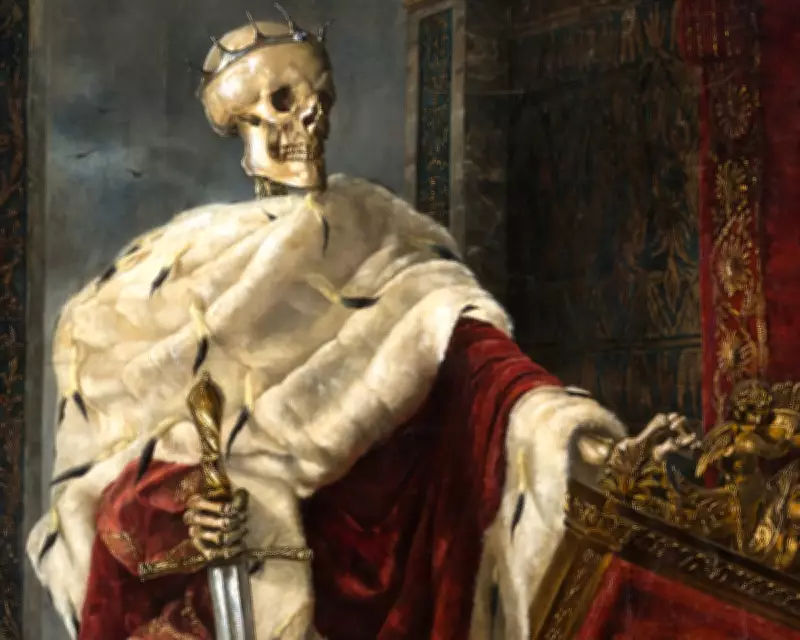
A hulking skeleton wrapped in an ermine-fur cloak, wearing a jagged iron crown, rests one foot on a globe while dramatically knocking over a royal throne with an ivory wrist. This striking image, titled Mors Imperator ("Death is the Ruler"), created by German artist Hermione von Preuschen in 1887, was meant to symbolize the transience of fame and power. However, it sparked a major scandal amid fears it mocked the aging German Emperor Wilhelm I, who had recently turned ninety.
The Controversial Rejection and Political Paranoia
Authorities refused to accept the painting for the Berlin Academy of the Arts' annual exhibition, fearing it could be interpreted as an insult to the monarchy. This rejection highlights how prone single-ruler autocracies can be to paranoia about hidden meanings in art. According to Birgit Verwiebe, an art historian and curator of the current exhibition, "an offence against the monarchy was neither what the artist intended nor how it was perceived by its supposed target."
In-depth studies have revealed no evidence that von Preuschen intended the skeleton to represent the German kaiser. The coat of arms on the throne was a creative invention, loosely comparable to French royal insignia, and the falling crown was based on a French royal crown at the Louvre. The painting was originally conceived as the first part of a ten-painting cycle exploring themes of life, death, and love, meant to counterpose another work titled Regina Vitae (the queen of life), which was not completed in time.
The Artist's Bold Response and Public Spectacle
Devastated by the rejection, the thirty-three-year-old painter wrote directly to Emperor Wilhelm I to explain her intentions. His secretary replied that the monarch had no issue with the subject, leaving the judgment to the academy. The academy then shifted its reasoning, rejecting the painting on artistic grounds, calling it "the inartistic expression of a skewed thought."
Von Preuschen escalated the situation by publishing a letter in a Berlin newspaper and hiring a shop room on Leipziger Strasse in central Berlin to showcase the painting. She hid it behind curtains, unveiling it with dramatic flair. Despite an admission fee equivalent to €8 today, the exhibition became the talk of the town, making the artist famous overnight.
Hermione von Preuschen: A Pioneer of Female Emancipation
Born in Darmstadt in 1854, von Preuschen was a poet, world traveler, and painter known for her large-scale, flamboyant historical still lifes. At the 1896 International Women's Congress in Berlin, she delivered an impassioned speech advocating for women's access to artistic education. Verwiebe notes, "Hermione von Preuschen was bold, not short of self-belief, and an early advocate of female emancipation. But she was not a political person, and there is no record of her having anti-monarchical instincts. After all, she came from nobility herself."
Mors Imperator was sold to a Swiss businessman in 1892. After von Preuschen's death in 1918, her daughters donated her remaining works to a small neighborhood museum in Berlin's Alt-Mariendorf district. A 2013 retrospective featured a copy of the scandalous painting, and now the original has been loaned to the Alte Nationalgalerie for display from Sunday until mid-November.
The Painting's Enduring Message and Historical Irony
Verwiebe describes von Preuschen as "an intelligent, highly educated but also highly emotional person, who spent a lifetime grappling with the big questions around life, death, and fate. Mors Imperator was a picture that came from the heart." The painting's central message—that death overrules earthly authority—proved tragically true: Wilhelm I died shortly after its completion on March 9, 1888. This year, known in Germany as the "Year of the Three Emperors," saw his son Frederick III take the throne while fatally ill with throat cancer, dying just ninety-nine days later.
More than a century after its initial rejection and pop-up gallery display caused a stir in Berlin society, Mors Imperator returns to the German capital. The 2.5-meter by 1.3-meter painting is now showcased in a state institution, the Alte Nationalgalerie, allowing modern audiences to appreciate its powerful allegory of death and power, free from the paranoia that once surrounded it.