Robert Capa Exhibition in Paris Reveals the Man Behind the Legendary War Photography
A remarkable new exhibition at the Museum of the Liberation of Paris is offering an unprecedented glimpse into the working methods of Robert Capa, the photographer who revolutionized war photography and defined the profession for generations to come. The retrospective features newly discovered candid footage of Capa during the chaotic liberation of Paris in August 1944, showing him in action with his signature three cameras around his neck.
Discovering Capa in the Archives
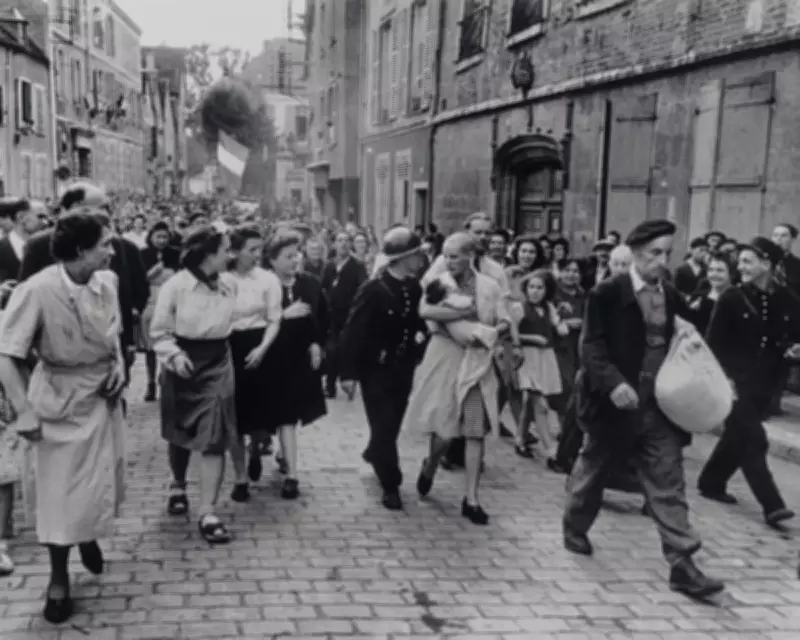
Museum researchers embarked on an extensive project to trace Capa's movements during the liberation of Paris. Starting with the 30 contact sheets containing approximately 500 photographs that Capa took on August 25 and 26, 1944, the team meticulously identified each location where the photographer stood. They then cross-referenced these positions with extensive US Army footage from the same period.
The result was startling, according to museum director Sylvie Zaidman. "We found him," she said. "We can see him with the Free French in the suburbs and with De Gaulle on the Champs-Élysées. Dodging bullets on the rue Saint-Dominique." The footage captures Capa sprinting, crouching, mingling with crowds, and spinning to capture shots during two days when up to 1,000 French resistance fighters lost their lives.
The Invention of a Photographic Style
Zaidman emphasizes that Capa didn't just document war; he invented a new way of seeing it. "He invented a style, fashioned our whole perception of war photography," she explained. "Immediate, unposed, immersed in action. He said: 'If your photographs aren't good enough, you're not close enough.' And here we see him actually doing it."
The exhibition reveals how Capa created not just a photographic style but also a persona. Born Endre Friedmann in Budapest in 1913, he arrived in Paris in 1933 and soon reinvented himself as Robert Capa. "If he invented a photographic style," Zaidman noted, "he also invented, little by little, a character." This character—the intrepid, risk-taking, hard-drinking war photographer—became the archetype for the profession.
From Humble Beginnings to Global Recognition
The exhibition traces Capa's journey from his early days as a Hungarian émigré to his status as the world's most celebrated war photographer. It includes his first published photographs of Leon Trotsky in Copenhagen in 1932 and documents his time in Paris's Montparnasse artistic circle, which included fellow photographers André Kertész, Gisèle Freund, David Szymin (Chim), and Henri Cartier-Bresson.
Capa's breakthrough came during the Spanish Civil War when his most celebrated image, "The Falling Soldier," was published in Vu magazine in September 1936. Despite ongoing controversy about the photograph's location and subject, it remains one of the most powerful war images ever captured. This success led to regular work with Life magazine and Picture Post, which had already dubbed him "the greatest war photographer in the world."
The Liberation of Paris: A Personal Mission
For Capa, the liberation of Paris held special significance. He had called the city home since 1933, describing it as "a magnificent city" where he discovered "love, good wine and fine cuisine." The exhibition footage shows his personal investment in the events, capturing not just the military action but also the emotional release of Parisians after four years of German occupation.
In one particularly revealing moment, US Army footage shows Capa stepping out of his photographer role. After fierce fighting in the rue de Bourgogne, Capa followed Free French fighters to the Palais Bourbon, where he first photographed a Nazi officer approaching German soldiers still inside the building—then set his camera aside to help negotiate their surrender.
Legacy and Lasting Impact
After World War II, Capa co-founded the Magnum photo agency and continued working for Life magazine, photographing celebrities and fashion from Hollywood to the French Riviera. He maintained his adventurous spirit until his death in 1954, when he was killed by a landmine while covering the conflict in Vietnam.
The Paris exhibition seeks to place Capa's iconic images in what Zaidman calls "their personal and historical context. A tighter focus, you might say." By showing the photographer at work, the exhibition reveals how Capa's approach—capturing not just war but the actors and victims of war—created a new visual language that continues to influence photojournalism today.
"Like him, his pictures had to speak," Zaidman concluded, summarizing the essence of Capa's photographic philosophy. The exhibition runs through December 20, offering visitors a unique opportunity to understand the man behind some of the 20th century's most powerful images.