The Accidental Career of a Professional Eavesdropper
We've all done it. Whether in a bathroom stall, at a café table, or on a crowded bus, that irresistible nugget of conversation catches your ear and suddenly you're fully invested in someone else's drama. This universal human experience has now evolved into something more than just casual nosiness—it's become a legitimate career path for some content creators.
The Viral Rise of Uncle CCTV
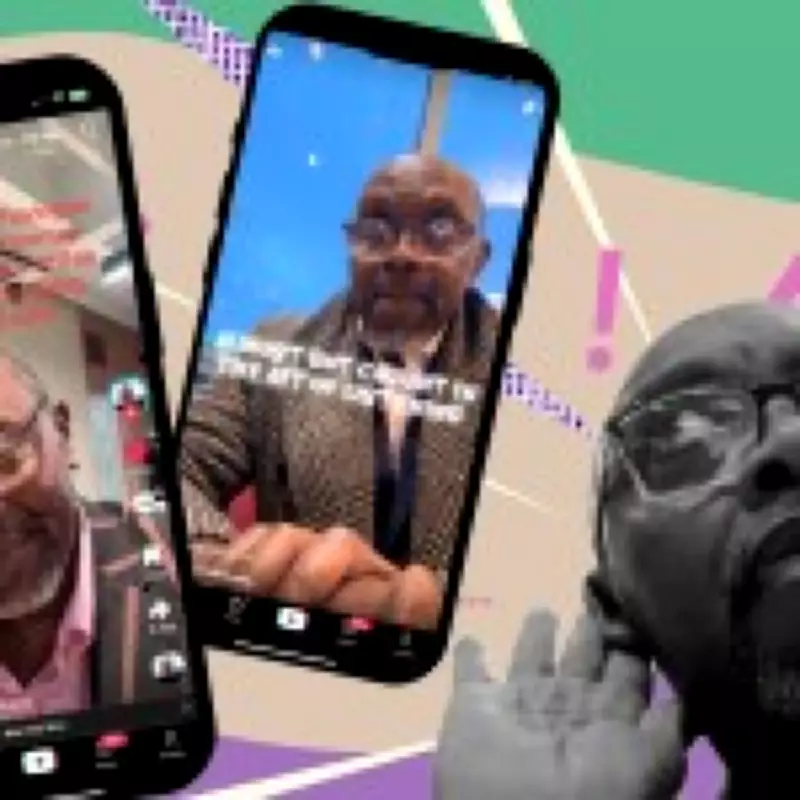
In October 2025, an anonymous content creator known only as Uncle CCTV went viral after sharing videos of himself listening in on nearby conversations. From relationship dramas to family conflicts, he records his real-time reactions to what he calls "piping hot tea" as it spills in public spaces. His popularity has grown so significantly that he's now booked for comedy shows and fringe festivals across the United Kingdom.
Uncle CCTV's eavesdropping career began entirely by chance. "I walked into a pub looking for somewhere to chill, and I saw this nice looking couple," he explains. "It was so wonderful to see two people in love, especially in this chaotic world we're in at the moment."
But the romantic scene quickly took a dramatic turn. "Something dawned on me and I thought to myself, 'I think they're cheating,'" he continues. "My head was racing and I just thought, 'I need to record this.'" The couple soon left the establishment, leaving both Uncle CCTV and his growing online audience wondering whether they had just witnessed an affair unfolding.
The Psychology of Eavesdropping
This phenomenon isn't just about being nosey—it's deeply rooted in human psychology. Dr. Heather McKee, a behavioral change specialist, explains that "we're wired to scan our environments for social information. It's a core evolutionary principle. Overhearing conversations gives us social learning; our brain is doing what it's evolved to do: taking in information and processing it."
Dr. McKee further elaborates that "behaviorally, gossip plays an important role in bonding, social norm setting, and sense making—especially in female and marginalized groups." This explains why platforms like Instagram's 'Overheard at...' profiles, which feature conversations from cities and universities worldwide, have amassed more than four million followers combined.
When Public Listening Goes Too Far
While Uncle CCTV has built a comedy career around overhearing conversations, his success raises important ethical questions about privacy in public spaces. In 2018, comedian Rosey Blair created what she thought was a romantic viral moment when she live-tweeted interactions between two strangers on a flight, dubbing them #PlaneBae and #PrettyPlaneGirl.
The thread went massively viral, with the initial tweet shared more than 300,000 times. However, this wasn't the feel-good story it appeared to be. The woman involved eventually released a statement through her lawyers revealing she had been harassed and doxed since the thread gained traction. "I did not ask for and do not seek attention," she stated. "#PlaneBae is not a romance—it is a digital-age cautionary tale about privacy, identity, ethics, and consent."
The Fine Line Between Curiosity and Exploitation
Dr. McKee emphasizes that "context matters" when it comes to eavesdropping ethics. "If you accidentally hear something on the tube, it'd be different from actively listening in or recording information to manipulate or harm someone," she notes. "The line gets crossed when listening becomes exploitative."
Uncle CCTV says he takes precautions to protect the identities of those he films, ensuring he always conceals both faces and voices. Viewers only see his reactions, never the people having the conversations. "No one is truly aware of what's going on around them," he observes. "They'll be complaining about their boss or bitching about their mother-in-law and they don't realize others are listening in. We've become so comfortable talking about our most intimate, private thoughts in public."
Public Perspectives on Eavesdropping
Public opinion on eavesdropping varies widely. Jessica Corrigan, 25, admits she's been "nosey since birth" and proudly embraces the label. "If I'm on the tube and spot a spicy conversation going down nearby, trust me I will pause my music and tune in," she says.
Blaise Kelly, 26, views eavesdropping as "information gathering" and considers it "an important life skill" rather than an invasion of privacy. Meanwhile, Rovie Hernandez, 28, calls it "low-lift escapism," explaining that "for a small amount of time, it keeps me distracted from what's going on with myself personally."
The Legal and Ethical Landscape
In public spaces, privacy rights are surprisingly limited. As long as you're on public land, you generally don't need permission to photograph or film people. However, Dr. McKee stresses that "the key question is what are you doing with the information you hear. The behavior isn't inherently bad, but it's the use of the information and how we translate that really matters."
Social media has fundamentally changed how we view privacy, normalizing and even encouraging surveillance behaviors. "It's difficult because it is such a grey zone morally," Dr. McKee concludes. "It's not about silencing curiosity but it's about acting with consent, compassion, and care for the people on the other end of it."
As our world becomes increasingly connected and public spaces transform into potential content creation zones, the ethics of eavesdropping will continue to evolve. What remains clear is that this ancient human behavior has found new expression in the digital age, creating both entertainment opportunities and serious privacy concerns that society must navigate carefully.