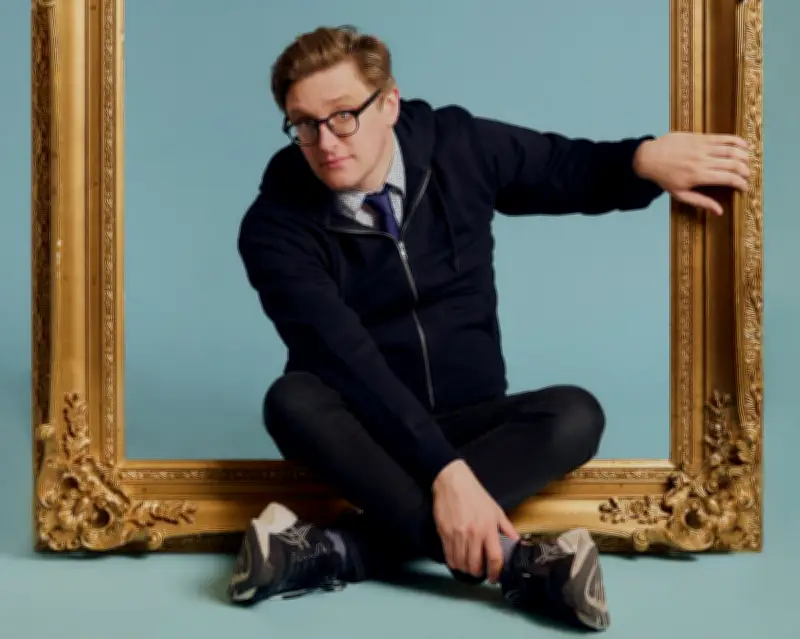
In September 2024, Tom Neenan was commissioned to paint a portrait of an 86-year-old man who had always wanted a formal portrait, inspired by watching Portrait Artist of the Year. Neenan, who had been receiving painting commissions for three years, expected a straightforward process: receive a photo, render a painting suitable for a cricket clubhouse wall, and earn his fee.
Initial Challenges
Two issues arose. First, the sitter wanted Neenan to paint him in person, requiring a commute from London to Reading and small talk, which Neenan dreaded. Second, the sitter asked Neenan to “capture him.” Neenan initially thought this would be easy.
Neenan realized that both he and the sitter struggled with identifying what they look like. As a portrait painter, Neenan is accustomed to gazing at his own reflection, but he dislikes it. “My eyes gravitate to flaws and imperfections,” he wrote. “I torture myself wishing I were slimmer, more sculpted, had a stronger jaw or smaller ears.”
The Failed First Attempt
Neenan created a basic composition—a head-to-elbow painting against a nondescript wall—and sent a photo of the 80% finished work to the sitter. The response was harsh: the sitter did not recognize the man in the portrait and felt Neenan had not captured him at all. He provided notes: his eyes were kinder and wiser, his hair fuller, his smile brighter.
Neenan tried again, flattering the sitter so much that the second painting resembled a hybrid of Paul Newman and Brad Pitt. But this attempt was also met with indifference; the sitter sensed he had been “yassified” and was unhappy.
A Deeper Approach
Frustrated, Neenan realized the sitter had an unshakeable idea of who he was, unrelated to his current appearance. He wanted Neenan to conjure the image he held in his mind. Neenan changed his approach, chatting with the sitter to learn about his life. He discovered the sitter was romantic, a dreamer, a yarn spinner, and a voracious reader of detective and historical novels. He loved fiction and often embellished his own story.
Neenan’s painting became a collaboration between what the sitter saw and what Neenan saw. “Art is a dialogue,” Neenan wrote. The eventual portrait went beyond acrylics to become a product of their conversations. The smile became more impish, the eyes more glinting.
Reflection and Legacy
Sadly, the man died before seeing the finished painting. Neenan takes solace in the fact that the sitter wanted to be seen, maybe for the last time. Neenan had shown him a work in progress, at which he grinned broadly. Neenan hopes he would have approved of the finished piece.
Through the process, Neenan learned about the disconnect—dysmorphia—he often experiences with self-perception. He finds room for improvement: weight to lose, blemishes to remove, crooked teeth to straighten. But he reminds himself that negative self-talk is just one side of the conversation. “Although I may gain weight and lose my hair, and although I’ll definitely age, that doesn’t make me any less ‘me’,” he wrote. “We’re all a work in progress, right until the end.”
Tom Neenan’s show Portrait of a Tom as a Young Neenan is at Underbelly, George Square, Edinburgh from 5 to 30 August at 15:15pm.