The National Gallery of Australia in Kamberri/Canberra has unveiled its most significant showcase of contemporary First Nations art, the 5th National Indigenous Art Triennial. Titled After the Rain, the exhibition is curated by acclaimed artist Tony Albert and presents a powerful narrative of cultural resilience, hope, and regeneration.
A House of Glass and Legacy
At the heart of the exhibition is a stunning, large-scale stained glass recreation of the house built by the legendary Western Arrarnta watercolourist, Albert Namatjira, in 1940. The original sandstone and lime house still stands on the banks of the Lhara Pinta (Finke River) in Ntaria/Hermannsburg. This luminous glass replica, a collaboration between Canberra Glassworks and the Iltja Ntjarra Art Centre, is lit from within and depicts Namatjira's story and Country.
Curator Tony Albert describes it as the show's "heart and soul." The installation forms part of a vast multigenerational project featuring 57 artists from Namatjira's family and community. The Hermannsburg Potters have contributed painted clay sculptures of the artist's personal belongings, including his boots, brushes, and letters, offering an intimate glimpse into his life.
Art as Enlightenment and Truth-Telling
The triennial's theme, After the Rain, was chosen for its poetic duality, symbolising both renewal and potential devastation. This resonates deeply in the wake of the 2023 Indigenous Voice to Parliament referendum. Gumbaynggirr artist Aretha Brown, 25, whose large mural greets visitors, suggests that while the referendum result felt like a burn, "the seeds are going to come back stronger and greener."
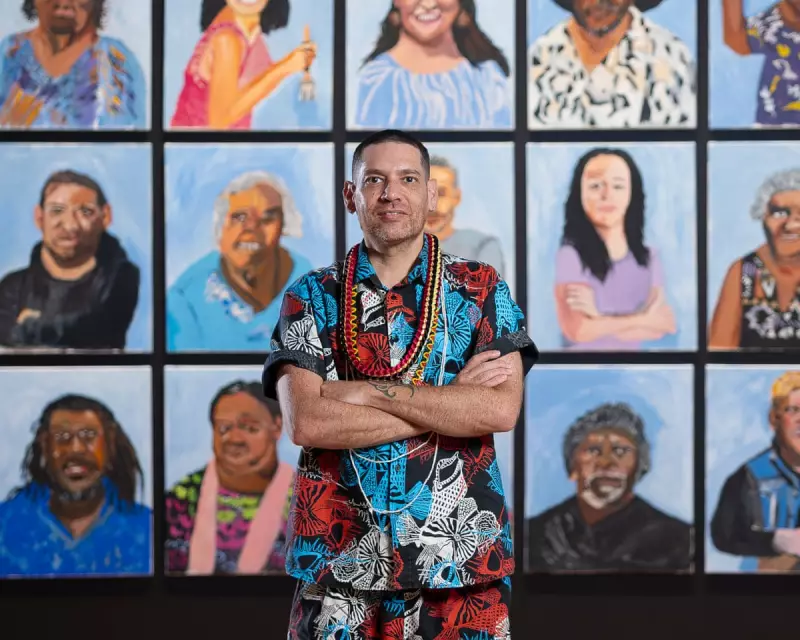
The exhibition features a diverse range of powerful works. Vincent Namatjira, great-grandson of Albert and the first Indigenous winner of the Archibald Prize, presents 15 portraits of the participating artists. Kuz/Peiudu artist Jimmy John Thaiday's video work, Just Beneath the Surface, addresses climate threats to the Torres Strait Islands, accompanied by sculptures made from salvaged 'ghost nets'.
In a more sombre installation, Kamilaroi artist Warraba Weatherall links environmental destruction to cultural loss. His work, Mother-Tongue, projects footage of deforestation onto autopsy tables inscribed with Kamilaroi kinship designs.
Celebrating Queer Blak Love and Familial Legacies
Another strong thread is the celebration of identity and lineage. Yuwi, Torres Strait and South Sea Islander artist Dylan Mooney, who is legally blind, presents vibrant banners depicting queer couples entwined with Country. He cites the late artist Destiny Deacon as a foundational figure. Deacon famously coined the term "Blak," which is used throughout the exhibition catalogue. As Tony Albert explains, "Blak isn't a colour, it's a state of being."
Arrernte/Kalkadoon artist Thea Anamara Perkins contributes intimate portraits of her renowned family, including her grandfather, activist Charles Perkins. Her evolving style reflects the Indigenous concept of 'everywhen', where past, present, and future exist in a continuous flow.
After the Rain runs at the National Gallery of Australia until 26 April. Following its Canberra showing, the exhibition will embark on a three-year national tour to every state and territory, marking a renewed commitment by the gallery to hold the triennial every three years.