Montez Press: Global Champions of Queer Feminist Art and Literature
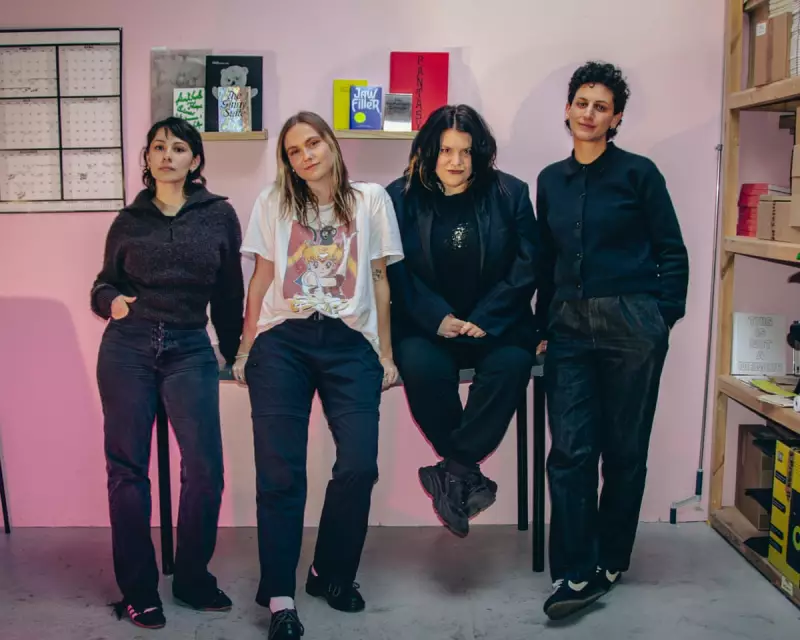
In an era marked by political turbulence, Montez Press stands as a defiant beacon for queer and feminist artistic expression. This international press and radio collective, with bases spanning London, New York, and Hamburg, has carved out a vital space for experimental voices that challenge mainstream narratives. The organisation's work has gained renewed urgency as its founders confront what they describe as a rising tide of fascism, making their commitment to underrepresented perspectives more critical than ever.
From Goldsmiths Exchange to Global Movement
Montez Press emerged in 2012 from a group of exchange students between Goldsmiths College of Art and Hamburg School of Art. Their founding mission was clear: to disrupt a publishing landscape they viewed as dominated by heteronormative journalists and academics. Instead, they sought to platform more radical forms of writing, foregrounding feminist and queer viewpoints through artist-led initiatives.
Their inaugural publication, Chubz by Huw Lemmey, set the tone with its provocative content. This homoerotic satire follows a protagonist who dates a leftwing journalist inspired by Owen Jones, exploring themes of class struggle, populism, and technological dependence against a backdrop of Nigel Farage's political ascent. The book's explicit content and political commentary established Montez Press's boundary-pushing ethos from the outset.
Innovative Publishing and Radio Programming
Each year, Montez Press commissions a novel from a younger artist working in what director Emily Pope describes as "auto-speculative or fan fiction" realms. This approach produces literature rooted in personal experience yet viewed through futuristic or fantastical lenses. Their recent release, Jaw Filler by Maz Murray and Charlie Markbreiter, exemplifies this with its pulpy neo-noir detective narrative set within a virtual reality trans commune.
The team members themselves frequently contribute to this literary output. Co-director of Montez Press Radio, Stacy Skolnick, authored The Ginny Suite in 2024, while assistant editor Elida Silvey is currently developing a vampire story. This personal investment underscores the collective's integrated approach to creation and curation.
Montez Press Radio, launched in 2018 from a Manhattan art gallery, extends this experimental spirit into audio. The station broadcasts an eclectic mix that captures underground art, literature, nightlife, and music scenes. Programming includes everything from Irish noise artist Vivienne Griffin's augmented harp performances to interviews with countercultural icons like Adele Bertei. The radio provides a crucial platform for intimate conversations and artistic experimentation, reaching audiences far beyond traditional gallery spaces.
Building International Countercultural Networks
Unlike community radio stations tied to specific locales, Montez Press operates as a truly international network. Beyond its three main bases, the organisation has developed programming in Mexico, staged events in Vietnam and Korea, and produces its Interjection Calendar through editorial work in Taiwan. This calendar commissions twelve emerging and established artists annually to map contemporary art writing across the year.
"We're really interested in how to connect hyper-local, grassroots, counter-cultural scenes in contemporary art, writing and music, and how to foster a global community," explains Pope. This transnational approach allows Montez Press to weave together disparate artistic communities while maintaining sensitivity to local contexts and struggles.
Political Urgency and Future Challenges
For founding member Anna Clark, living in America under Trump's political shadow has intensified Montez Press's mission. "The rise of fascism is really challenging and makes the work that we do both even more important," Clark states, "doubling down on our commitment to support trans people, feminist perspectives, underrepresented voices, as that becomes more and more under attack."
This political consciousness permeates their programming, from collaborations with Radio Alhara on Palestinian liberation to Forensic Architecture's examinations of colonial violence in Namibia. Montez Press positions itself as an essential alternative to public radio, particularly in the United States where such institutions have faced significant defunding and undermining.
Over its decade of operation, Montez Press has evolved from peripheral newcomer to established pillar of independent publishing. As Pope reflects, "We've shifted from being on the periphery to being a pillar in new ways of thinking about independent publishing." Yet this success presents its own challenges: how to maintain countercultural relevance when the queer feminist publishing landscape has blossomed into a diverse ecosystem of small presses, zine fairs, and dedicated shops across London and beyond.
The organisation continues to navigate this tension while expanding its global footprint, proving that experimental art and radical politics can forge powerful international connections in uncertain times.