Laura Lima's ICA Exhibition: When Surrealism Stumbles in London
Moving through the Institute of Contemporary Arts in London, visitors encounter Laura Lima's The Drawing Drawing, a solo show that marks her UK debut despite a long international career. This exhibition, filled with surreal and absurd elements, aims to jolt audiences out of their everyday thinking patterns, but as this review explores, it often falls short of delivering meaningful engagement.
Conceptual Ambitions and Practical Shortcomings
Lima, a Brazilian conceptual artist, has built a reputation on creating works meant to free viewers from mundane mental ruts. At the ICA, she presents a series of installations designed to provoke thought through unexpected encounters. However, the execution raises questions about whether the absurdity translates into substantive art or merely feels silly.
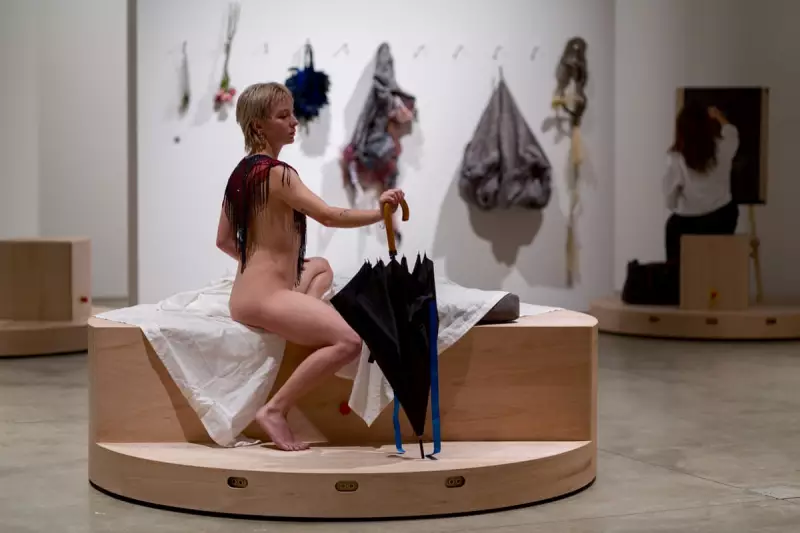
One of the central pieces involves a life drawing class where everything is on wheels. Easels and models are placed on moving wooden platforms that autonomously navigate the room, forcing participants to crane their necks and spin around to see the subject. While the idea is to introduce randomness and chaos, the reality is more controlled; the platforms operate like giant Roombas with sensors, moving in preprogrammed patterns. This undermines claims of unpredictability, making the experience feel heavy-handed rather than genuinely chaotic.
Absurd Encounters and Elusive Meaning
In another room, a set of keys lies on the floor with a human arm protruding from under a wall, attempting to grab them. Initially, this absurd setup might evoke laughter or curiosity, but as viewers search for deeper meaning, the concept unravels. If the intention is to suggest that meaning is just out of reach, the eventual success of the hand in grabbing and discarding the keys muddles the message, implying that obstacles are self-imposed rather than inherent.
Upstairs, a red parasol on motorised wheels dances around the gallery, while a nearby fridge holds images frozen in ice, meant to be defrosted for viewing. These elements, though whimsical, lack significant impact, leaving visitors wondering if the effort to uncover meaning is worthwhile.
Philosophical Overload and Artistic Substance
The exhibition is laden with references to half-baked philosophy, such as Epicurus's atomist theory, which Lima uses to frame the work as an exploration of chance and process. However, this intellectual scaffolding often feels shoddy, detracting from any potential enjoyment of the surreal and poetic aspects. Lima encourages viewers to find significance in the unexpected, but without guiding them toward actual substance, the risk is that the art comes across as meaningless, with blame placed on the audience for not looking hard enough.
Ultimately, The Drawing Drawing struggles to balance its conceptual ambitions with aesthetic appeal. While the form of the installations—from spinning easels to dancing parasols—is not inherently problematic, the lack of clear meaning or visual impact leaves a lingering sense of disappointment. As visitors sit amidst giant Roombas drawing a nude model or defrost ice trays, the attempt to engage with serious thoughts often yields only silly art, highlighting a gap between intention and execution in this surreal London show.