The late Australian avant-garde artist John Nixon transformed everyday objects into extraordinary art, from sprinkling eggshells across canvases to committing five years exclusively to orange paint. His first major posthumous exhibition, Song of the Earth 1968-2020, now illuminates his five-decade career at Melbourne's Heide Museum of Modern Art.
A Life Blending Art and Everyday Experience
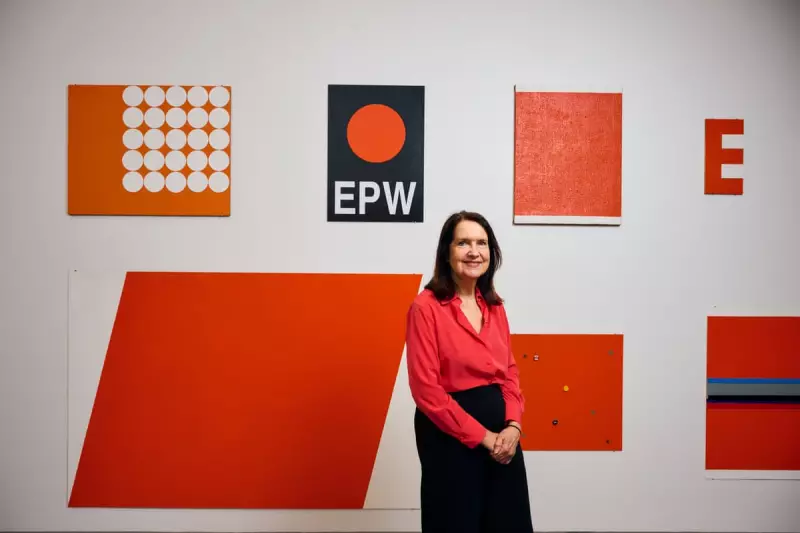
Curated by his wife Sue Cramer, the exhibition reveals how Nixon's frugality and idiosyncratic methods became central to his artistic philosophy. 'He wanted to challenge orthodoxy in everything he did,' Cramer explains, highlighting how Nixon seamlessly integrated artistic practice into daily living. The artist's notorious five-year orange period began in 1996 as he prepared for fatherhood, seeking a streamlined approach while establishing a unique artistic signature.
Experimental Painting Workshop: A Kaleidoscope of Innovation
The exhibition opens with a dedicated space for Nixon's Experimental Painting Workshop (EPW), the enduring banner for his abstract works rooted in conceptualism, minimalism and Russian constructivism. Visitors encounter shimmering silver series, rare organic forms resembling planets, and his iconic crosses and monochromes - some featuring unexpected additions like dinner plates or violins. Despite the visual richness, Nixon maintained his frugal principles, often working with found materials like onion bags and cardboard. 'It was his sense of making something out of nothing,' Cramer notes.
From First to Final Works: A Career Framed
In a poignant curatorial decision, Nixon's first and final works face each other across 40 metres of gallery space. His 1968 black monochrome, created at age 19 under the influence of Ad Reinhardt and Marcel Duchamp, contrasts with his 2020 final pieces - squares within squares that metaphorically suggest eyes, created while facing mortality. The exhibition also features his ingenious 1982 Documenta 7 installation, designed to pack neatly into a suitcase to avoid freight costs, demonstrating his practical ingenuity alongside artistic vision.
Throughout the survey, themes of labour and construction emerge consistently - from hessian potato bags covering canvases to artworks displayed on agricultural wheelbarrows. 'He was interested in the idea of construction, the worker and building,' Cramer reflects. 'He saw what he did as an artist as work.' This connects directly to Nixon's enduring engagement with Russian Constructivism, which provided both philosophical framework and poetic inspiration for his belief that art should integrate completely with life.
John Nixon: Song of the Earth continues at Heide Museum of Modern Art until 9 March 2026, offering comprehensive insight into an artist whose prolific output - spanning painting, prints, text, music, film and performance - became its own powerful statement about artistic dedication.