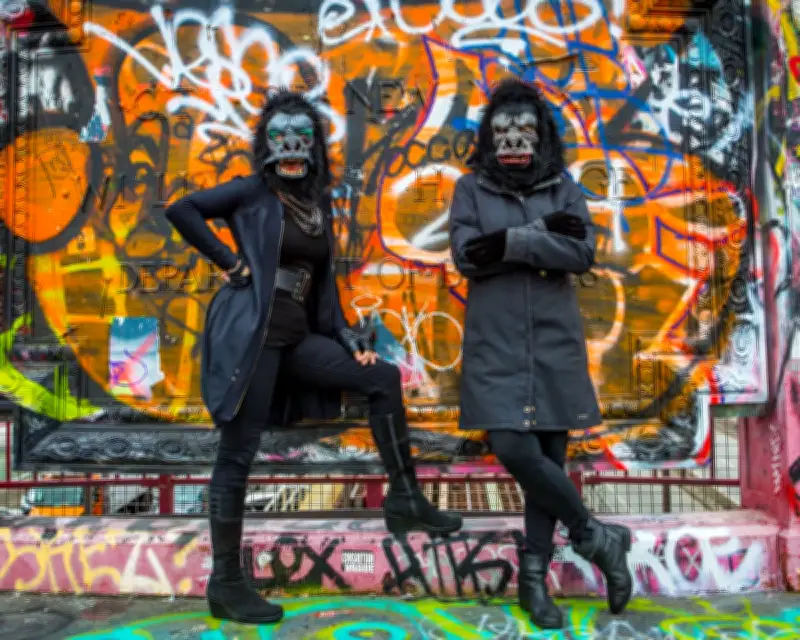
The Guerrilla Girls, an anonymous feminist art collective known for gorilla masks and provocative posters, have long championed anonymity as a radical act. This week, founding member Joyce Kozloff, 83, chose to unmask herself publicly, breaking a decades-long pact to reveal her identity only after death. Her decision underscores how invisibility can serve as both a shield and a spotlight in an era obsessed with self-exposure.
A Legacy of Masked Activism
Founded in New York in 1985, the Guerrilla Girls used humor and eye-catching visuals to expose gender and racial biases in museums and galleries. Their iconic 1989 poster asked, "Do women have to be naked to get into the Met. Museum?" The group's founding member explained in a 1995 interview, "Of course, we were afraid that if we blew the whistle on some of [the art world's] most powerful people, we could kiss off our art careers. But mainly, we wanted the focus to be on the issues, not on our personalities or our own work."
Over the years, 55 members have come and gone, using pseudonyms borrowed from deceased women artists like Frida Kahlo and Lee Krasner. Only a few true identities have surfaced, often posthumously or through legal battles. Kozloff, codename Liubov Popova, said, "I'd had a pact with another Girl that whoever died first, the survivor would bring her out. But I suddenly realised that if I were dead, I couldn't tell the story my way."
Anonymity as Self-Protection
Anonymity offers protection, as seen with the Secret Barrister, a legal blogger since 2015, who wrote, "Put simply, anonymity buys me the ability to speak plainly, frankly and without fear or favour about the problems that I see in the criminal justice system." Similarly, Banksy adopted an alias in the early 1990s to avoid legal trouble, though his vandalism now enhances property value.
Focusing on the Work
For some, anonymity shifts focus to the art itself. Elena Ferrante, author of the Neapolitan quartet, embraced a pen name to overcome shyness, stating, "Anonymity lets me concentrate exclusively on my writing." Daft Punk's Thomas Bangalter once said, "One thing I like about the masks is that I don't have people constantly coming up to me and reminding me what I do."
Niche Motivations and Mystery
The Directors Guild of America introduced the pseudonym "Alan Smithee" in 1968 for directors disowning films, but it became too notorious and was retired. Authors like JK Rowling and Stephen King used pen names to test market reactions; Rowling's "Robert Galbraith" sold only 1,500 copies before her authorship leaked.
Anonymity also fuels curiosity. In 1990, the Guerrilla Girls joked with a poster listing over 500 names of women artists under the headline "GUERRILLA GIRLS' IDENTITIES EXPOSED!" concluding with "AND MANY MORE…….." This clever stunt highlighted the countless under-recognized women in the art world.
Despite modern pressures to share personal data, anonymity remains a viable strategy for artists to control their narratives and challenge cultural norms.