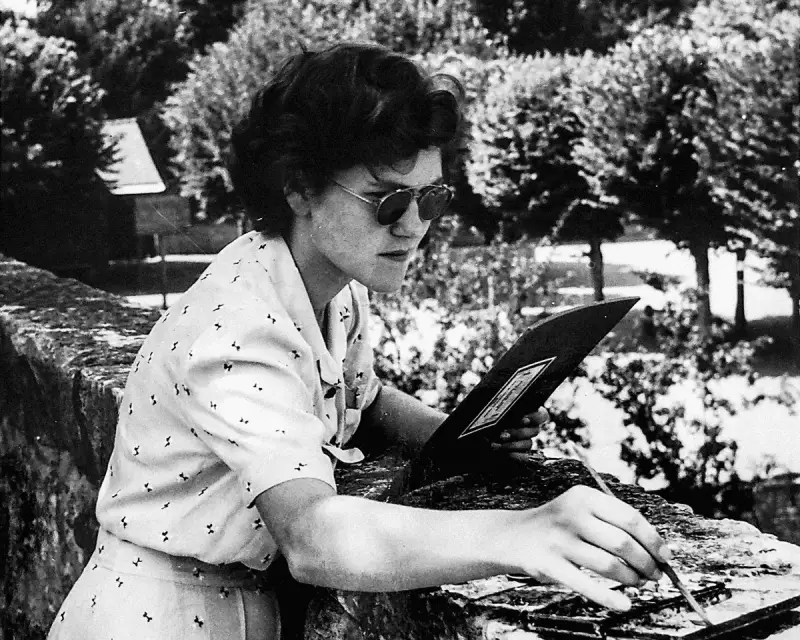
The British art world is mourning the loss of Gillian Hopwood, a pioneering textile artist whose large-scale, colourful installations brought art into public spaces across the UK and beyond. She died peacefully on 27 November 2025 at the age of 88.
A Life Woven in Colour and Community
Born in 1937 in Manchester, Gillian Hopwood's artistic journey began at the Manchester School of Art. She later honed her distinctive craft at the Royal College of Art in London, graduating in 1961. It was here she fully embraced textiles, a medium she would champion and elevate throughout her long career.
Hopwood was a central figure in the British textile art movement of the 1960s and 70s. She rejected the notion that textiles were merely a domestic craft, instead treating woven fabric as a powerful medium for monumental public art. Her work was characterised by bold, geometric patterns and an exuberant, optimistic use of colour, designed to engage and uplift the everyday viewer.
Iconic Public Commissions and Lasting Legacy
Her most celebrated works were her vast, architecturally-scaled installations. Among her key commissions was a major piece for the British Pavilion at the 1967 Montreal Expo, which brought her international acclaim. In the UK, she created significant works for public institutions, including a large hanging for the University of Surrey and another for the headquarters of British Rail in London.
Perhaps her most ambitious project was "The Canterbury Tales," a series of 12 massive woven panels depicting Chaucer's stories. Completed in 1985 for the new Chaucer College in Canterbury, the work showcased her narrative power and technical mastery on a grand scale.
Beyond her own practice, Hopwood was a dedicated educator, influencing generations of artists through teaching posts at Hornsey College of Art and Canterbury College of Art. She also served as the chairman of the 62 Group of Textile Artists, an organisation dedicated to promoting textiles as a fine art form.
Remembering an Artistic Pioneer
Gillian Hopwood's career was marked by a steadfast commitment to bringing art out of galleries and into the spaces where people live and work. She believed art should be accessible and integral to the built environment. Her pioneering spirit helped redefine the boundaries of textile art, securing its place in the canon of contemporary British art.
She is survived by her two children, Mark and Tanya. While the specific cause of death was not disclosed, her family confirmed she passed away peacefully. The art community remembers her not only for her vibrant, large-scale creations but also for her generosity, warmth, and unwavering dedication to her craft. Her legacy is woven into the fabric of Britain's public art landscape.