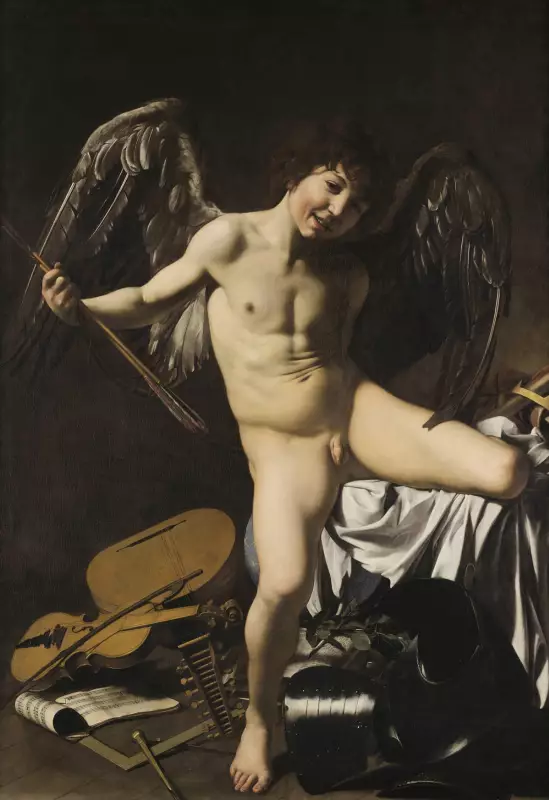
The art world is buzzing with excitement as one of Caravaggio's most provocative masterpieces, Victorious Cupid, prepares for its display at London's Wallace Collection. This remarkable painting offers a fascinating glimpse into the complex relationship between the Baroque master and his frequent model, a young man known as Cecco.
The Face That Launched Three Masterpieces
Art enthusiasts visiting the Uffizi Gallery in Florence often find themselves captivated by Caravaggio's The Sacrifice of Isaac, where a boy's face contorts in terror as his father prepares to sacrifice him. What makes this painting particularly compelling is that the same distinctive face appears in two other Caravaggio works from the same period. The model's tousled hair and dark, expressive eyes become unmistakable across these three powerful compositions.
In John the Baptist, the same young man appears mischievous while embracing a ram, his expression playful yet profound. But it's in Victorious Cupid where his portrayal becomes most controversial. Here, he transforms into Cupid, the god of love, depicted as a naked youth with dark, feathery wings, grinning confidently as he tramples over symbols of knowledge and culture.
A Masterpiece of Mayhem and Provocation
Painted around 1601 for art collector Vincenzo Giustiniani, Victorious Cupid stands as what many consider the most embarrassing masterpiece ever created. The painting shows Cupid standing triumphantly over a pile of toppled objects including musical instruments, armour, and architectural tools. This deliberate reference to Albrecht Dürer's Melencolia I suggests that love creates chaos where reason once prevailed.
Unlike traditional depictions of Cupid as blind, Caravaggio's version stares directly at the viewer with brazen confidence. The same face that screamed in terror in The Sacrifice of Isaac now grins with street-hardened assurance. This provocative work resurrected the sexual suggestiveness of Caravaggio's earlier paintings, created when he first arrived in Rome as a penniless artist identifying with the city's marginalised communities.
The Mystery of Caravaggio's Model Revealed
Historical records provide intriguing clues about the identity of Caravaggio's frequent model. The British traveller Richard Symonds, viewing the painting in 1649, recorded that the subject had "the body & face of [Caravaggio's] owne boy or servant that laid with him." The name of this boy was Cecco, and evidence suggests he was more than just a model.
Cecco eventually became known as Cecco del Caravaggio, indicating he trained as a painter under the master. His work Interior With a Young Man Holding a Recorder in Oxford's Ashmolean Museum demonstrates clear Caravaggesque influences, particularly in its treatment of reflected surfaces reminiscent of Caravaggio's early work Boy Bitten By a Lizard.
The relationship between artist and model attracted contemporary attention, most notably from Caravaggio's rival Giovanni Baglione. In his painting Sacred and Profane Love, Baglione depicted Caravaggio as a red-fleshed devil being denied access to his "catamite" by an angelic figure. This vicious parody made dangerous accusations about Caravaggio's personal life in an era when sodomy was technically punishable by death.
Caravaggio's Legacy and Redemption
Caravaggio's life was marked by violence and controversy, culminating in his flight from Rome after killing a man in 1606. Despite his turbulent personal life, his artistic genius inspired generations of artists across Europe, from Artemisia Gentileschi to Diego Velázquez.
In his final years, Caravaggio's work took on more penitent themes. His haunting David with the Head of Goliath features the artist's own face on the severed head of the giant, suggesting a profound self-examination and quest for redemption. This powerful self-portrait serves as a stark contrast to the triumphant, sinful Cupid of his earlier years.
The arrival of Victorious Cupid at the Wallace Collection offers British audiences a rare opportunity to experience one of Caravaggio's most personally revealing works. The painting not only showcases his mastery of light and emotional intensity but also provides a window into the complex relationships that shaped his art and life.
Visitors to the exhibition from 26 November will encounter a work that continues to challenge and provoke audiences more than four centuries after its creation, demonstrating why Caravaggio remains one of art history's most compelling and controversial figures.